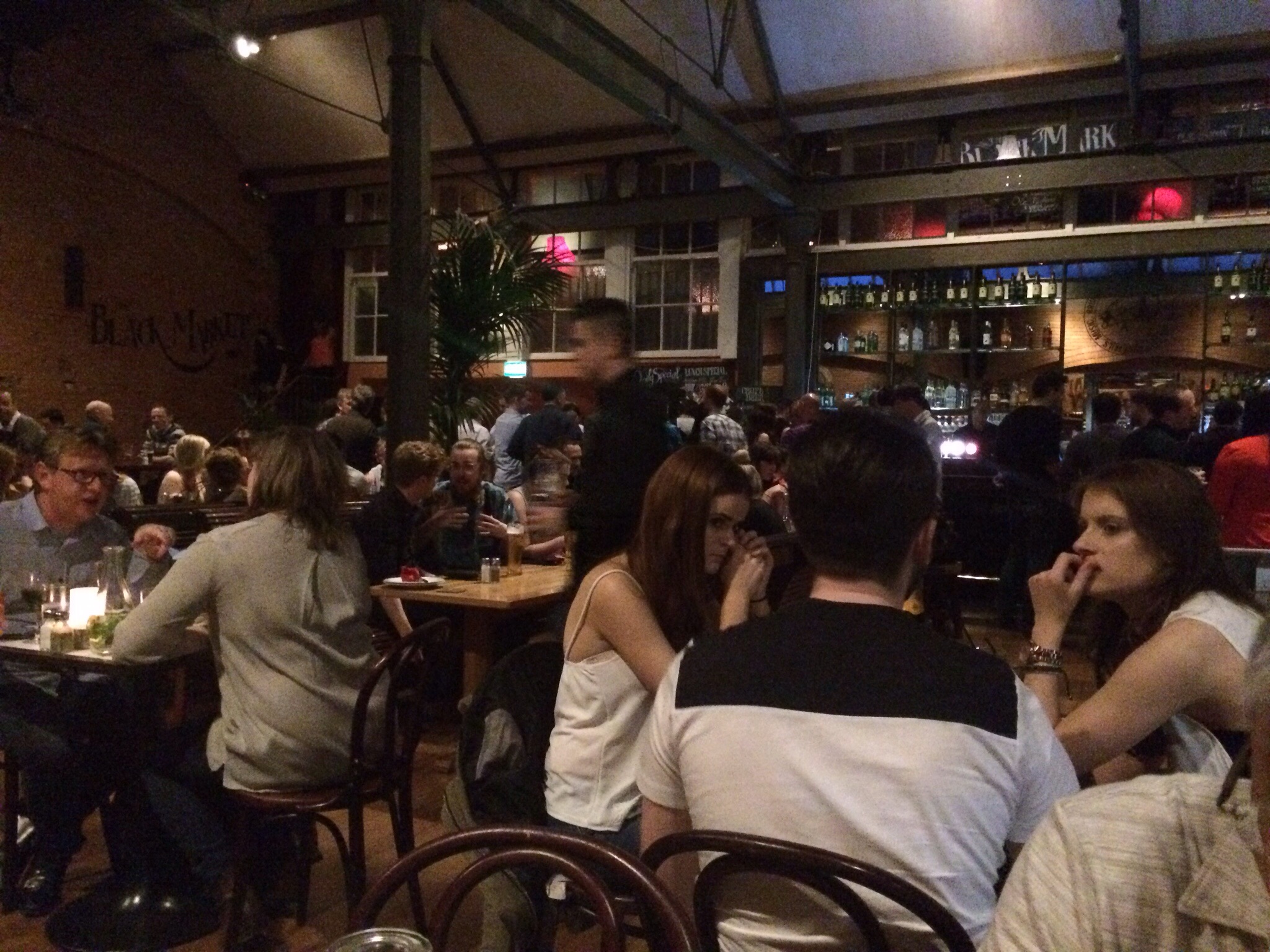
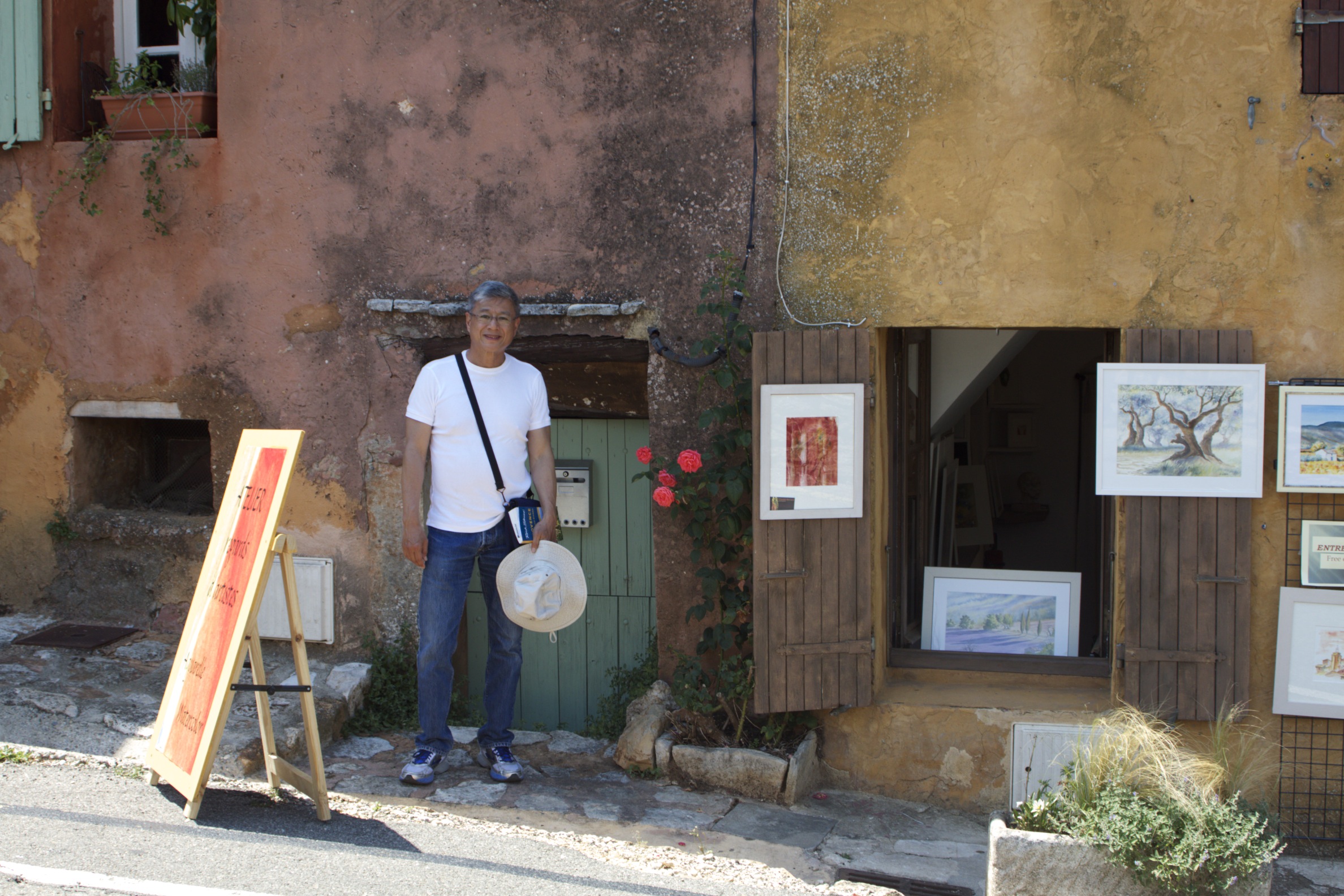
Glasgow

July 5, 2015

It feels wrong to say that a destination disappoints, but Glasgow was below my expectations. Once it was twice its current population, it is an example of some positive things one gets from a population decline—cheap apartments, light traffic. There’s a strong sense that Glasgow is recovering from the losses it suffered when the shipbuilding industry left the city decades ago.

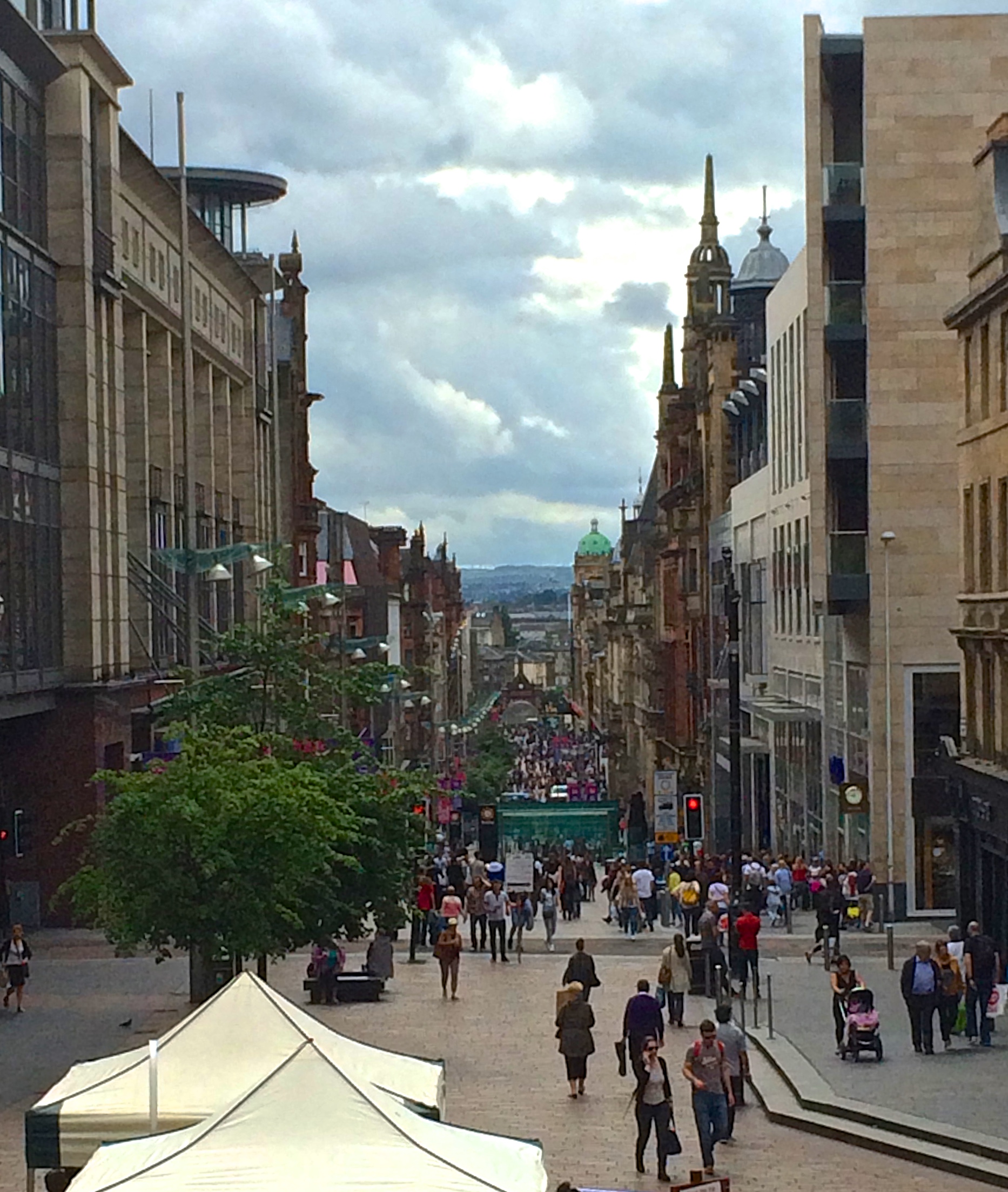
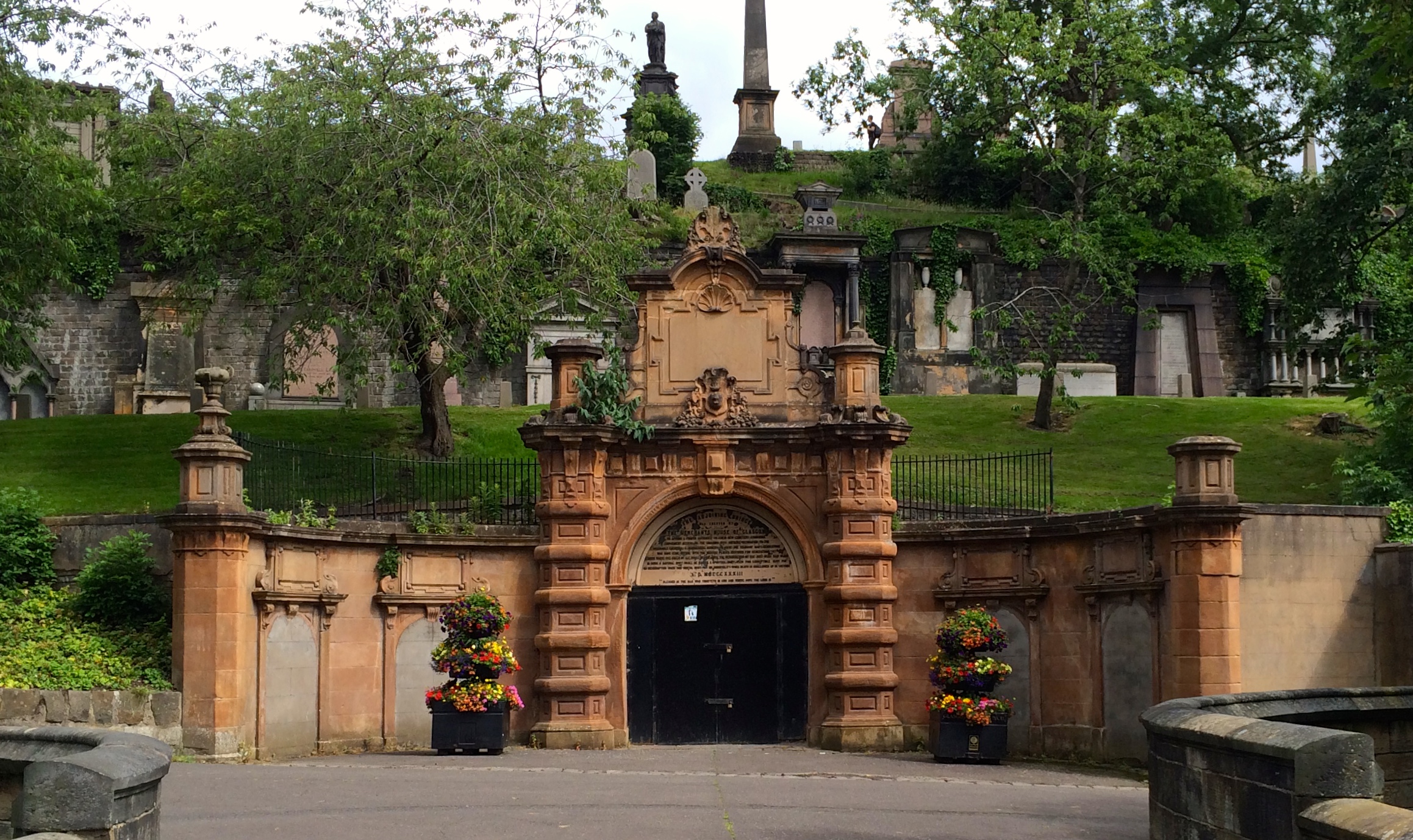
IMG_2272The center of Glasgow is this pedestrian mall that runs several blocks of high-end stores. The photo at the top of this post is of the quirky art nouveau designs that were the rage in the city’s hay days.

IMG_2266This indoor mall on the outdoor mall was puzzling. The style dates back to the 1890s, but there is hardly a scratch on the wood. Turns out, this accomplishment was done only 30 years ago. Scotland still has craftsmen who do something other than watch whiskey age. Those obvious stairs are escalators. It is called “Princess Square.” How precious.

IMG_2270

The stately plaza in front of city hall is reviving. A few buildings remain that shouldn’t, including the little subway train station stop with a cheap diner at the entrance. (Rick Steves says that a decent meal can be had there at bargain prices.) Here and there Glasgow is a little run down, but it was not torn down, so the future is bright.

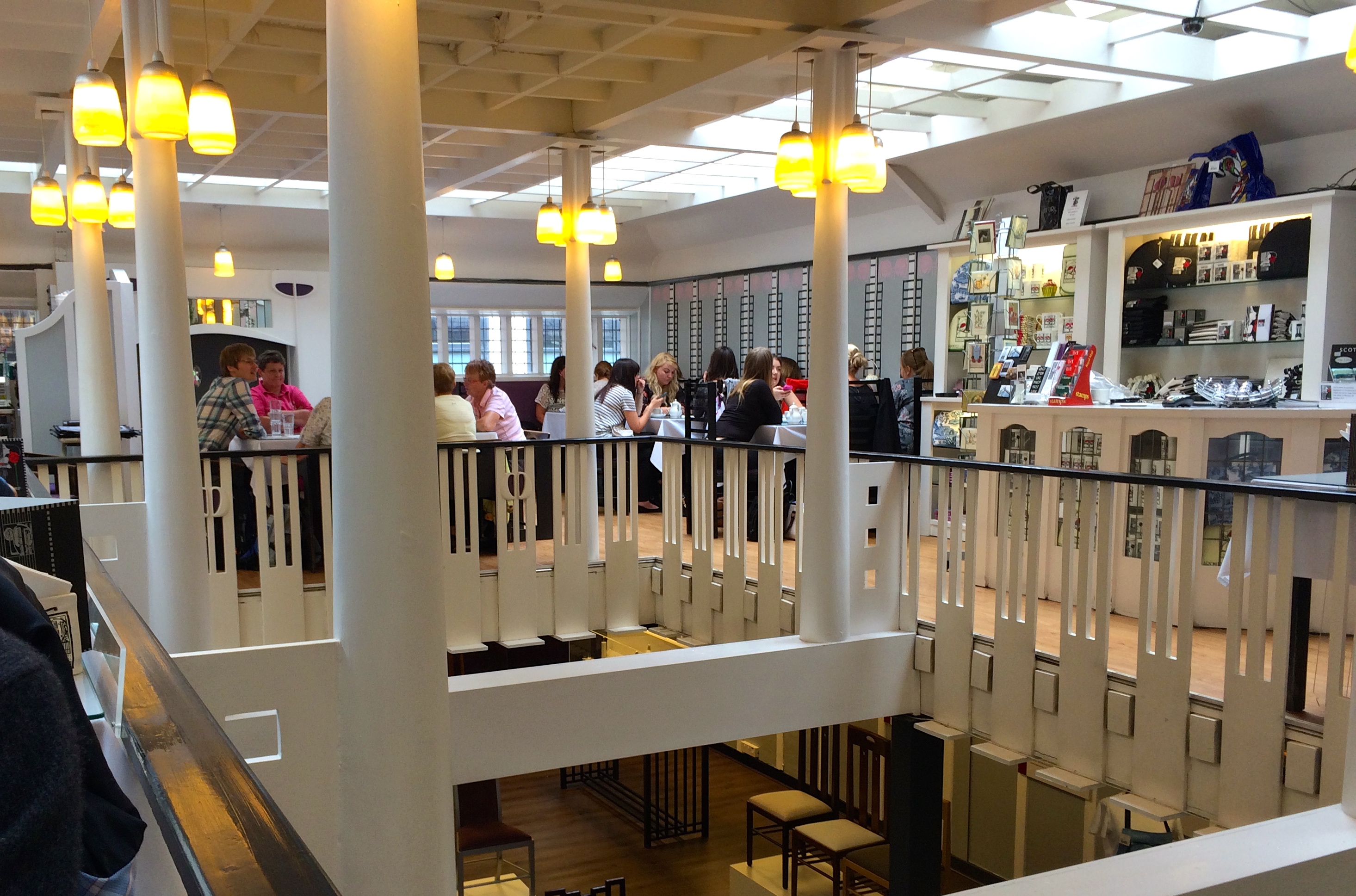
IMG_2273After walking around for 90 minutes or so, we ducked into a tea house to avoid an afternoon sprinkle. The nice thing about tea is that you can have a light meal and not feel guilty about the table service because the bill is so low. In the U.K. tea houses, the portions are inverse to the bill. It’s as if the most expensive item on your plate is the white space.

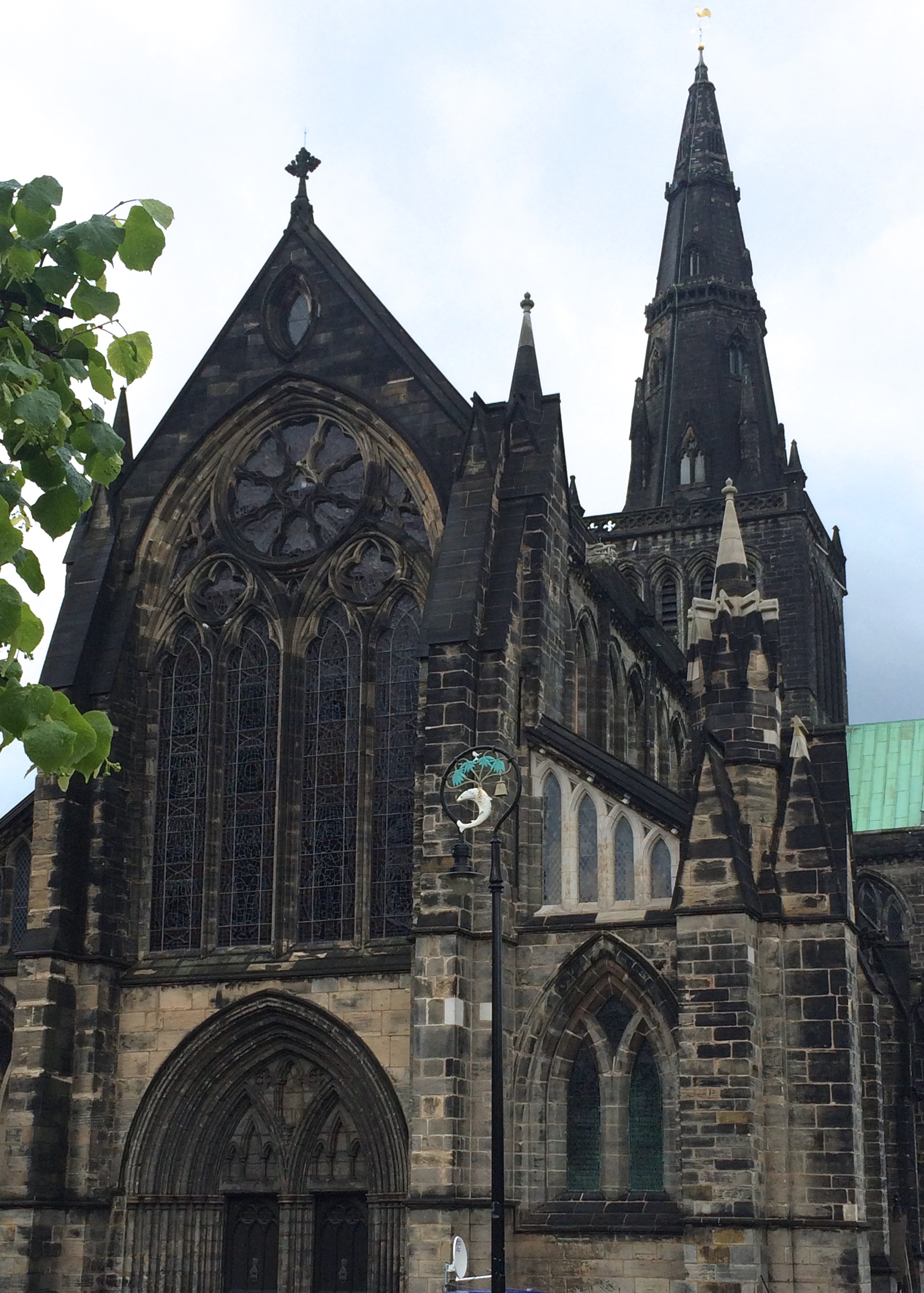
IMG_2274We walked an unnecessarily long distance from tea to tomb, but at long last we found ourselves at the Necropolis, a high-end cemetery at the foot of the cathedral. Even in death there once persisted the need for class, though always at the profit of the living. Must be time for church.

IMG_2276

The cathedral

Scotland has an inexhaustible supply of black stone. There are advantages—you don’t need to clean it and it is easier to find your house in a snow storm.

I’m a sucker for a big organ under the nave.

The Museums

Aside

July 3, Friday

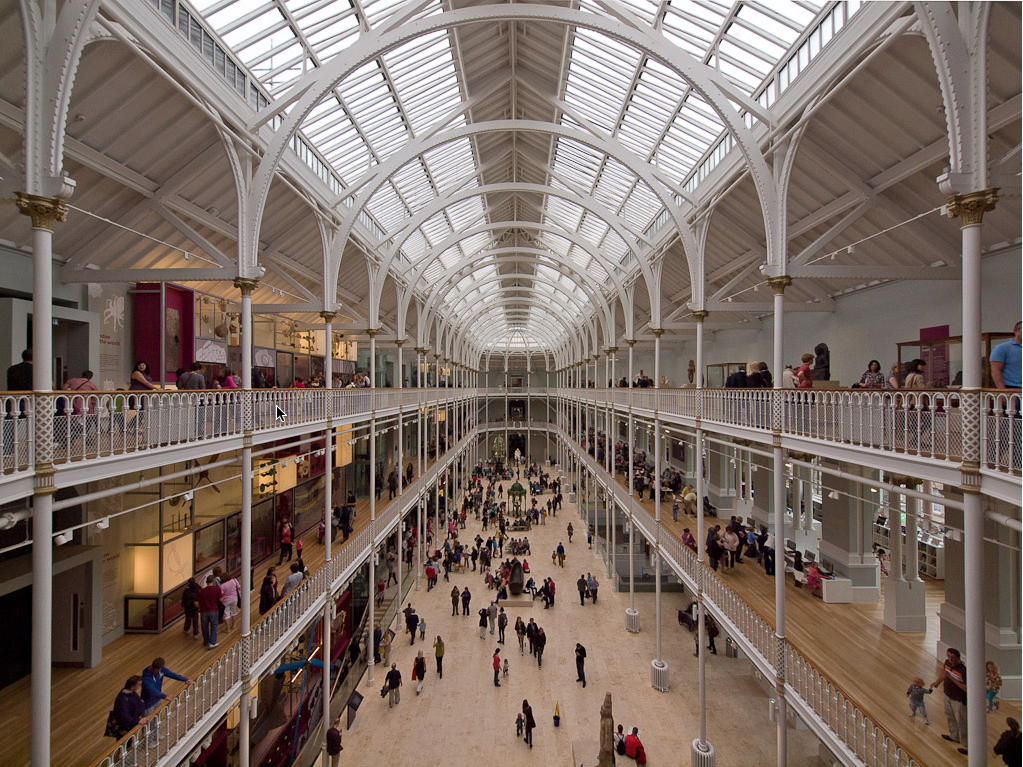
While we did not see these museums all in one day, it makes sense to put the stuff no one cares about in one place so that it can be easily avoided, like sheep shit on a…well, about every meadow, pasture, hillside, hiking trail, and lawn in the northern UK. The pano photo above is of the National Gallery, not to be confused with the National Portrait Gallery not with the National Museum of Scotland. Such inventiveness!

The National Gallery

Free to the public (donation encouraged), The National Gallery is in all ways marvelous. The works from the 1400s and 1500s are far less comprehensive than what one finds in Italy, but those that are here are in significantly better condition. The temperate Scottish climate over a few hundred years is probably the cause. Anyway, here are a few favorites:

IMG_2159

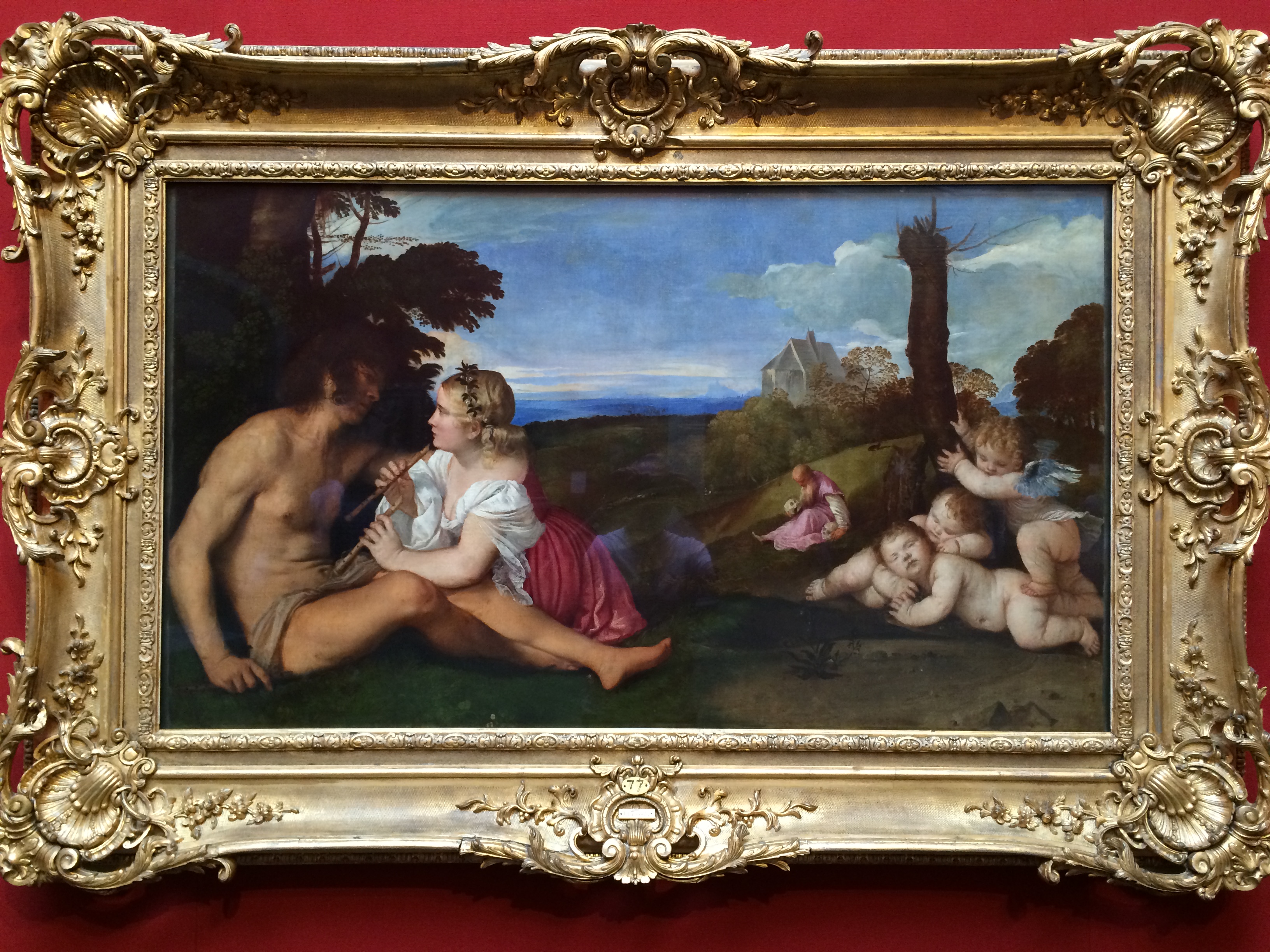
The Three Ages of Man —Titian

This Titian depicts, if one believes the wall card, “The Three Ages of Man.” It was painted in 1513, give or take a year. The first scene of babies climbing over each other foreshadowed the rise of Google, Yahoo, and Facebook and their hiring practices. The winged baby is Cupid, presumably FB. Yahoo is on the bottom.

The second phase, and doubtless the one that caught my attention, is of “young lovers staring ardently into one another’s eyes,” though I see a naked, eager man showing concern that the maiden has been practicing with tiny flutes.

The old man in the background seems to have forgotten from whose head he had removed this skull. Regret, dementia, or both?

IMG_2199

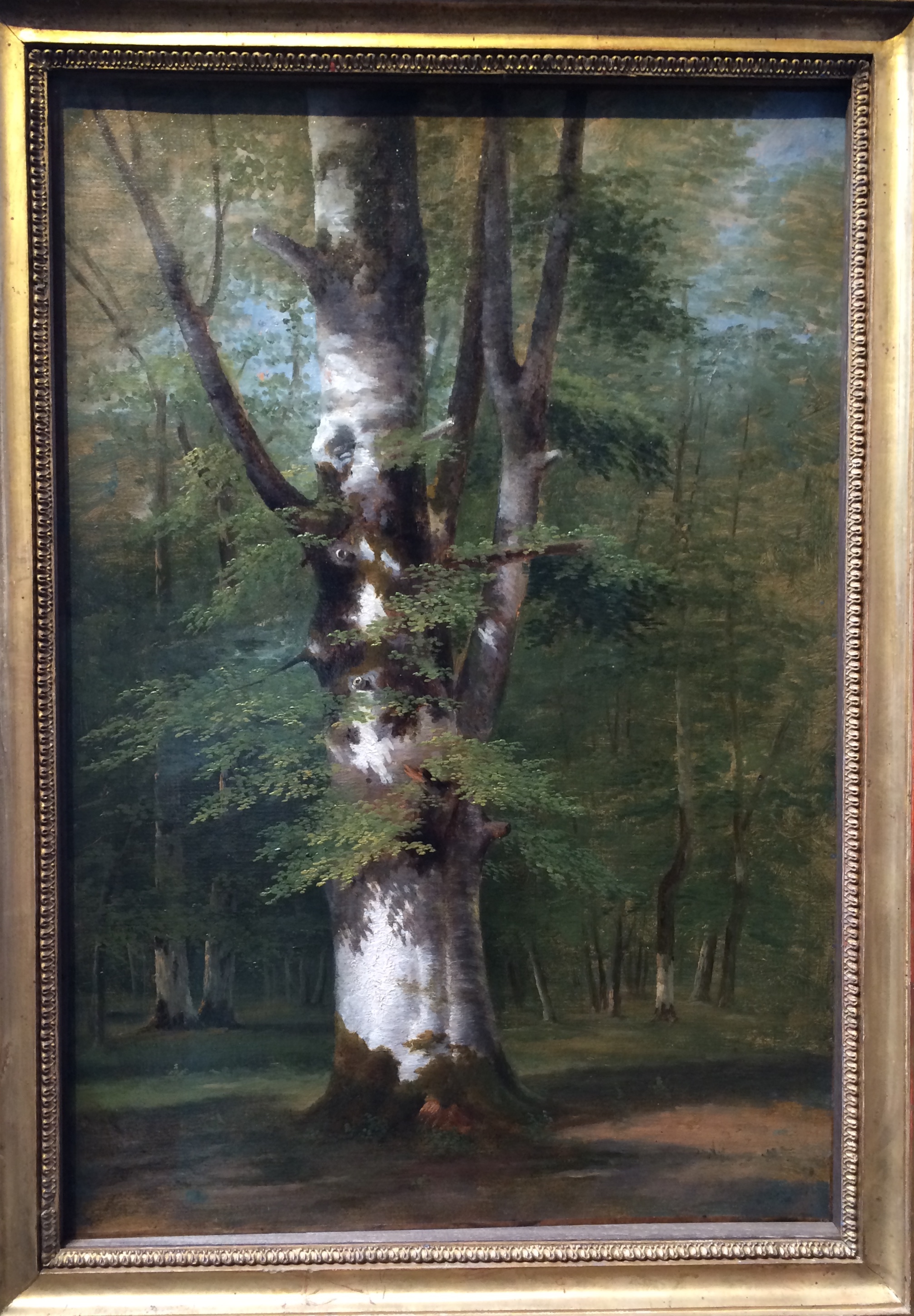
Forest Scene —Achille-Etna Michallon

Landscapes are rarely demanding. Sometimes they offer mystery, often they lack focus. This great white tree simply leaped off the wall at us. It is a commanding painting [click to enlarge]. Normally, I think that a tree with white bark is a birch, but this seems too large to be birch. Perhaps it is (was) sycamore.

The artist did not paint a tree, else he would no more have cut off its canopy than a photographer might crop a dancer’s feet. This is a painting of the space in the forest commanded by the might and success of single member. All competition is vanquished and the lesser trees huddle together at a safe distance. Like high school.

IMG_2215

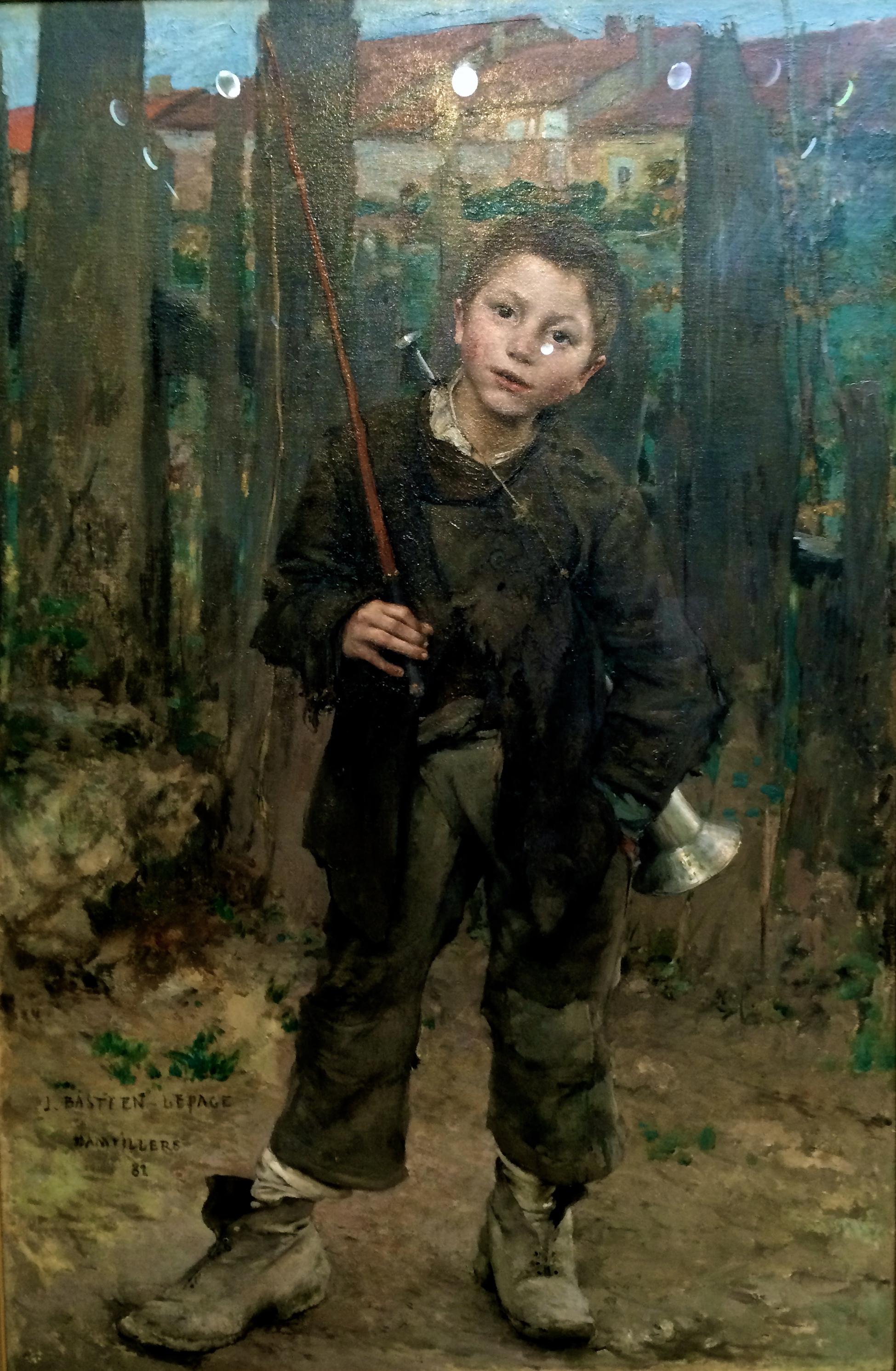
Pas Mèché —Jules Bastien-Lepage

Pas Mèché is the French equivalent of our expression “no way.” The subject is thought to be a barge boy, holding a whip for the horses and a bell to alert the lock masters. These painters of peasant life give us more value than do the portrait artists who painted rich people for commission. When you’ve seen one ego on canvas, you’ve seen them all.

Exactly what the boy is rejecting is left to the observer’s unsatisfied curiosity. He appears alert, confident, and optimistic. Lepage seems to admire his common subjects.

National Portrait Gallery

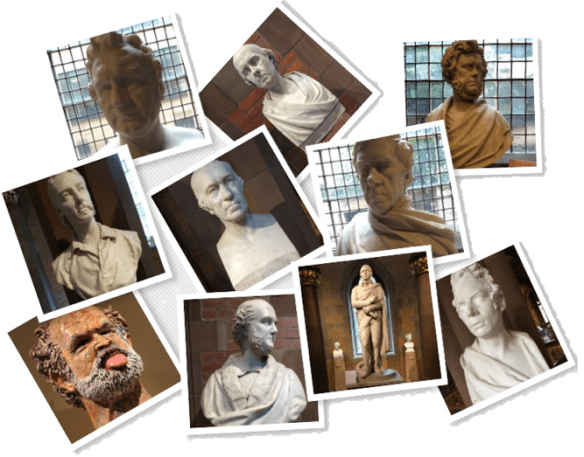
This magnificent museum does not allow photos from its primary galleries—where the paintings are. The building has a grand entrance hall with these busts, acknowledging in order of their appearance: architect, writer [to paraphrase Saturday Night Live, With a name like Cockburn, he has to be good], journalist, novelist, scientist, abolitionist, joke, publisher, poet, and painter. The selection demonstrates the Scots reverence for intellect. My purpose was a somewhat lower. I could not resist a Cockburn joke, like Didn’t he marry Sandy Vagina?

PagesScreenSnapz005

Bryce, Cockburn, Miller, Sevenson, Watt, Brougham, Attitude toward the English, Constable, Burns, Wilke

Edinburgh maintains this museum in a condition superior to the day it was built. There are modern touches, such as gift shop and lavatories, but as they were added, no expense was spared to make the new blend in. The love of architecture is ingrained. Everywhere in Edinburgh where the modern world has intruded on the past, great pains have been taken to keep from diminishing the old with the new. The Scots have a respect for open space. Americans treat civic buildings the same way Rod treats empty space on a dinner plate—why do you need a spot to rest your fork?

National Museum of Scotland

We spent little time here because we arrived about 45 minutes before closing. What we saw felt like a museum of natural history or a science museum.

SafariScreenSnapz080

IMG_2253IMG_2251I did manage to get a pano shot of Rod standing next to a totem that must have been 10 meters high.

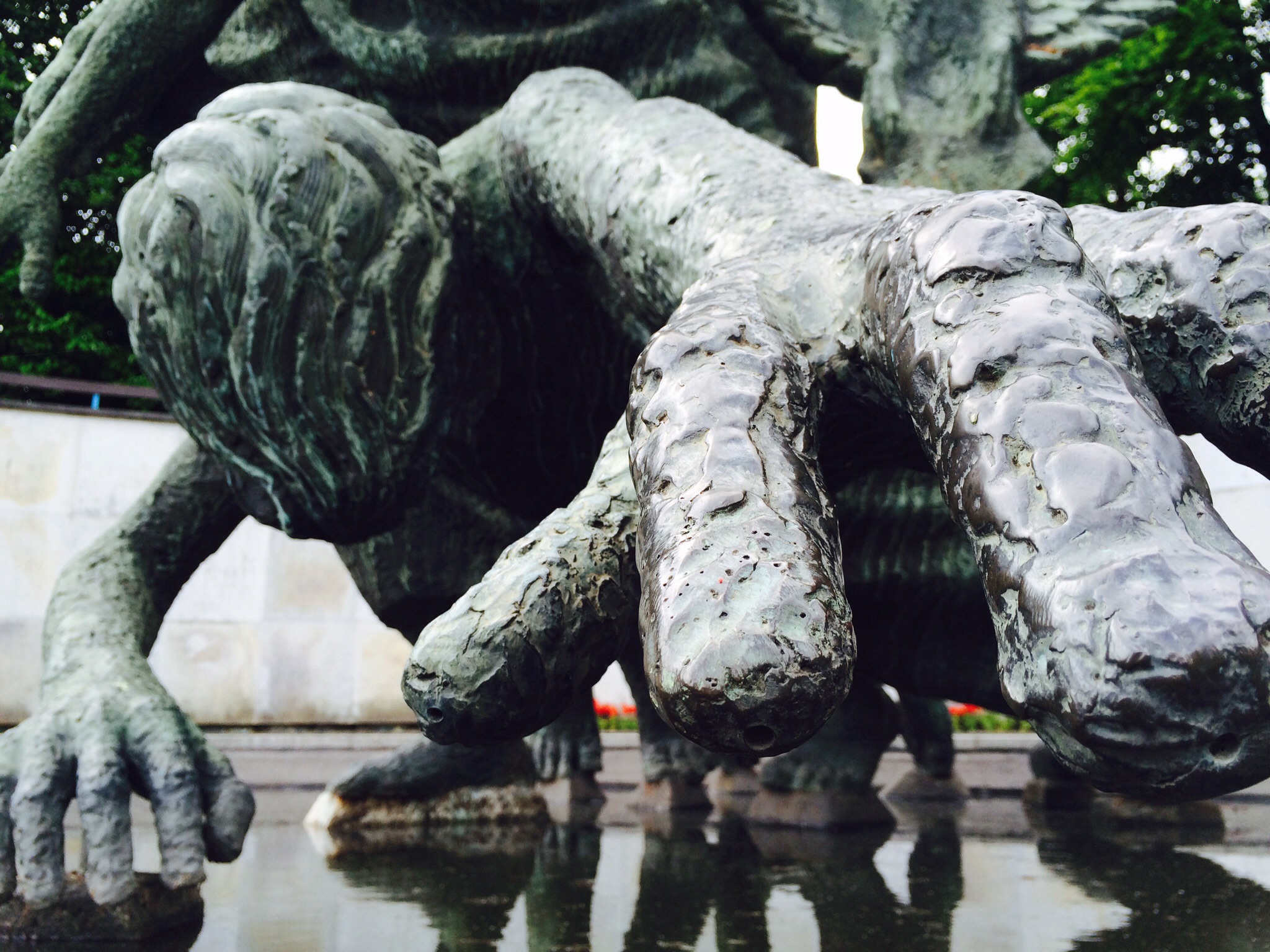
The character on the right looks like a blind carpenter tried to crucify him.

Observations

July 2, Thursday

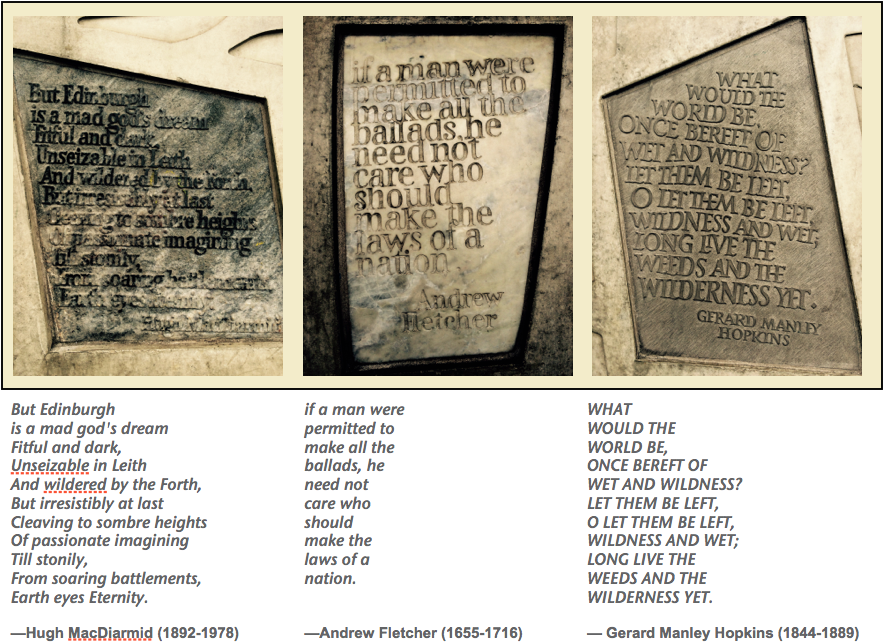
Rod and I get to know a city or town by walking the streets frequented by residents, for they are the people who love a place for its soul and not its trinkets. If a traveler were to find a city more beloved of its inhabitants than Dublin and Edinburgh, he would be wise to end his travels then and there. We spoke with cab drivers, bartenders (m/f), waiters (m/f), and other drinkers and none had anything but a broad smile for their city. These plaques are among many on a citizen’s wall of the parliament building.

PagesScreenSnapz003

IMG_2255

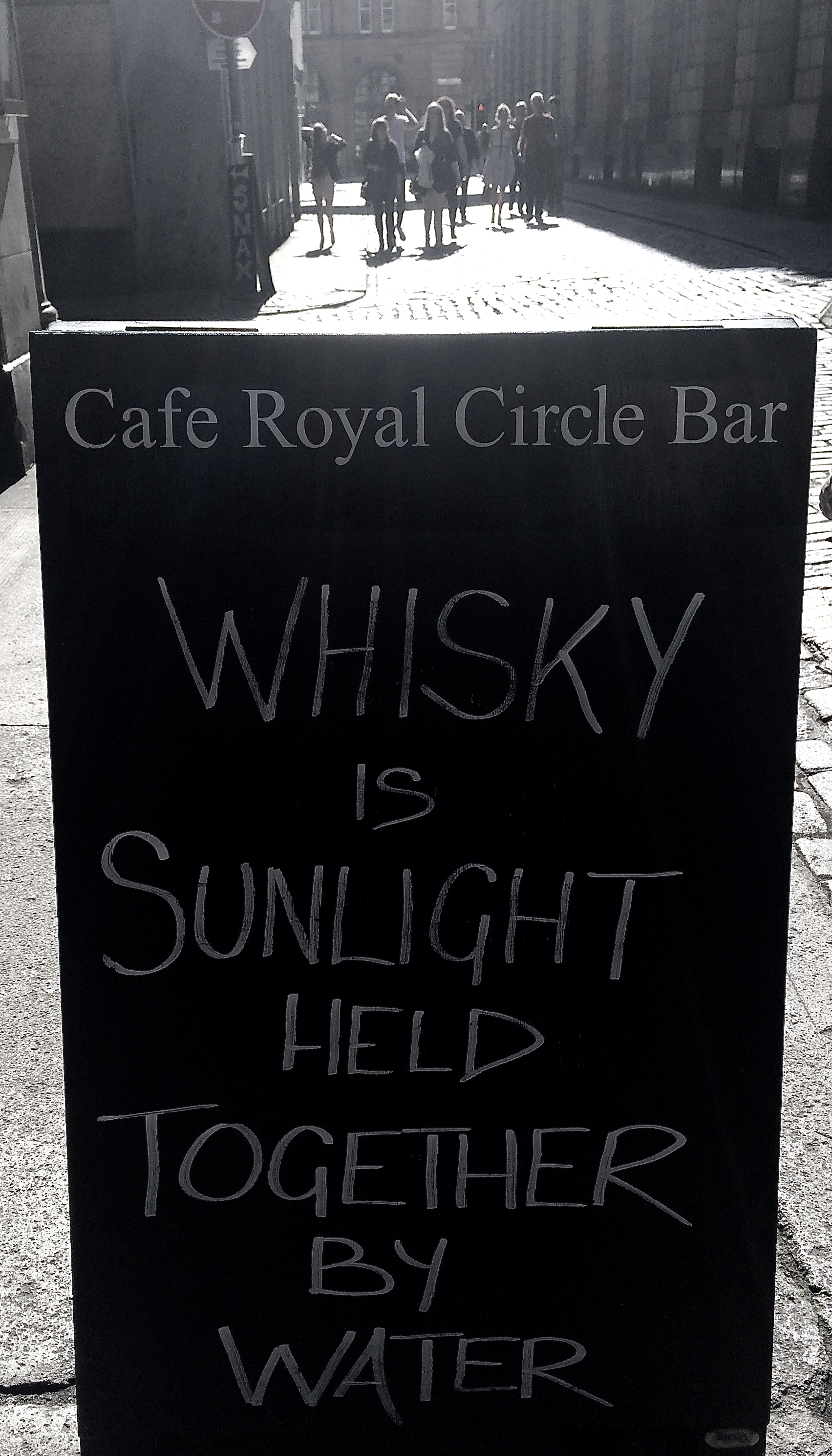
Of course one can always depend on a street poet to add something pithy to the staid pronouncements of the past. This one, “Whiskey is Sunlight held together by Water,” gives the pedestrian a clear sense of the people’s priorities.

One striking difference between Dublin and Edinburgh is the seriousness with which they handle their drinking laws. No one gets carded in Dublin, but it is as common in Edinburgh as in San Francisco or Oklahoma City [no compliment intended]. At last call, the police in Edinburgh swoop down on the nearly countless pubs from beneath their invisibility cloaks and drag off a drunk kid or two (presumably American, but who knows) unwilling to abandon an unfinished drink they will not quickly dispatch. In Dublin, you can drink outside the bars and the drinking age is a kindly advisory from the friendly folks at city hall.

Both cities have some exceptional street musicians. As one Dublin cabby told me, “If you can’t sing, then you become a comedian.”

I filmed an a cappella group who I thought better than The Manhattan Transfer (a low bar), but my recording equipment, which I carry in my back pocket without a protective case, fails to do justice to them (or my reader[s]).
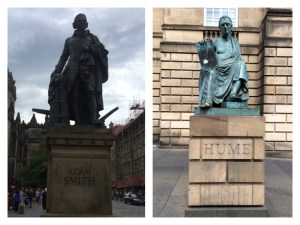
Smith&HumeWe who descend from empires are used to the honoring [sic] military men and politicians. The two largest statues in Edinburgh revere Adam Smith and David Hume, an economist and a philosopher.

The protective patina is worn from Hume’s exposed big right toe by college students eager to nail a test in the humanities. (That’s two, Dan and Tony.)

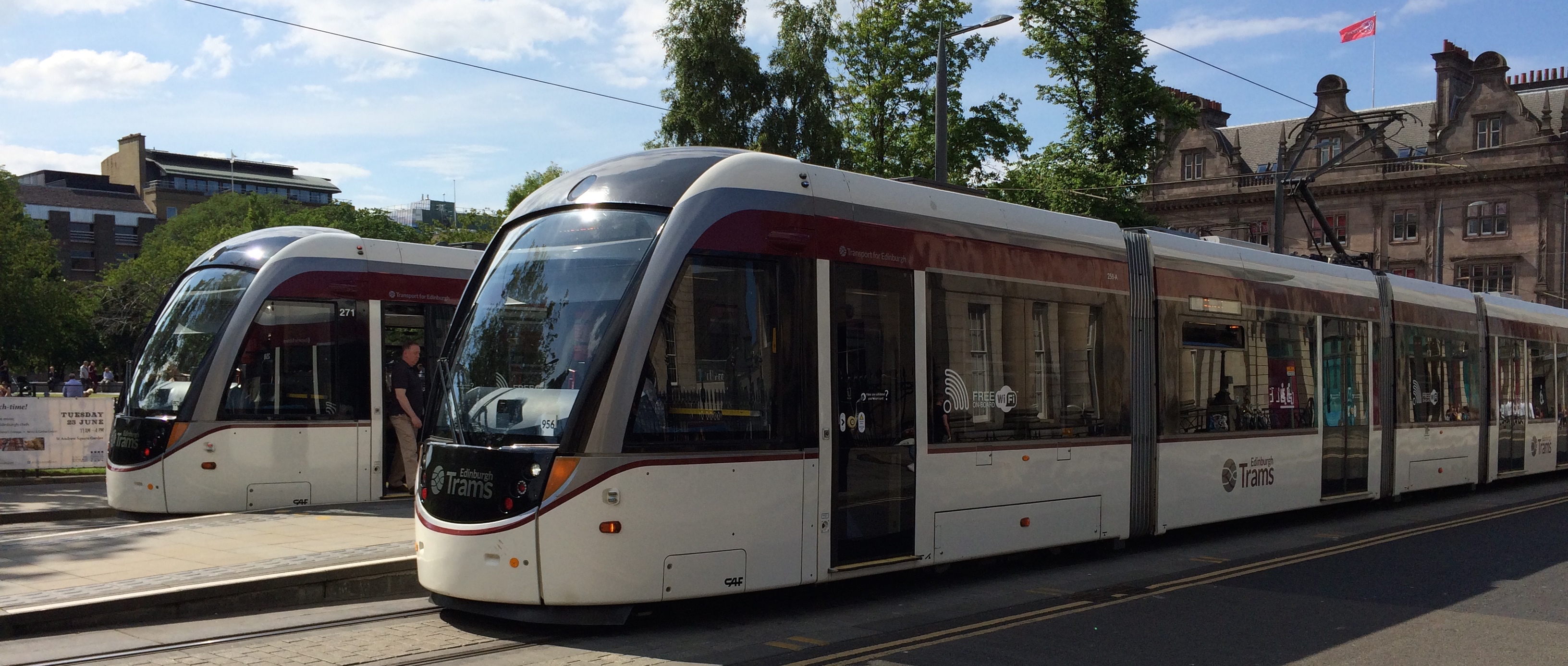
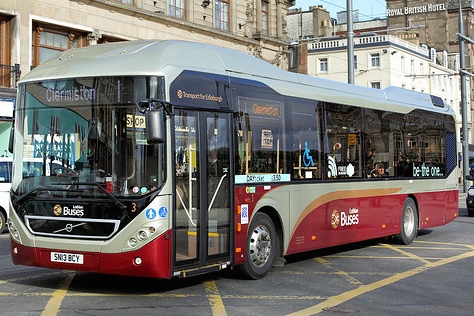
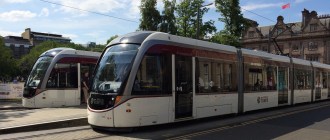
The public transportation system of both Dublin and Edinburgh are above ground, extensive, clean, remarkably quiet, and each has free wifi. They all have lots of glass, but before you hop onto one of these, take the three-week course on how the system works so as to learn how many zones you are about to travel. We took a double-decker bus from the airport and it was quite comfy.
train

bus

The traffic signals have some minor differences with SF. First, the yellow caution is brief—it really means stop. Before a light changes from red to green, it first displays red&yellow together, to alert drivers to put the car into gear or, for those cars that turn off at stoplights, to let drivers take their foot off the brake in order for the engine to start in time for green. The pedestrian countdown clocks in Dublin give the number of seconds one has to wait at the curb before getting a walk signal. Ours are a threat; theirs, a promise.

Both cities have managed to keep the crosswalks free of the mangled corpses of American visitors who stand in the gutters while waiting for a walk signal (in my dreams). Bus drivers turn the corner at intersections at barely diminished speeds, polishing the sidewall of their tires with smoothed curbstones. There’s not much leeway for the daffy tourist unaware of speeding vehicles coming from the right. buh bye

Open Space

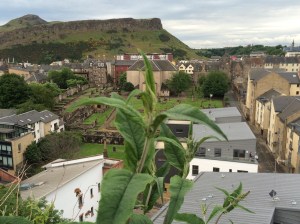
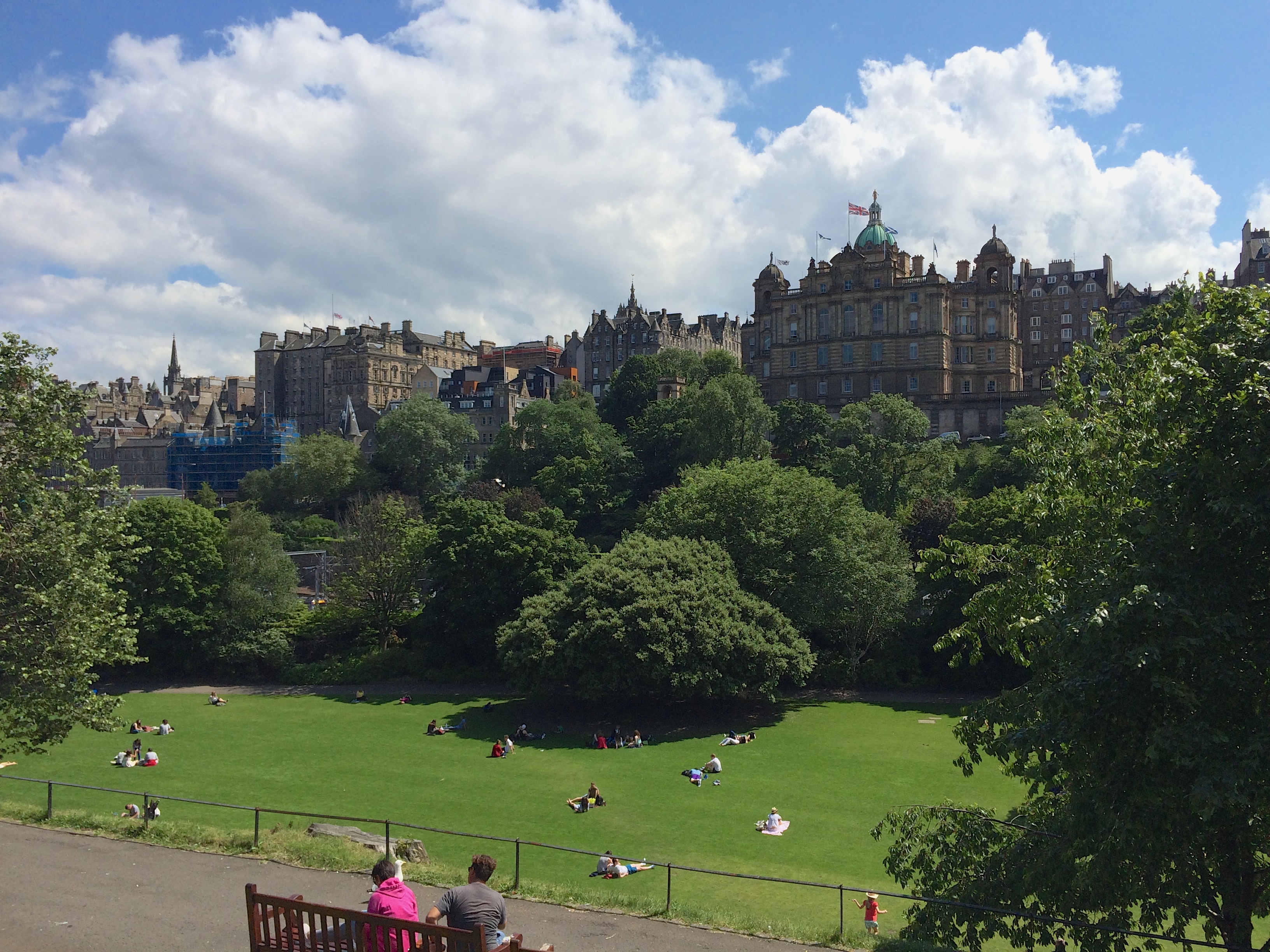
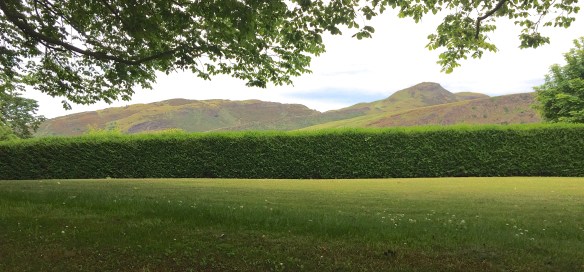
One feels that almost half of Edinburgh is public green space. The high hill in the background of the photo below on the left is Holyrood Park, attached to one of the Queen’s 10,000 homes and open to the public when she’s absent. The green space in the center of that photo is largely an ancient cemetery, serving some purpose for the living people in the apartments that surround it. On the right side photo, there’s a long, wide (we see across the width) park that divides Old Town from New Town.IMG_2219IMG_2125

This view of the distant Holyrood Park is introduced by another park, The Royal Terrace Gardens. Between the two, in a hidden-from-view valley, are a Palace, the Scottish Parliament, and several city blocks.
IMG_2120

The photo at the top of this page shows the independent George Heriot’s School, called “independent” where we would say “private.” The more confusing term “public school” is a left-over from a time when most schools catered to students by religious denomination and public schools admitted anyone with a 98.6 and money. (Today, because of the EU, the temperature requirement has been lowered to precisely 37.)
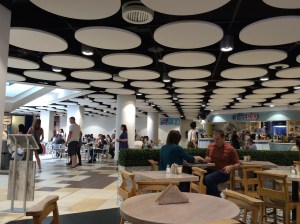
IMG_2222Edinburgh has modern buildings, too. They even have a large Apple store. I did not take many photos of new buildings, but I did notice that even simple apartment blocks have some nice refinements. This food court obscures the conduit, ducts, and pipes that run under the open ceiling with a series of white wafers that are remarkable simple and dramatic. There are many examples of this sort of attention to space.

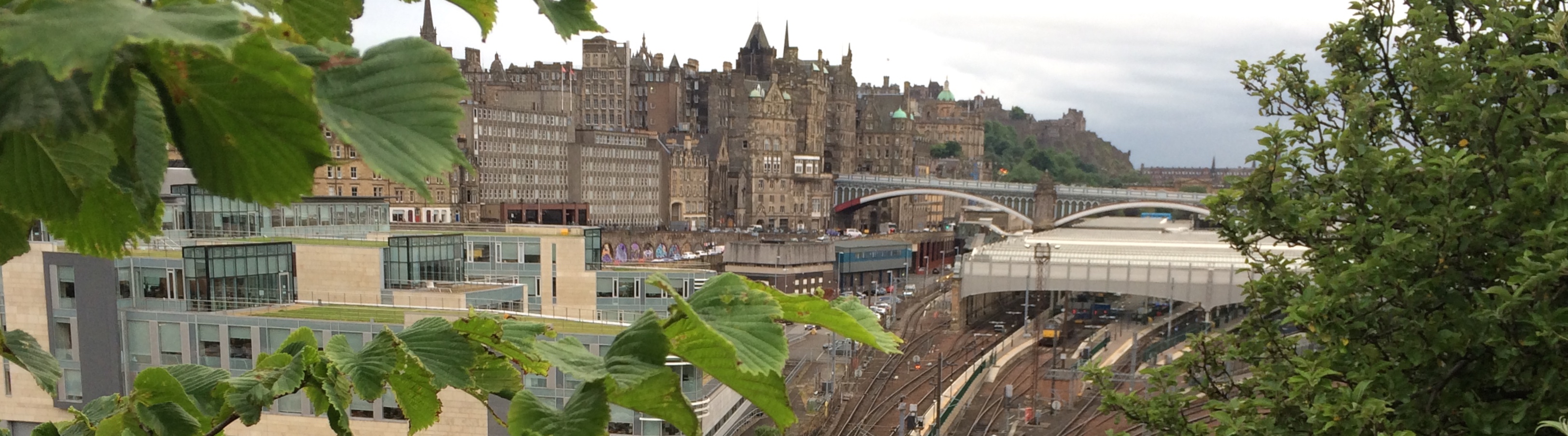
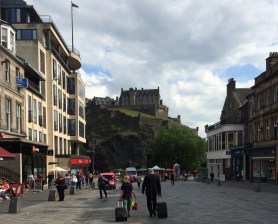
This view from New Town looking toward the castle in Old Town shows a mix of Georgian and modern, but where modern buildings have been inserted, they fit.IMG_2228
 

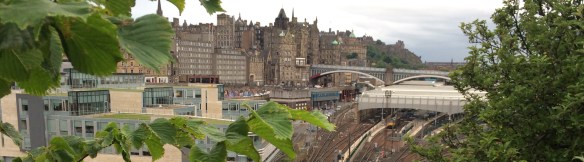
Where the rail tracks divide the city, old from new, modern office buildings take advantage of the open space. Notice the high bridge that crosses the rail station from New Town to a high hill in Old Town. It connects street-level to street-level.IMG_2127
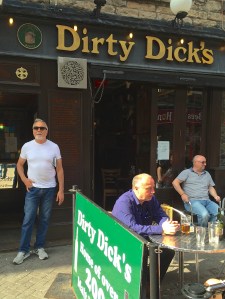
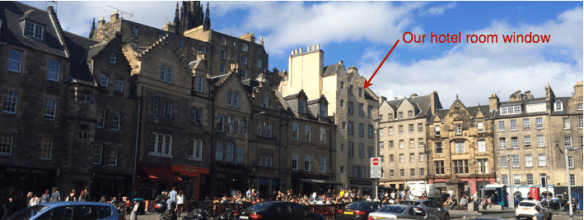
Another, strained example of open space is the plaza in front of our hotel where much younger people enjoy a collection of pubs and sports bars with fish and chips. My favorite shop on the square (where Rod bought a solar powered waving queen—don’t ask) is called “The Mutt’s Nuts,” which is a more visually accessible, if a less welcome, alternative to our expression, “the bee’s knees.” Whether a bee has knees, I have never seen, but the mutt… .PagesScreenSnapz004
IMG_2232And what more appropriate place to insert Dirty Dick’s than after the Mutt’s Nuts.

(Well, yeah, “appropriate” probably does not apply.)

The Castle

July 1, Wednesday

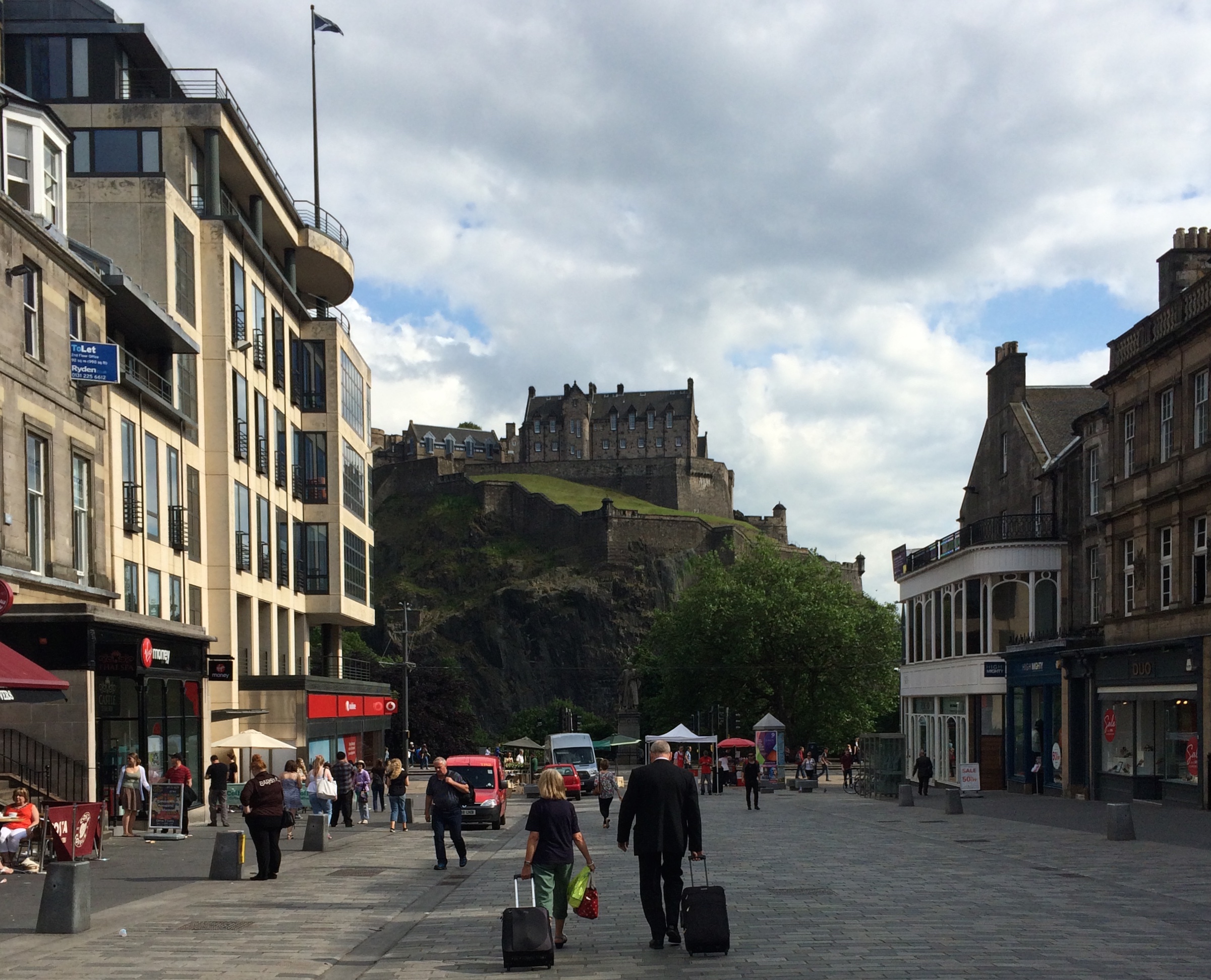
The Old Town of Edinburgh is nestled at the foot of a the hill on which a castle stands. The castle is more than a building, but a cluster of buildings within the thick walls that seem to grow from the cliff-side rock to protect them.

IMG_2067

Where there are flags, there’s a guy who thinks he’s king.

This view [left] supports the illusion of a unified castle fortress. The stone gives spine to the boast that the castle has never been taken by force, though today it was overrun with we wee tourists.

In the panorama above, the castle would be off to the right and just out of sight.

Stonework        Each building demonstrates a Scottish talent for remarkable stonework. If you enlarge this image [click on it] you will see that the upper sections of the tower, together with columns that support the corners of the tower, and the crenelated parapet across the top are all set with large, rectangular, smooth blocks, presumably for strength. The walls are fashioned with irregular stones and pebbles that give the surface between the windows a soft, tweed look. One might first think that the masons got lazy, but it is hard to believe that the building would be as beautiful it the surface were all flat stone.
We happened to be there at the changing of the guard, but IMAX entertainment this ain’t:

Big musket.

At the gates of the castle lies a large open space into which a temporary arena is constructed annually, partially overhanging the cliffside. These newest stands cost about $25 million and can be erected in one month. From August 7 to the 29th, the military tattoo and other musical spectacles will entertain over 200,000 people. Already erected, the Scots would rather be early than late. Cantilevered or not, what the Scots build does not fall down. For more information about the seating, Tattoo seating

IMG_2066

We hope it does not rain…too much.IMG_2106

Off to Edinburgh

June 30, Tuesday

The drive from our hotel to the airport, stopping to fill up (saves £30), proceded without incident. In the shuttle from the rental agent to terminal 2, Rod noticed our boarding passes were for a flight 7 minutes away—we had missed our plane. Not to worry, Aer LIngus was happy to sell us two more tickets. Whether in search of a silver lining or suffering from Chinese fortune cookie poisoning, I began to imagine that fate had spared us from a crash on the missed flight. But this sword had a second edge.

By the time we were boarding the second plane, it had become clear by the absense of tragic news, that the earlier flight had made it safely and that superstition was working against me. I recalled that Albert Camus had died prematurely in a car crash with an unused train ticket to a common destination in his pocket. I’d have to get there eventually, so what was the point of taking a ferry, or swimming when the ticket in my pocket might be a lifesaver?

When the second plane landed safely, I had only my sheepishness for consolation; that I had braced myself against the existential angst of violent dismemberment for nothing.

A real terror was to follow when my carry-on bag, having been deemed too large to fit into the overhead compartments, was taken from me on the tarmac and then failed to materialized on the carousel in Scotland. Assured by a baggage handler that there were no more bags, I became convinced that another passenger had spirited away with my confirmations, my electronic devices, my clean underwear, and my residual future. Adding to my woes, a chubby East European with time to kill was chatting up the only agent that might have addressed my dilemma.  So I took to misbehaving like a Brit footballer fan, which did not exactly bring down the house in sympathy, and when I did finally get to the window, as if to mock me, the carousel had started up again and the bloke behind the counter asked, “Is that your bag there?” This was a cold reception from a people who are blissfully unaware of their distance from the equator. It was not typical.

Edinburgh (which the locals pronounce Ed•in•boor•uh, or something like that to irritate the English) has startling street charm. Here are a few snaps of “Old Town”: [click to enlarge]

Castle

Rod below castle.

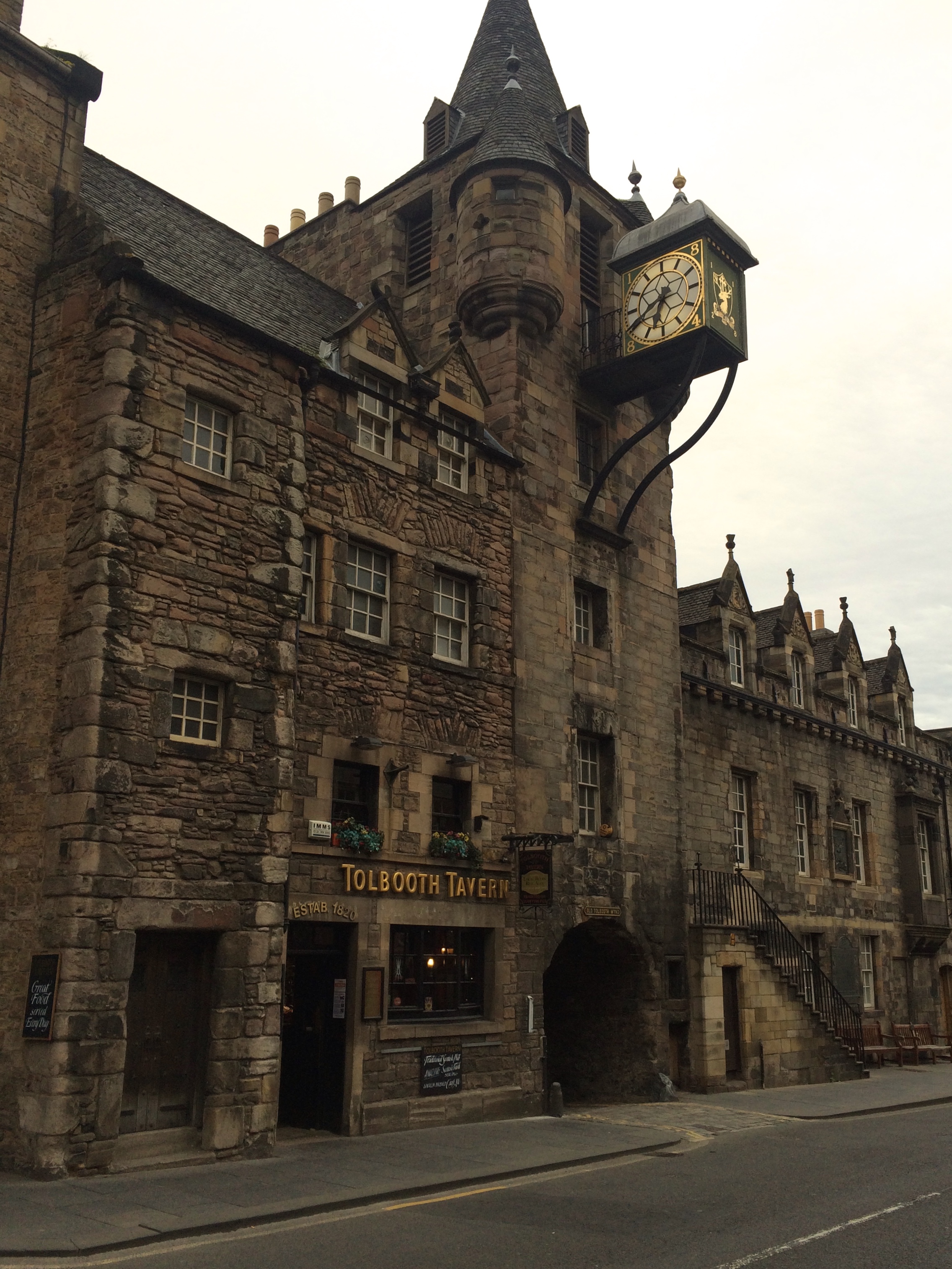
Royal mile

Was the clock an afterthought?

IMG_2060

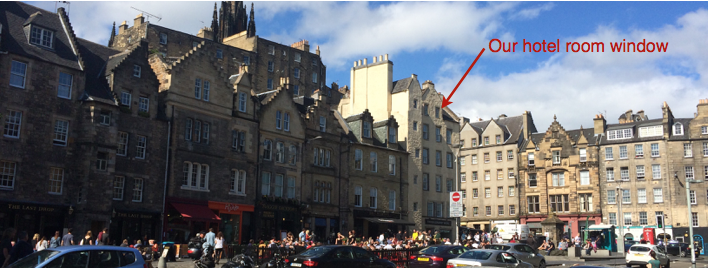
View from our room of Grassmarket

IMG_2104

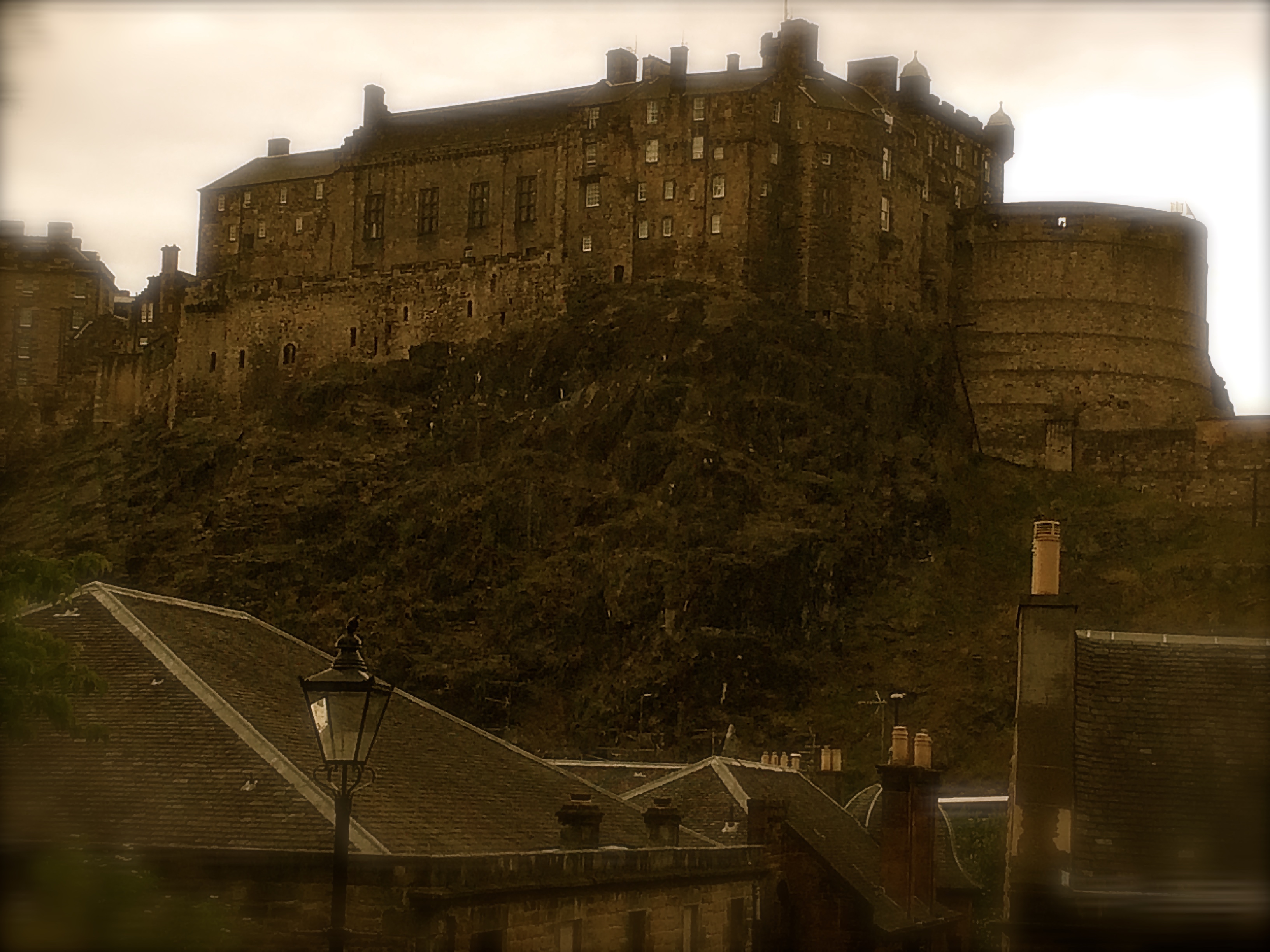
The castle dominates, as castles sometimes do.

IMG_2063

Here’s where Rowling got Hogwarts (poor girl).

A Day of Intellect

Makes Rod look

Makes Rod look “butch”.

On a partly cloudy morning, we set out for the Irish Writers Museum, expecting to see the house that James Joyce built. Ironically, he did not live in Ireland when he so famously wrote about it. The list of those from Ireland (Jonathan Swift, Bram Stoker, Oscar Wilde, G. B. Shaw, Samuel Becket, and on and on) is extensive.

imageThe museum is housed comfortably in this fine red brick house with red and blue something in the lower windows. It is quieter inside than a library…and less crowded. Such is the interest in books today.

image

We spent more time inside than it took some of its writers to pen the works for which they are famous.

image image

This creepy sculpture is a reminder of how much the struggles of the centuries have cost. The new Irish flag symbolizes the hope that the Catholics (green) and Protestants (orange) can find peace (white) between them. As most have given up God, there’s a good chance.

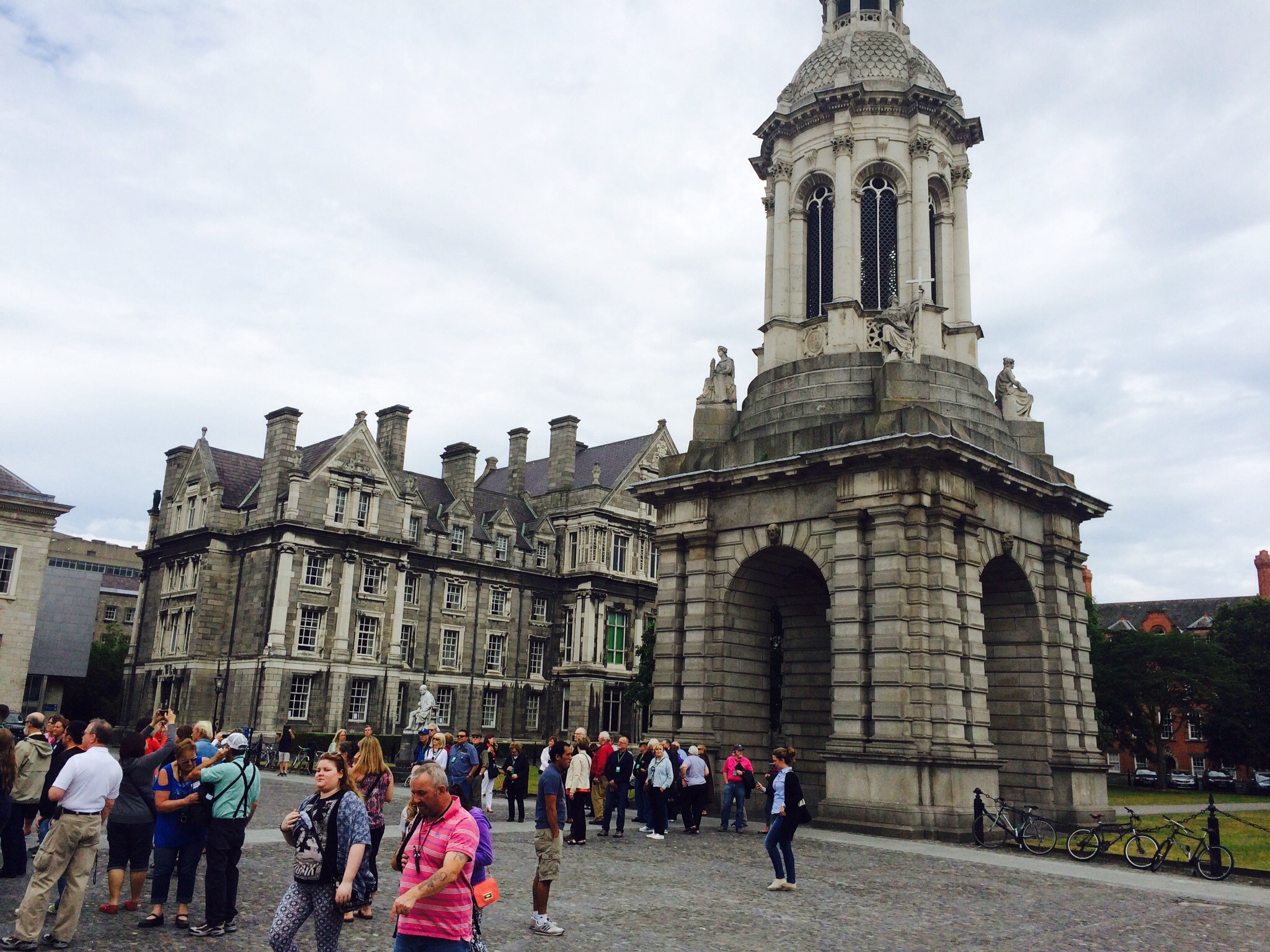
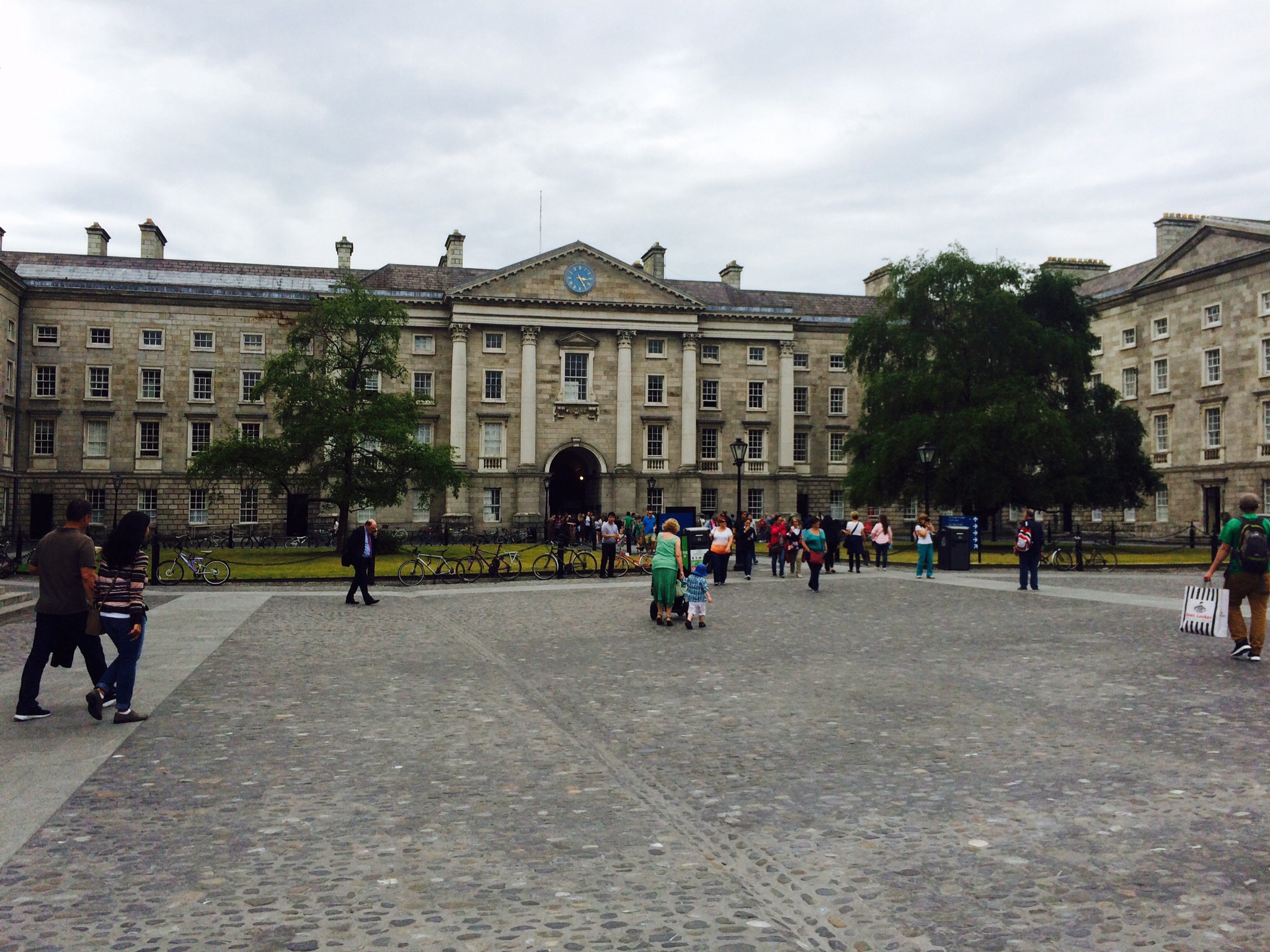
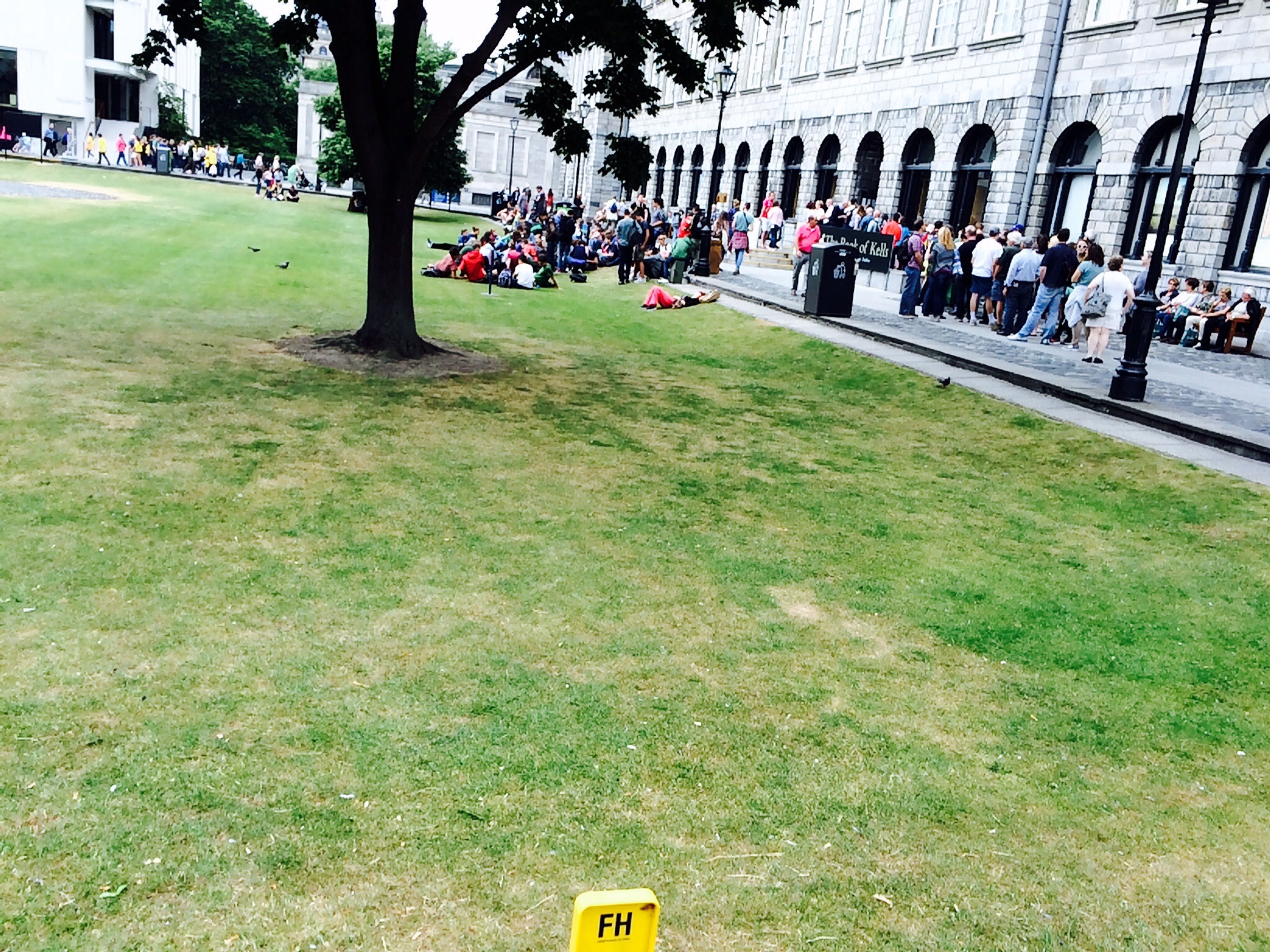
Here follows some photos of Trinity College. It is right in the center of Dublin. We crossed the campus on our return, expecting to engage in a tour, but we had not eaten for hours.

image

imageimageimageimage

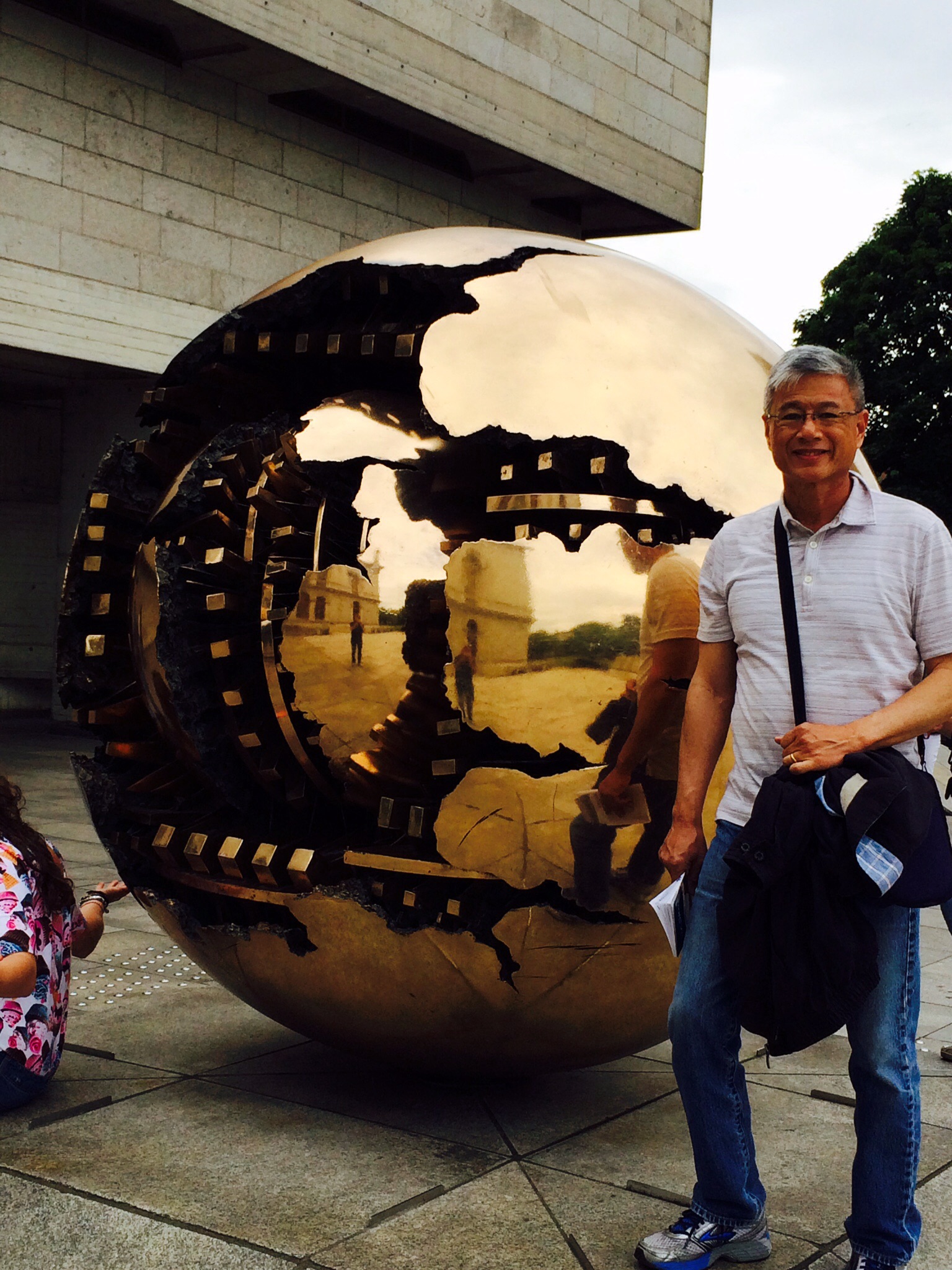
I do not know that this shiny ball is either, but it’s cool.

Sour Gripes

Image

Ok, ok, so we missed the gay parade, having presumed it would be on Sunday, as everywhere in America it is. One might think that the Irish reserve the sabbath for church, but more likely, given that there are 300 bar stools to every pew, the answer has more to do with recovery for the Monday workday.

We had dinner at a steak house which had one vegetarian dish—an odd concession to herbivores eating with carnivores: portobello Wellington. Our Polish waiter was put off by my saying that “we missed your  parade today.” He managed to working in the word “girlfriend” into the next six sentences seven times. Calm down, honey, we are here to eat—food.

A world traveler, he and the li’le miss hike on various continents, but have no interest in going to the US. Whether it’s the politics or the boys assaulting him, we never determined.

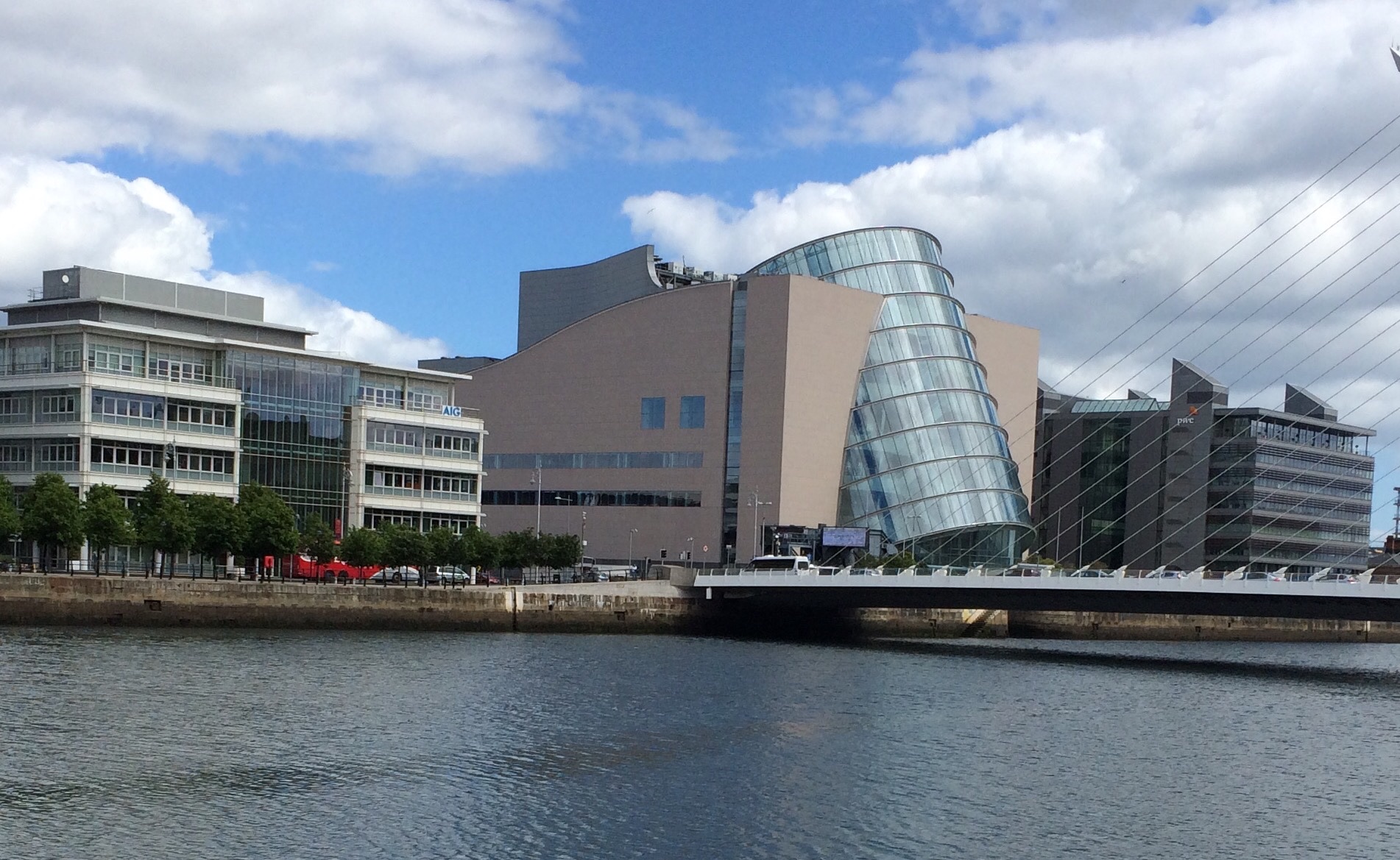
imageOn Sunday, we hiked east until I got us lost, which never really takes all that long. Ireland, like many other countries, overbuilt in the 2000s, but they have some pretty good stuff to show for it. These apartments, in an area similar to San Francisco’s China Basin, have generous balconies and lots of glass, larger than our million dollar studios.


A neat glass cylinder imbedded in stone.


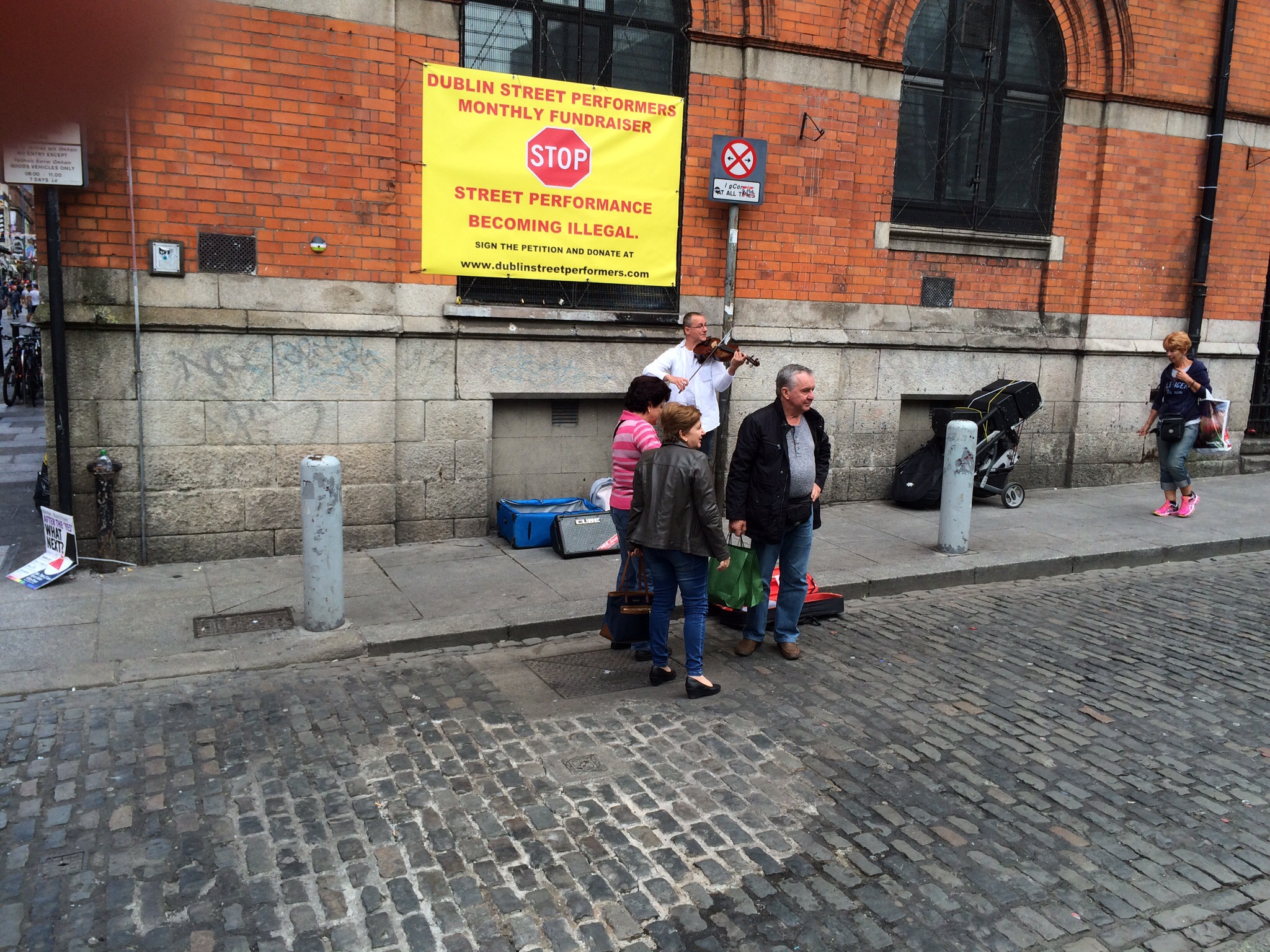
imageExactly why anyone might want to discourage Irish street musicians is a mystery.

image

Gallic football is more like basketball than soccer. They use their hands and have to bounce (dribble?) the ball once every two or three steps (who’s counting?). A player can score two points by getting it into the net, or one for going over the net, if you can believe the street kid at the bar explaining rules to this American pretending to know something about sport. He was Polish, too, so I now know what a Pole speaking English with an Irish accent sounds like, though that is unlikely to be useful for my remaining years.


Irish law about PUBlic drinking appears to be a tad more relaxed than in America.

Pub Crawl

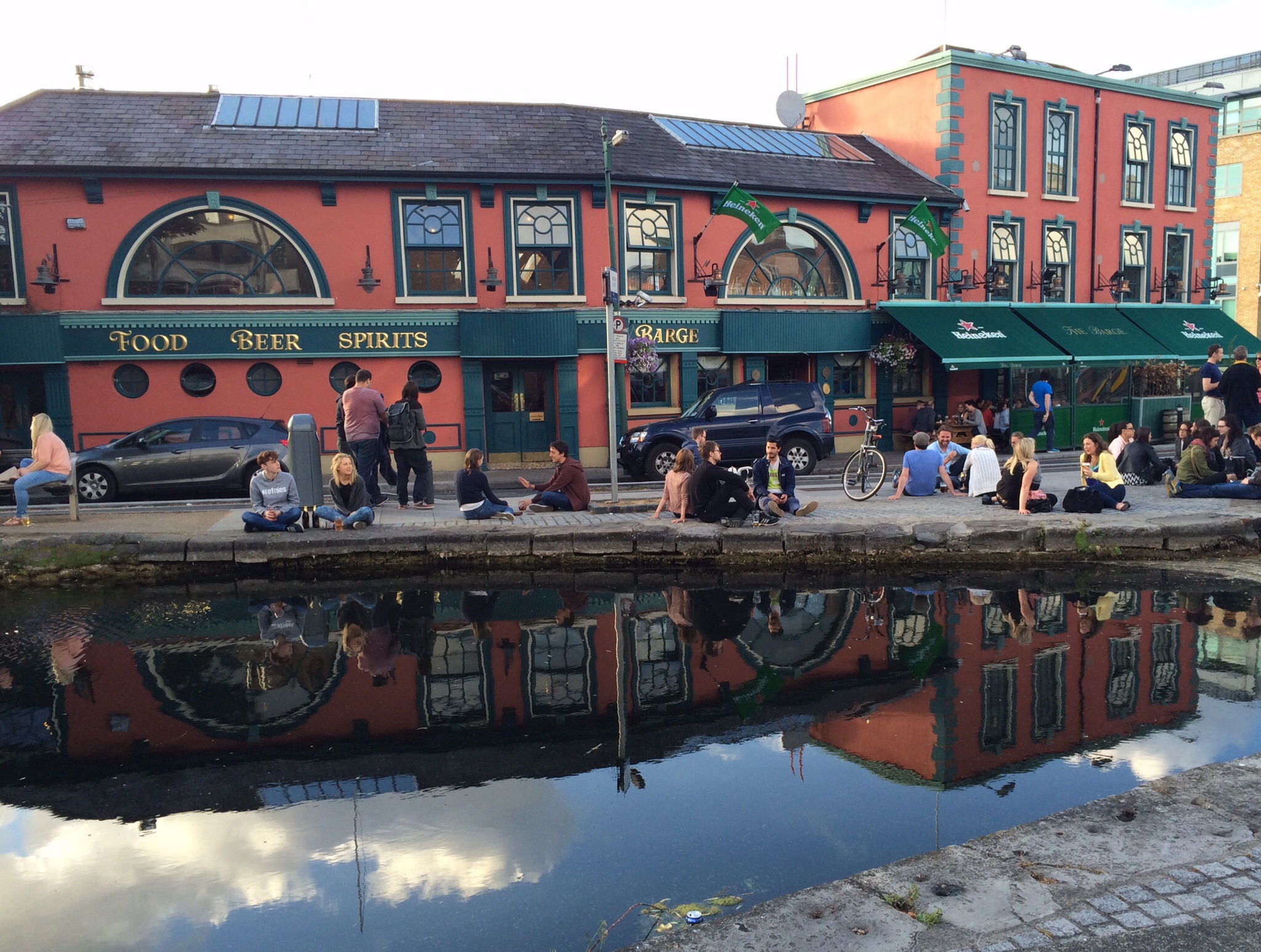
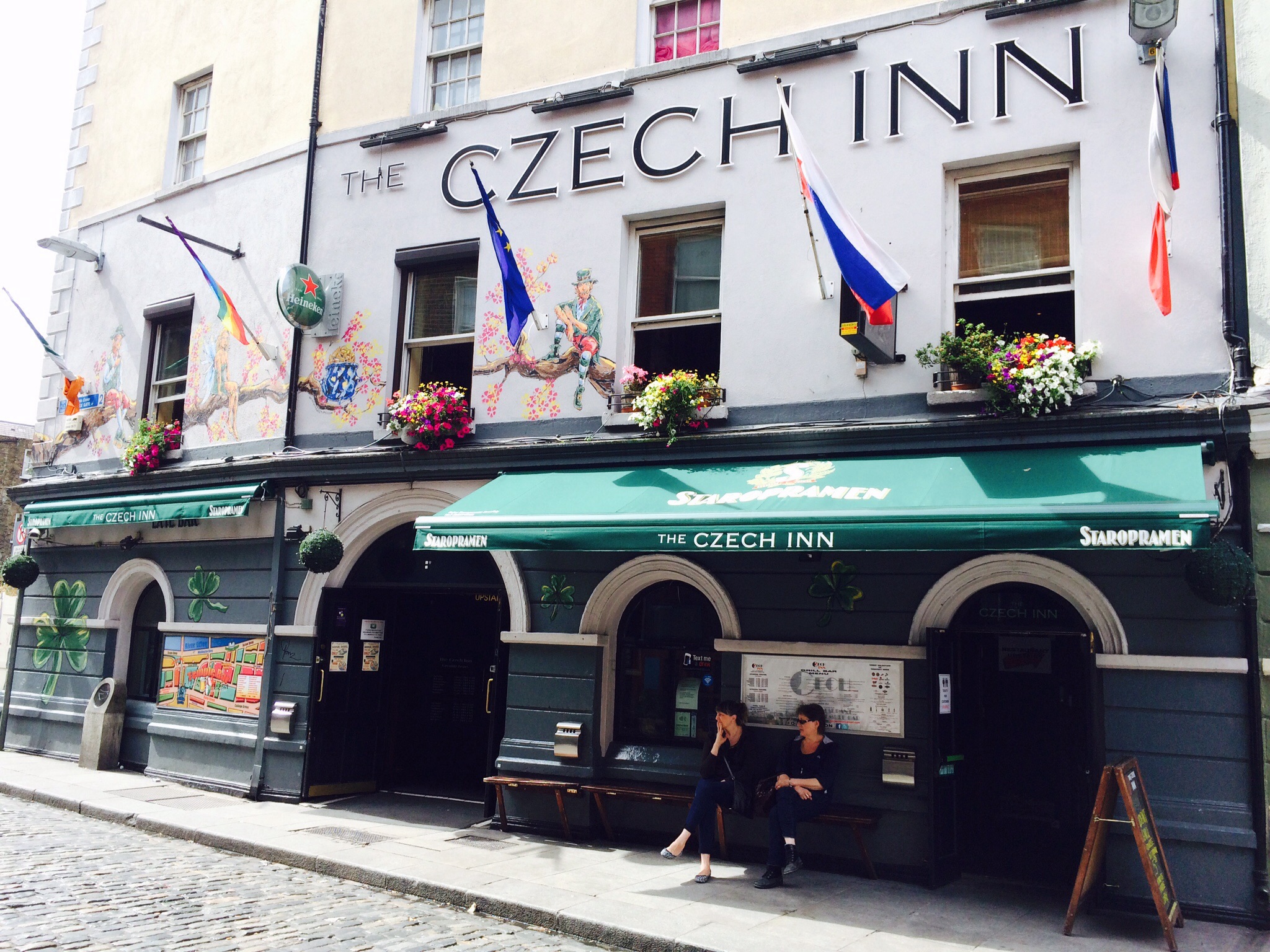
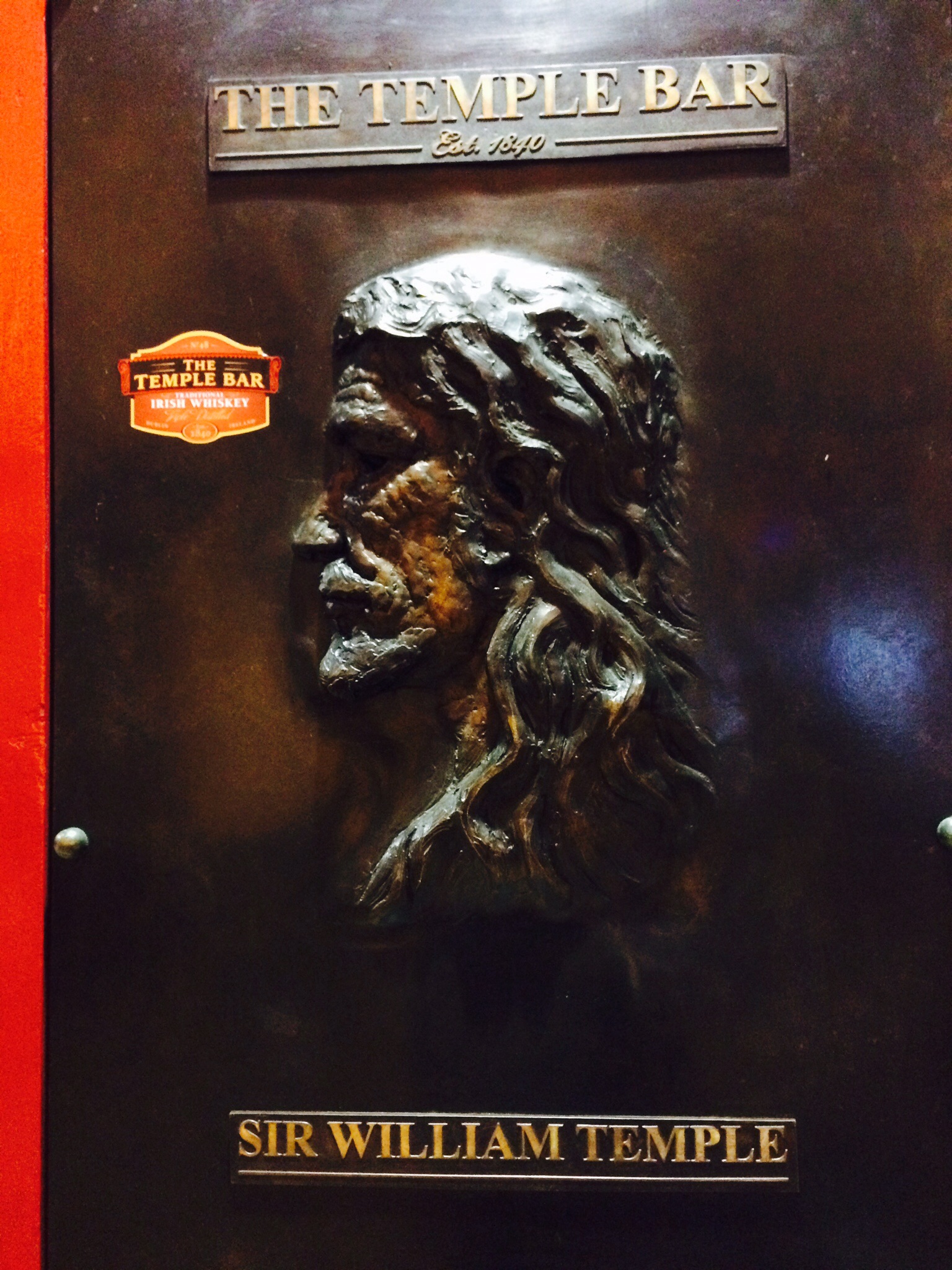
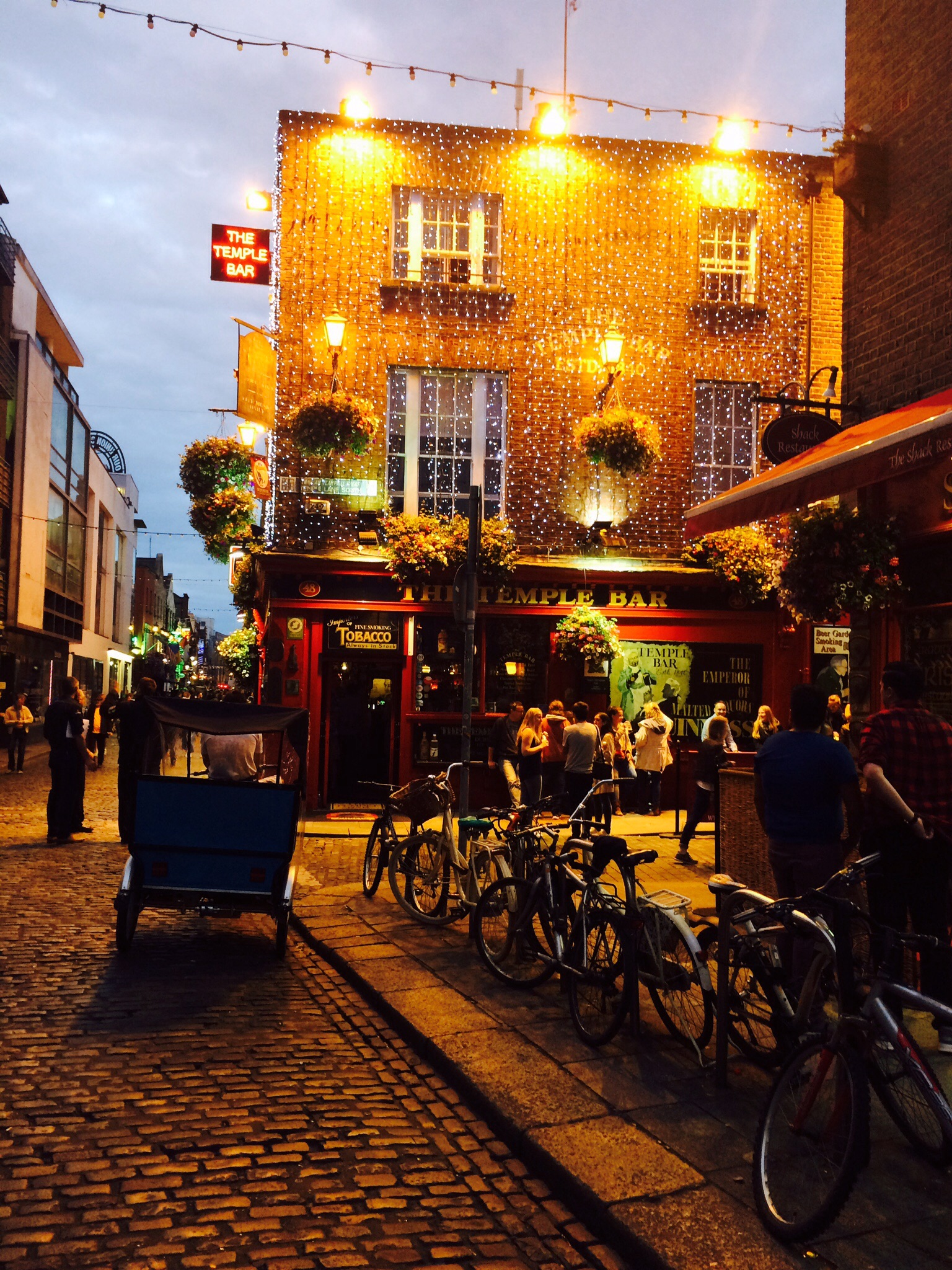
A pub crawl begins sober; it is not the objective at the end of the night. On Sunday, we started in the afternoon. This fine, renovated spot served us a bottle of Irish lager recommended by a chatty young gent named Darius, after the Persian king. We quit after just one and Rod was pleased to be rid of him. image The Irish are fond of puns. Check out this one. image image The afternoon pub was several blocks east of Trinity College, which in turn was a few more blocks from our destination, Temple Bar, which is neither, but a street named after Sir William Temple, an Irish philosopher, fittingly associated with public intoxication. image The pub was covered in tiny white lights, looks like snow, and is probably permanent. Yes, that’s a horse-drawn carriage, but no one seems to be surprised by its appearance, nor concerned about where the horse might leave droppings for inattentive pub crawlers. [No, it’s not. But there are horses here and there.] image  image

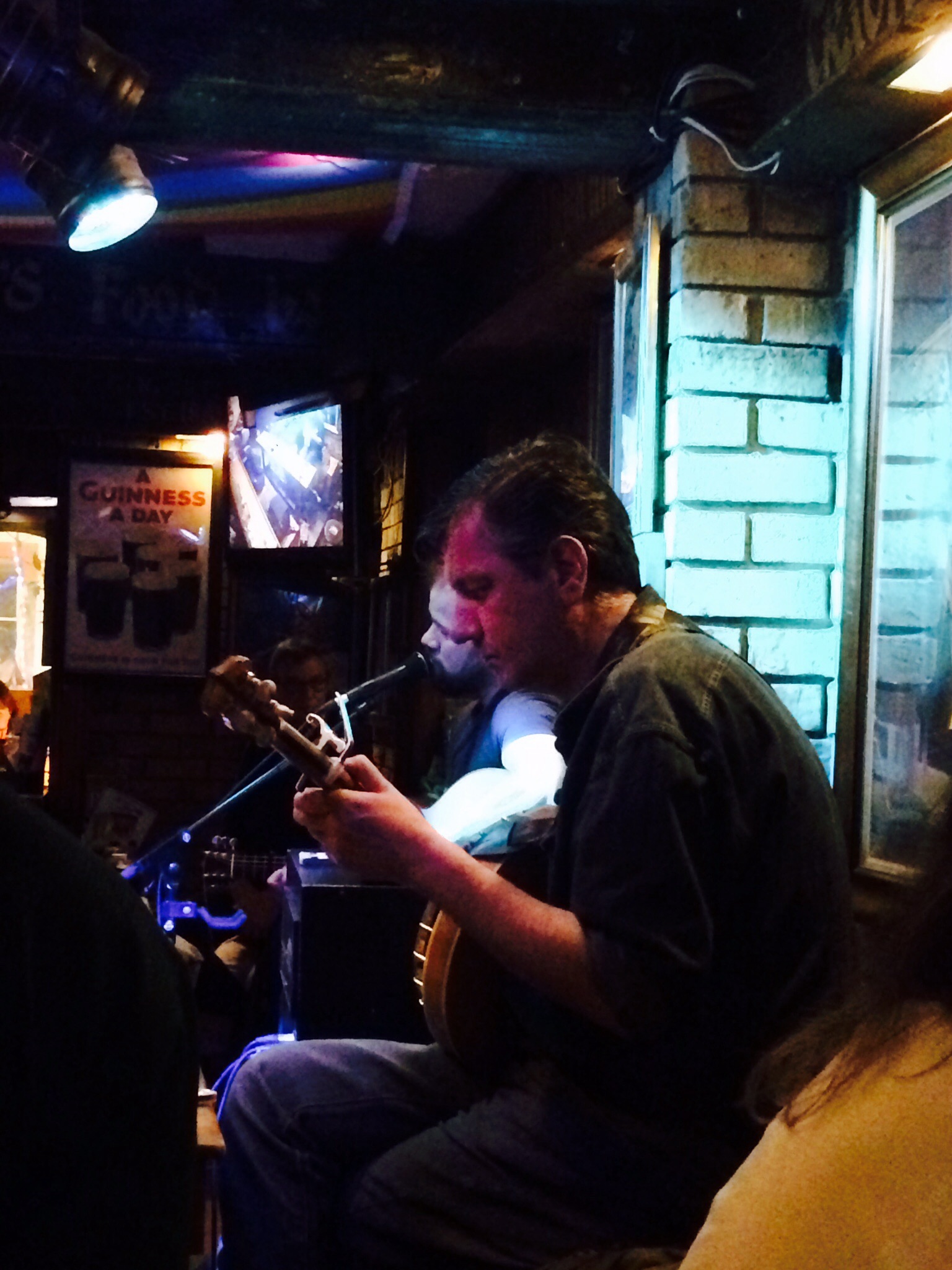
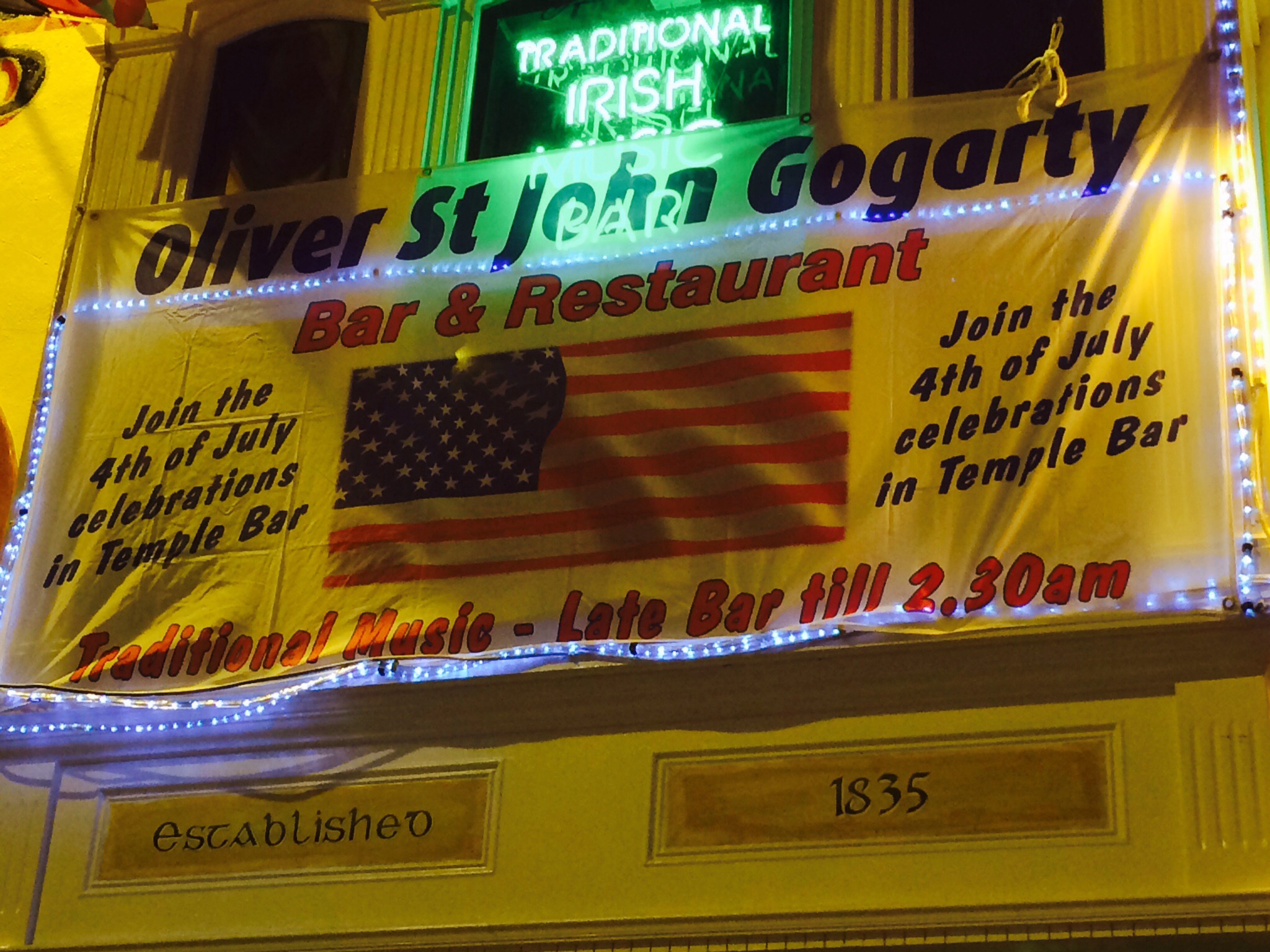
An early start to a pub crawl requires sustenance. If you thought that high cuisine at the bar would be fish and chips, the days of limited, cheap choice disappeared with with the introduction of euro-touting tourists. On the left, an Irish stew with a Guinness sauce; on the right, baked trout over veggies and mashed potatoes. image image Live music is common in at least half of the bars. The singers and bands we heard were excellent. It is a mixture of traditional Irish songs and vintage Rock. image The Irish celebrate the Fourth of July just as we celebrate St. Patrick’s Day, by drinking. Before anyone assumes that this means they want to be American, half the bars hang rainbow flags to celebrate the same sex marriage; the straight guys are not looking to cross over—darn! In fairness, I have not see an intoxicated Dubliner. They like to hang out together and talk rather than watch TV each night, but the current generation is neither neither rowdy nor belligerent. What is great about Ireland is that about half of the patrons stand around outdoors, probably a habit started when Ireland outlawed smoking in public places. Few smoke today.

Guinness

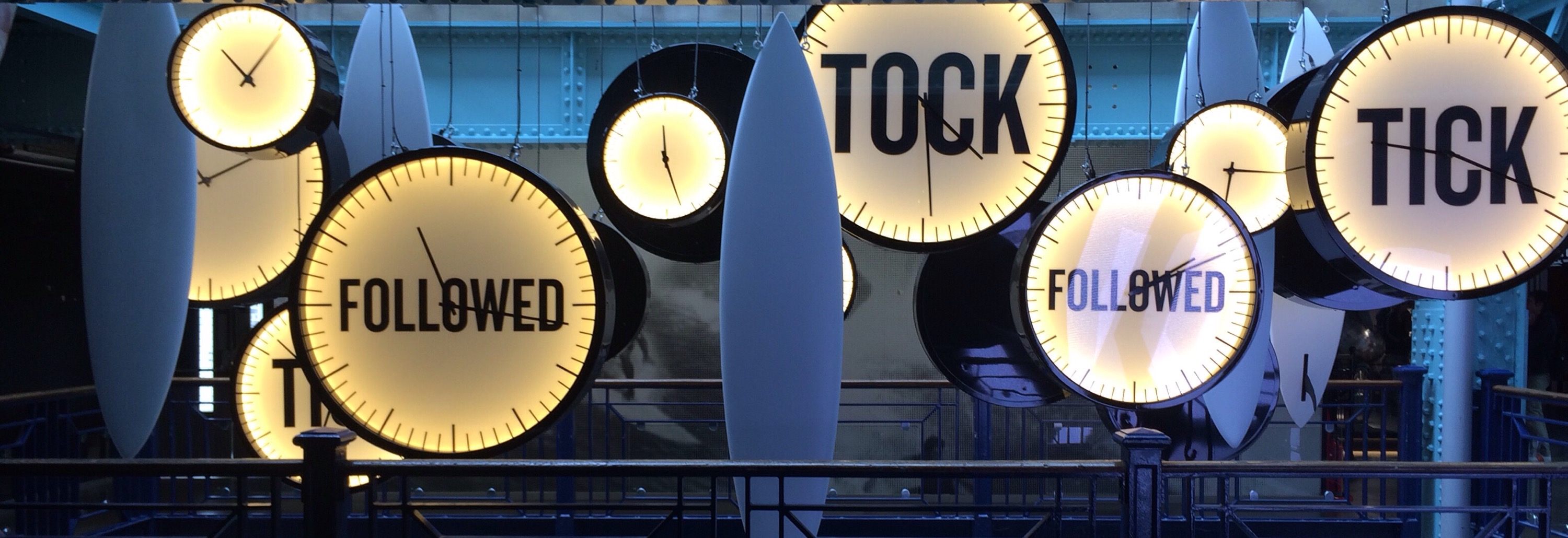
After our morning breakfast, Rod insisted that we walk to the Guinness brewery. No, I’m telling the truth, it was his idea. And a fine idea it was, truth be told. Turns out, they make beer in Ireland with clean water, rejecting the prolonged and painful experiment of using horse urine, unsuccessfully championed by Budweiser. Rejecting the tired passé tradition of tonguing the Blarney Stone, Rod demonstrates the more hip gesture of pulling the ostrich testicles for good luck. No need to look for a smile, if he keeps his head in the sand, you’re doing it right. [And so long as Rod does not read this blog, I can keep my wedding band.] How time flies. They drive on the wrong side and they put “tock” before “tick.” I was nearly ticked off.We met a couple from Boston and I bet you have no idea how I found them.   They were delightful and we shared a pint of good stuff from the top floor of the old Guinness brewery. The taller one on the right (I cannot think of any other way to distinguish them…oh yeah, he’s male, duh) worked for Elizabeth Warren, knocking on doors and telling people that if they didn’t vote for Warren, he’d bust a knee. Pugilism really works—she won. And he can still walk without a limp. (I bet he still has no idea how I figured out where they were from.) 

After this we hit a museum and visited the redundantly named Christ Church Cathedral, but who needs another picture of the pregnant virgin—now that’s a moron pulling an unbelievably big oxy.

Tonight we are eating at the Bull & Castle, so I should have some disgusting pictures of Rod further carving up a slaughtered animal. Yum.

Arrive in Dublin

If there is a cooler city in the world, I’ve not heard about it. Dubliners party.Somehow, these pretty people have changed from the bigoted, fighting Irish of my youth to the friendly, smiling, inclusive kids who grace the festive streets of Dublin. I suspect it is because they are exceptionally well-educated. It should also be noted that they have no student debt to show for it.  They are the first  generation of Irish in over 100 years who have known peace all their lives. Thank you George Mitchell. Please come home and do the same for us.

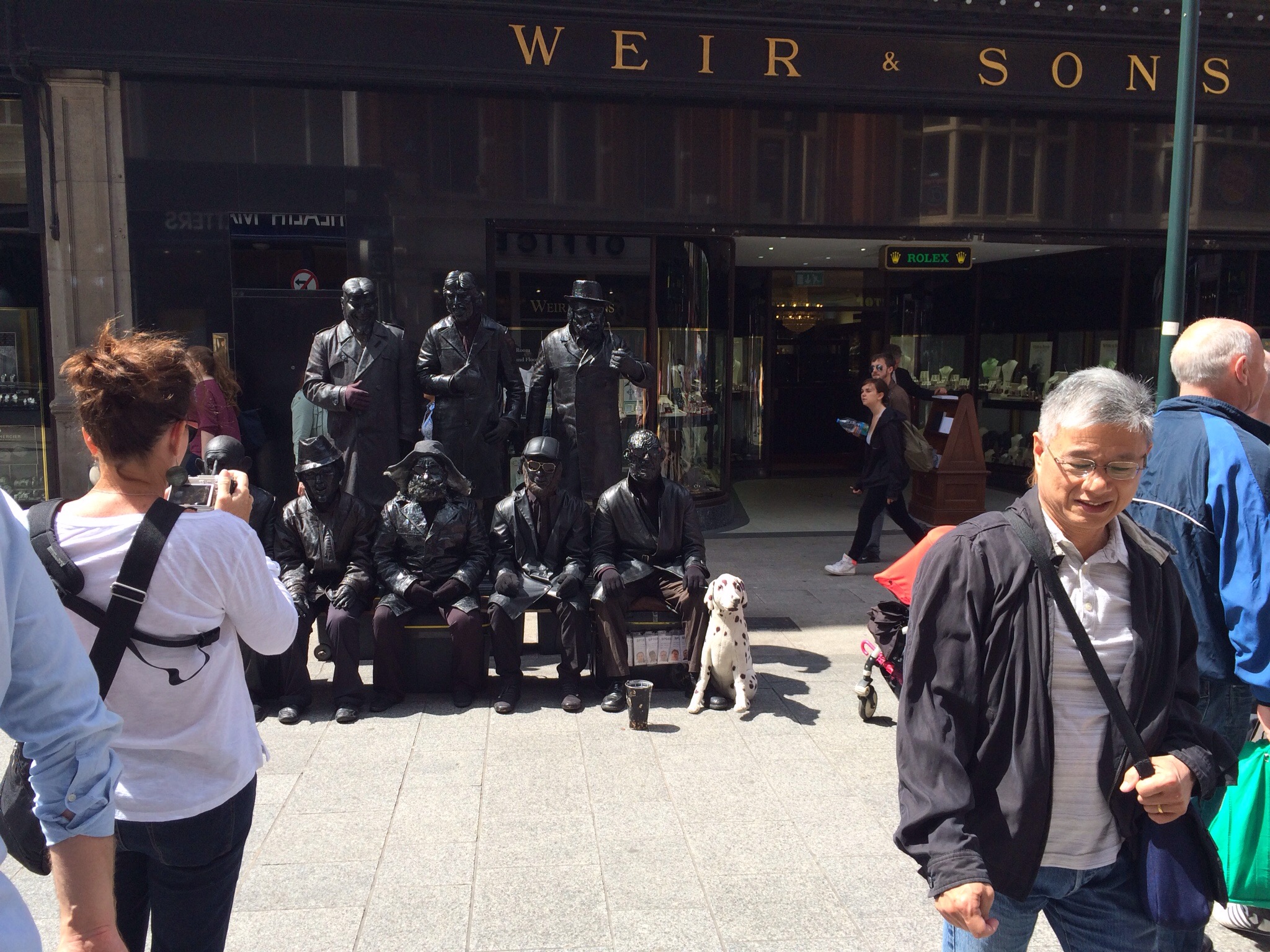
The Irish like flowers nearly as much as they like Guinness, a good joke, and red hair. I’m with them on the Guinness thing…and the red hair…oh, what the heck, I must be Irish.   The poor Irish cops have neither guns nor Tasers. Must make for a dull day, except for Guinness, redheads and  a good laugh. Sometimes all three at once, which is my personal preference.Despite what you may have heard, there are black people in Ireland.  This is not sculpture. They sit and stand motionless until some overly generous dude, like the one on the right, drops a euro or two into their bucket. Then they bow and wave, gently. “Rod, how do they keep the dog still?

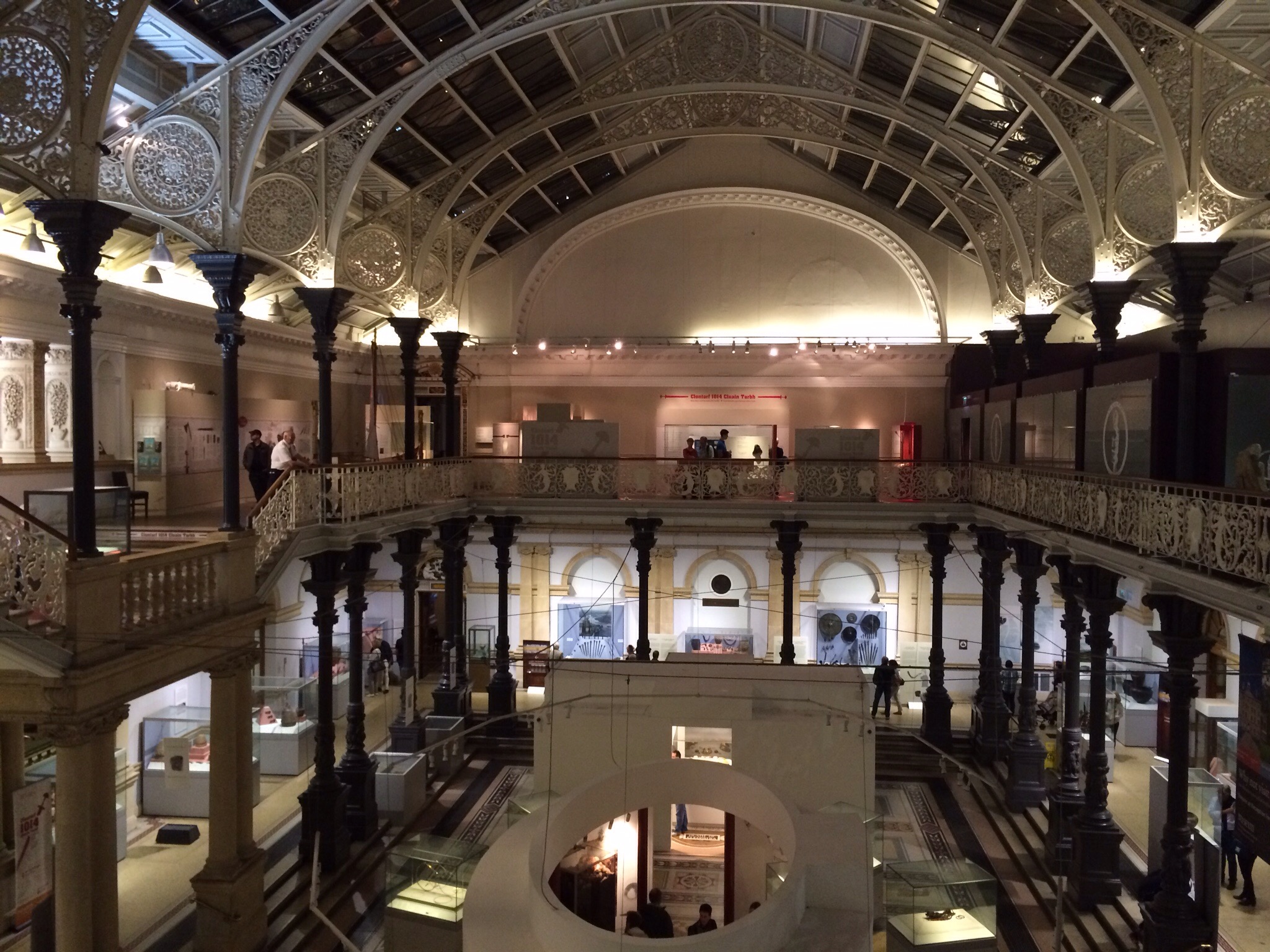
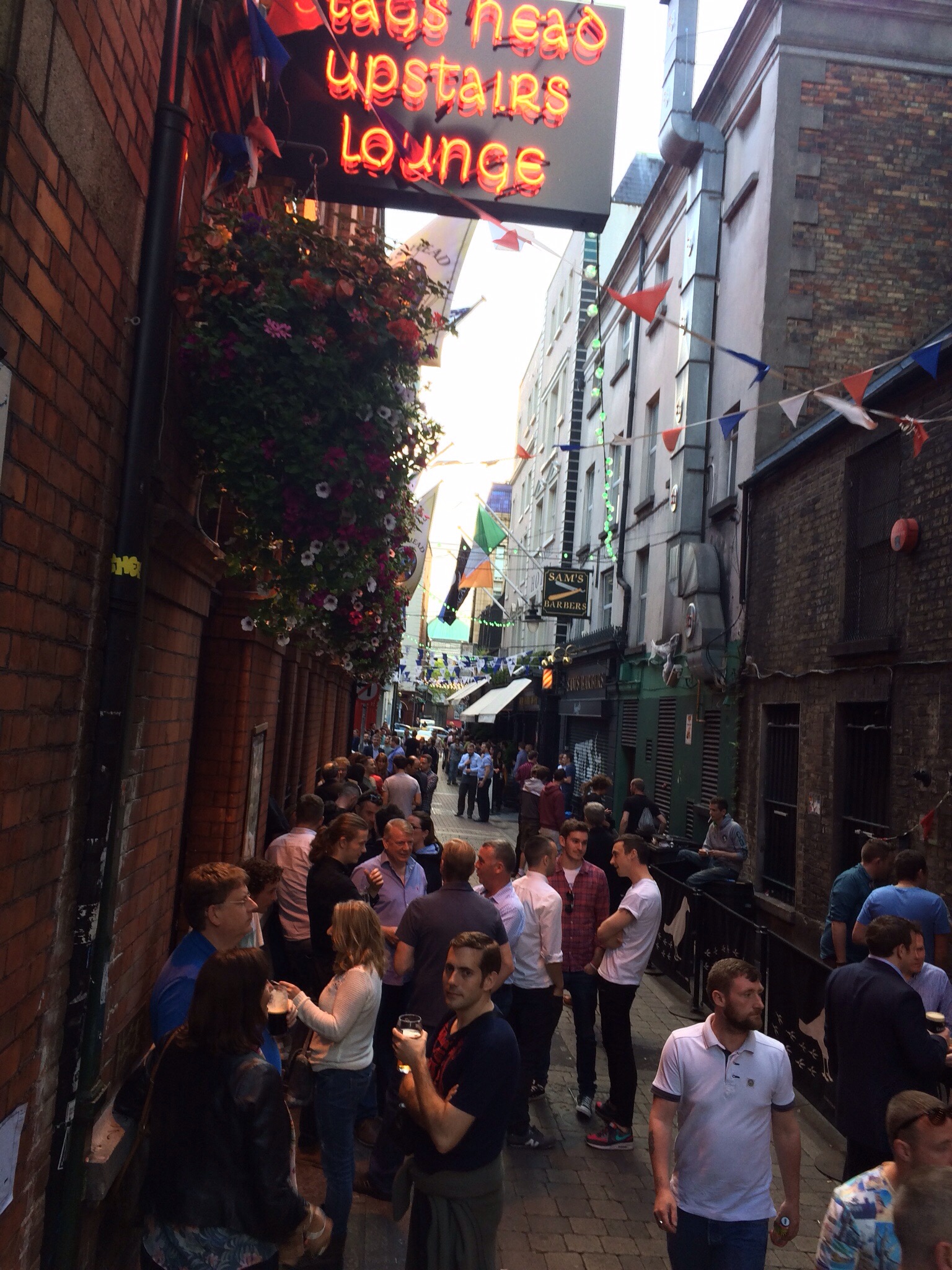
The building housing the National Museum of Ireland (spoiler alert: there are no paintings) is a work of its own. I learned all about the formation of peat, but I did not get bogged down by the subject. [Forgive the geology pun, but Tony might be reading this, though I cannot imagine why.] This pub-fested alley is always busy and on Friday it is packed.Hmmm, hadn’t noticed this cute guy looking at me. Damn!

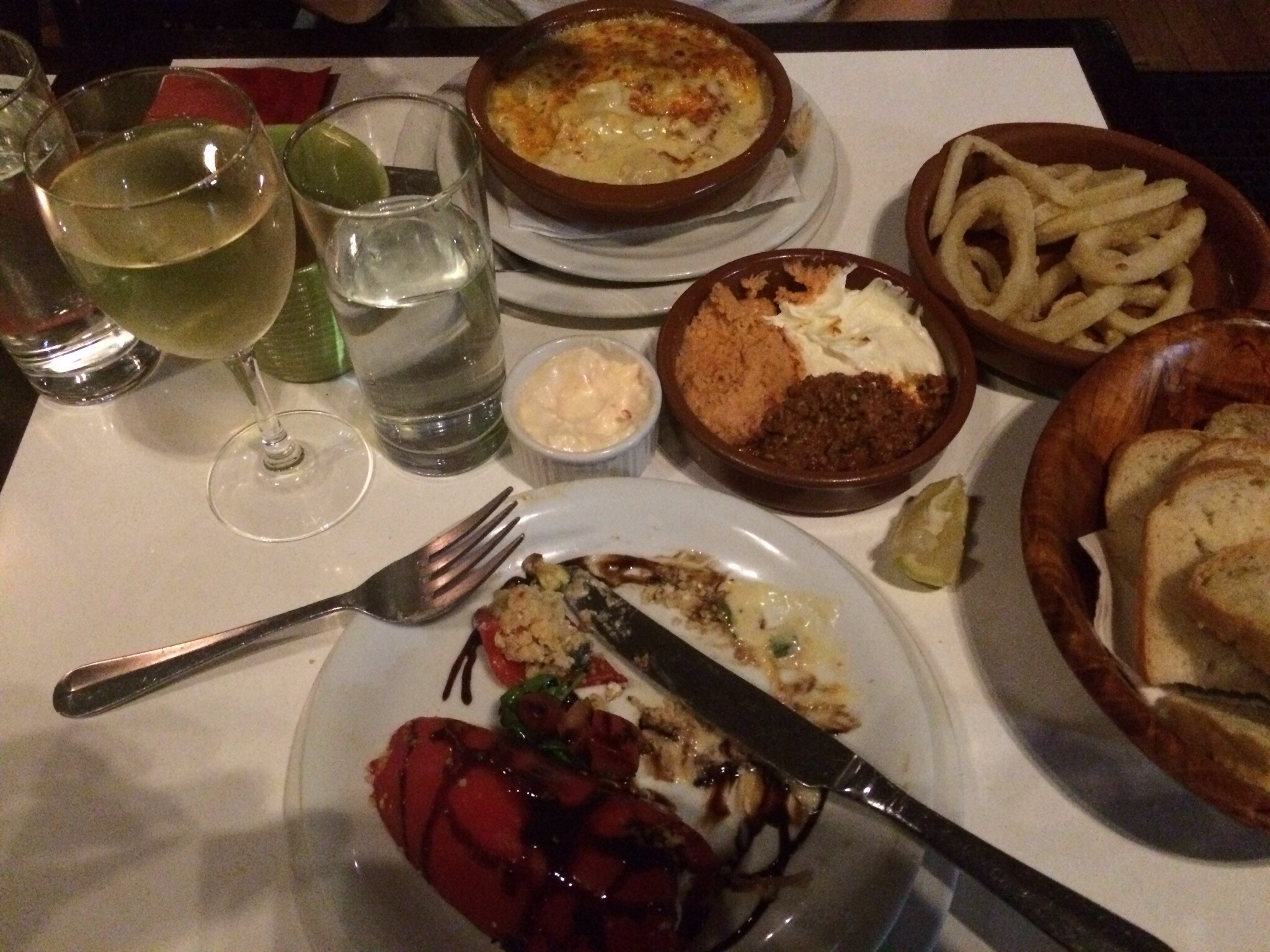
We finished the day eating tapas at a noisy, spirited place.Great food. 

Flight Day

Image


  It’s nice to have an afternoon flight, giving us time to scour the house eleven times for things forgotten before dashing off to the waiting limo. We have learned to travel with carry-on luggage, avoiding lost bags, and waits at the carrousel. Also, this avoids spending the last half of the trip carting around dirty laundry, which makes clothes, theoretically, heavier.

We were early to the airport, which took the pressure off being delayed at security when TSA’s computer did not list my full name, though my board pass did. We waited several minutes until a supervisor blesssed the display. How this had anything to do with me, I am unsure. It is always a mystery that something so simple is a total surprise to the agent. Thousands of people have scooted past his gaze and none has had this irregularity. Security circus.

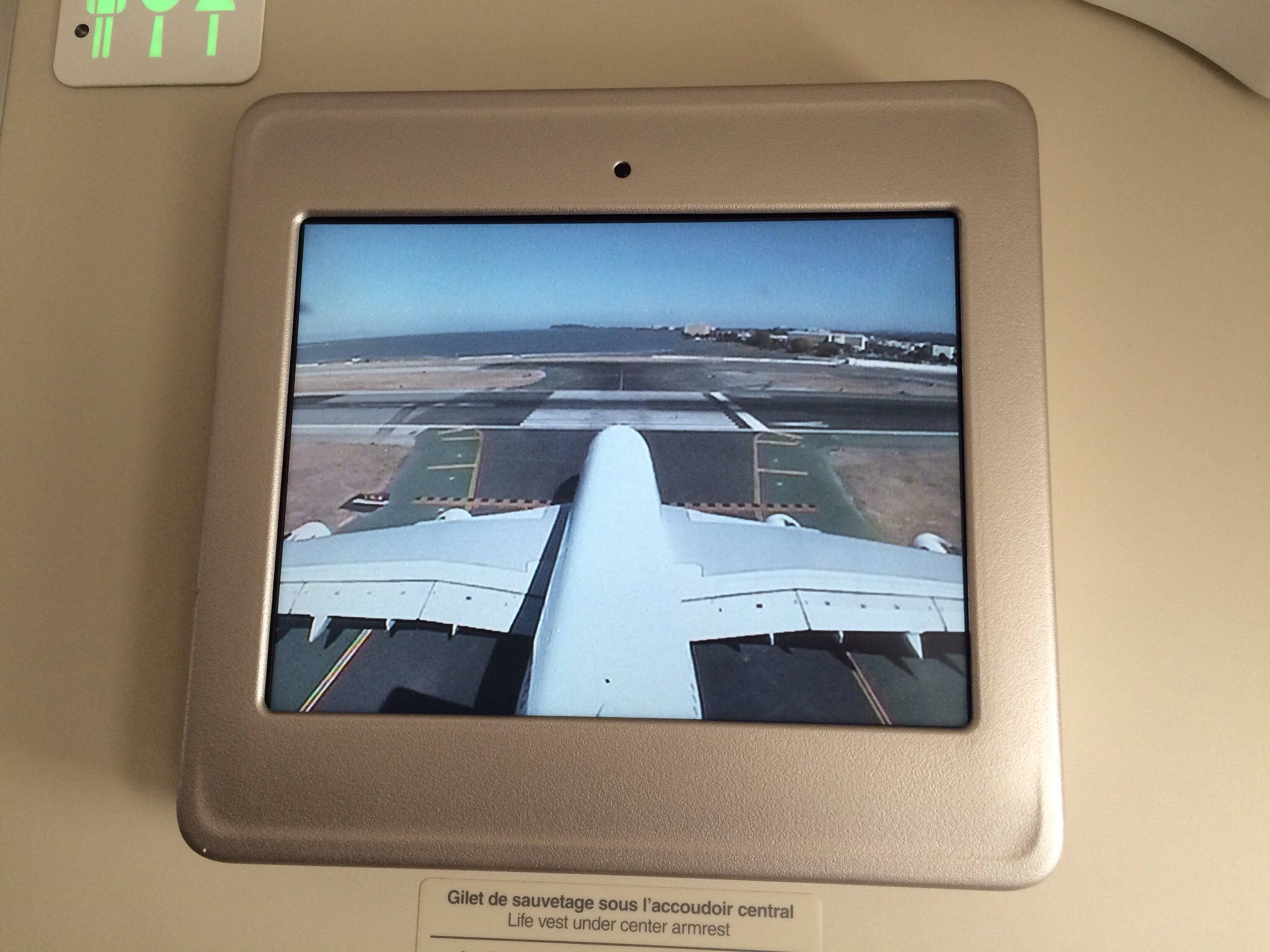
  The plane is huge. A cool feature is a camera mounted on the tail fin (vertical stabilizer) that lets the passengers view the take-off from a bird’s eye view. In the air, the ride is smooth. We were on the upper deck, but you have no sense of being above another deck as the passengers assigned seats here enter directly at this level. With as many as 700 passengers, there are three connecting walkways.

In addition to having a bed for a long flight, we used the lounge for breakfast and a lunch during our 2 hour delay in Paris.

Roussillon

Aside

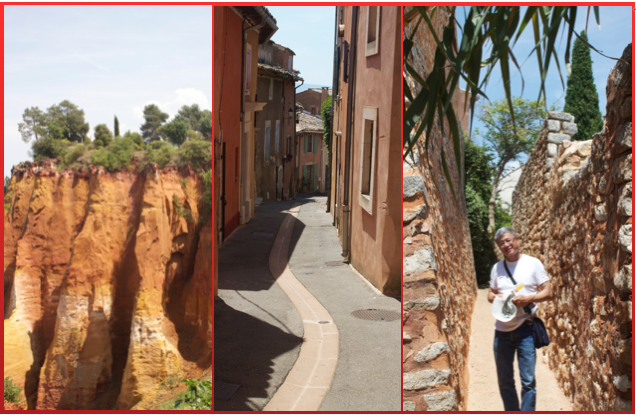
Roussillon 2000There’s a mountain town whose hillside is saturated with iron ore, giving it a variety of color from burnt yellow to reddish brown, called ochre by those who buy paint from art stores. It differs from the beautiful landscape of Sedona, Arizona in one important way—Roussillon is built with exquisite taste.
PagesScreenSnapz003

To be in Roussillon without a camera is like being hungry in France between 15:00 and 17:00, which we were. You can get wine and beer, but no food. So drinks it was. Not much else to say about the place. Lots of gawking tourists…not that we had stones to toss. A pleasant stop.

Roussillon 1933