Kerry


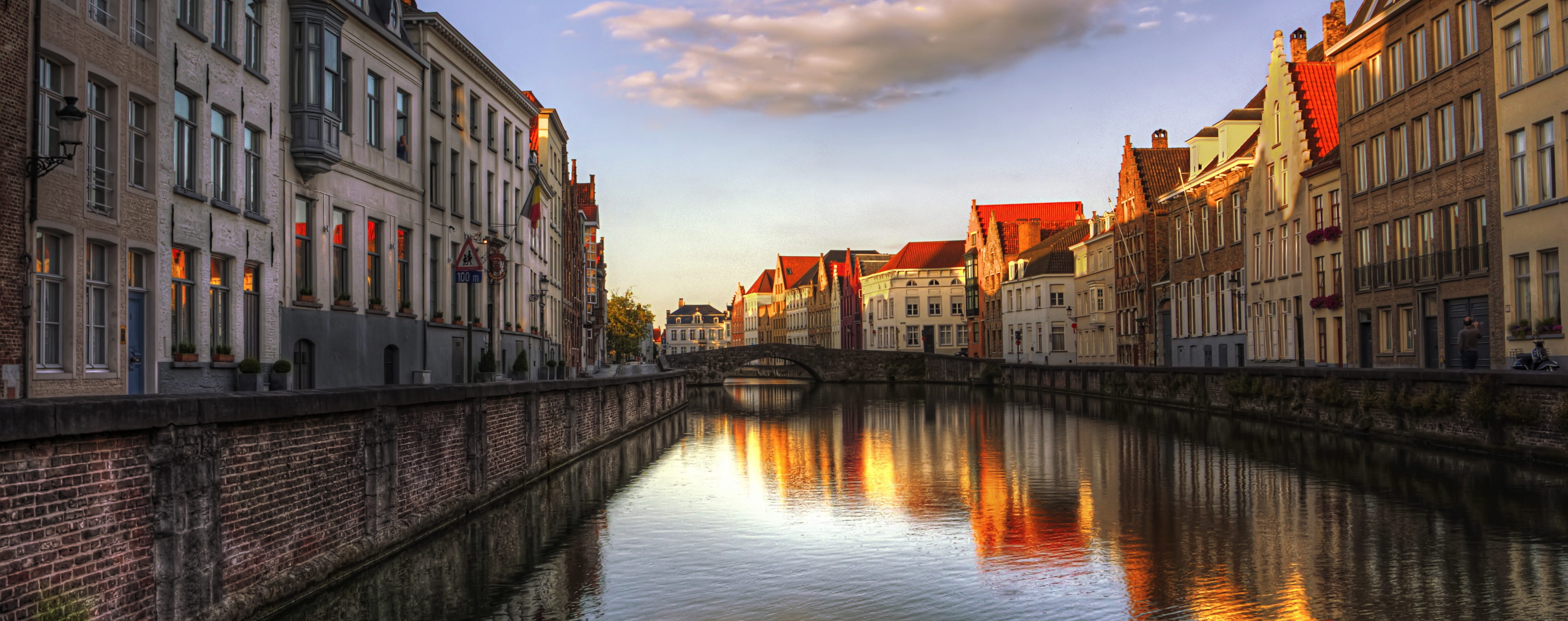
Bruges is an example of local city planning done with shockingly effective results. One does not require Mr. Peabody’s way-back machine to know that buildings from the 13th century would not fair well without at least half the face-lifts tucked behind Joan Rivers’s ears. But she smiles at us with grace and glow (Bruges, not Joan), the result of cooperation and planning.
The street (none is asphalt) stones are too uniform to be from Roman blueprints, and the absence of utility poles and wires (Bruges is electrified) should alert the least casual observer that power, water, sewage, and probably many lazy serfs are buried beneath, not just in the touristy center, but clear out to the ring of highways that bound the medieval from the just plain evil. As block by block fall to the renovator’s massage, the core services are in place. In my metaphor’s parlance, it is a happy ending.

The mastery of the original builders is undeniable, and it helped to build in stone rather than wood—or in the case of teepees, hides; or for yurts, soluble cow dung—doubly so when the foundation is submerged to give water-tight walls to canals filled by the North Sea.

Whatever the pleasure of dukes and vassals, modern day Bruges is put to better use by shopping, eating, and enjoying an afternoon beer while the bulk of humanity toils away in sweatshops, office cubicles, and Starbucks counters for the day when each might do the same. (Recommendation: the mussels in white wine and garlic are to die for.)

My pictures of Bruges, like my metaphors, suck, but I have the good fortune to have a friend and nephew (you’d know this if you had sat through my whole video) who is terrific with a shutter and subject:

Desert Trees

Some ten or twelve are of Bruges, but the location among others is out of my control.
Brown Milk Cows

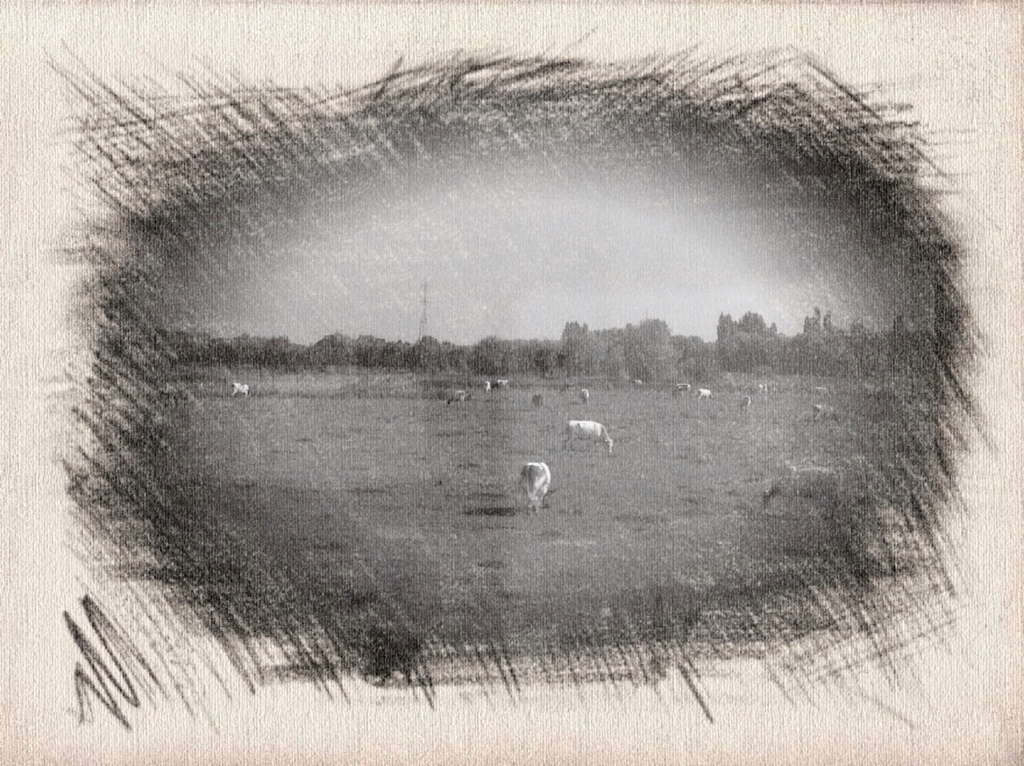
When flying into Brussels, one gets a view of myriad small farms organized in a patchwork buttoned down by almost regularly spaced villages and hamlets. The impression of pastoral bliss is confirmed on any train that leaves the city. No amber tsunamis of grain wash over the meadows and pastures. Instead, cows nibble the grasses haphazardly, pretending not to notice the speeding commuters who stir the bovine farts like a brisk swizzle though coffee, which leads me to my observation with an unexpectedly repulsive simile.

The morning coffee at our hotel’s breakfast buffet is not white or even cream colored (though I now question what that can mean), but instead it is a rich tan I’d proudly wear to boast a vacation south of the Pyrenees. It led me to wonder whether this less processed looking product is the result of the feeding, the post udder handling, or something unspeakably dark in between.

There’s a fear in the EU that free trade with US farmers is going paradoxically to reduce the cost of calories despite lengthening their distance traveled the way that Honda moved cars into Ohio cheaper than Michigan could transport them on local highways. But metal cars have more resistance to time and jostling than do tomatoes, corn and more corn. This could be a race to the bottom in ways that are doubly “figurative.”

† How often does one get the chance to quote a word for its literal use?

Bruges

IMG_0434

Bruges is a reminder of what we have lost to war and other forms of carelessness. It is claimed, locally at least, that this city retains more of its medieval past than any other, discounting indoor plumbing, motor cars, widespread use of electricity, a literate public, and a common currency.

Bruges was spared the ravages of time by the one virtue most feared by celebrities and politicians of today—insignificance. Ironically, its unique status as having been untouched by the torch or bombs has left it to a more hideous fate—tourism.

Chance Meeting

20130716-040837.jpg

Brussels has an area of narrow meandering streets with restaurants set cheek by swelling jowl. The summer warmth brings out a raft of tables, two to four deep, in a pedestrian cacophony of chatter, clank, clink, and chew. All venues are charming, but most are gastronomically mediocre. Fortunately, Rod is a hungry ferret at dusk, and he rooted out what proved to be one of the best of the lot 20 minutes after we enjoyed a drink in the Grand Place, a stunningly beautiful and expansive plaza that serves as the city’s primary social hub.

20130716-043543.jpg

While enjoying a Belgian brew before dinner (the best beer in the world comes from this little nation), we noticed a foursome a table away speaking in English tongues from opposite sides of the pond—the Brits professorial, the Americans animated, both interesting. When we left the bar to forage, there was no reason to think we would see them again among the crush of tourists and partiers who jostle each other in the EU’s capital. So it was with some surprise that they chose to eat at an adjacent table only minutes after we sat for dinner. This we soon learned was only partially coincidence as the Brits were expat Brusselonians (or whatever one calls them, quote me at your peril) whose local knowledge had limited their choices to the few quality restaurants.

During dinner we six got into a loud and friendly conversation about food, politics, personal origins, and Bruce Springsteen, the last because they four had tickets to a concert with The Boss, Blondie, Santana and others, to be held outside Brussels on the following night:
Wrecking Ball Tour
Europeans, we learned, think that Americans are well-travelled; Americans, that Belgium is as dull as Hartford. The Atlantic, by comparison with these misunderstandings, is a narrow gulf.

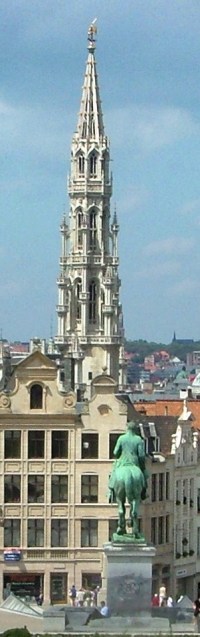
From the unwelcoming end of the horse…

From the unwelcome size of the horse...

After a comfortable flight to Brussels, we took the train from the airport to Centraal Station one block from our hotel. The train was clean, the ride smooth and quiet. The stations are plain and dingy. Flat surfaces between stations, like retaining walls and equipment covers, are soaked in graffiti, leisurely drawn. Perhaps this is an effective outlet, as the city is less marred, but youthful exuberance is not stifled much.

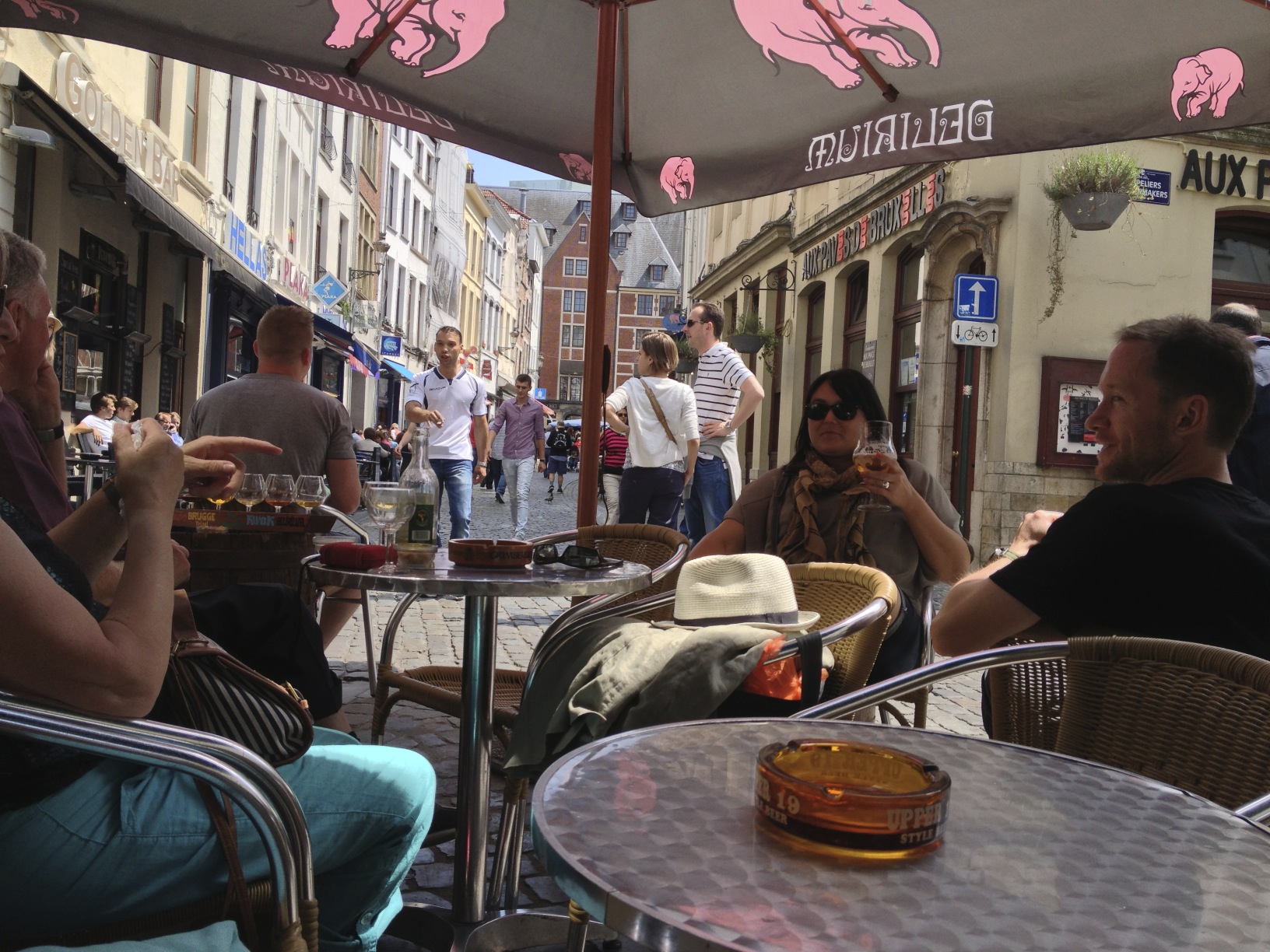
After a 90 minute walking tour, we settled into a sidewalk cafe to sample some great Belgian beers (6). We agreed that few of the tourists are American. Word has not reached the states that Brussels is a party town. As is common in Europe, teens with adults drink without public scorn.

Brussels 10

All the streets in this area are paved with stones, not asphalt or cement. The clatter of luggage rollers alerts one of approaching tourists. Ornate buildings are well maintained, given that most have seen more centuries than I have witnessed intelligent presidents. Respect for age is a virtue I am learning to admire, if not embrace.

Ok, the beer has gone to my head. Time for…how do you say “siesta” in French?