Ludlow

July 11, Saturday

Few people that we met in the British Isles know anything of Ludlow, so it seems unlikely that my reader(s) will know of it. It has a population of 11,000—not an industrial giant. There is a Ludlow college, which boasts five tennis courts and lots more. The college is over 800 years old. Take that, Harvard.IMG_2466

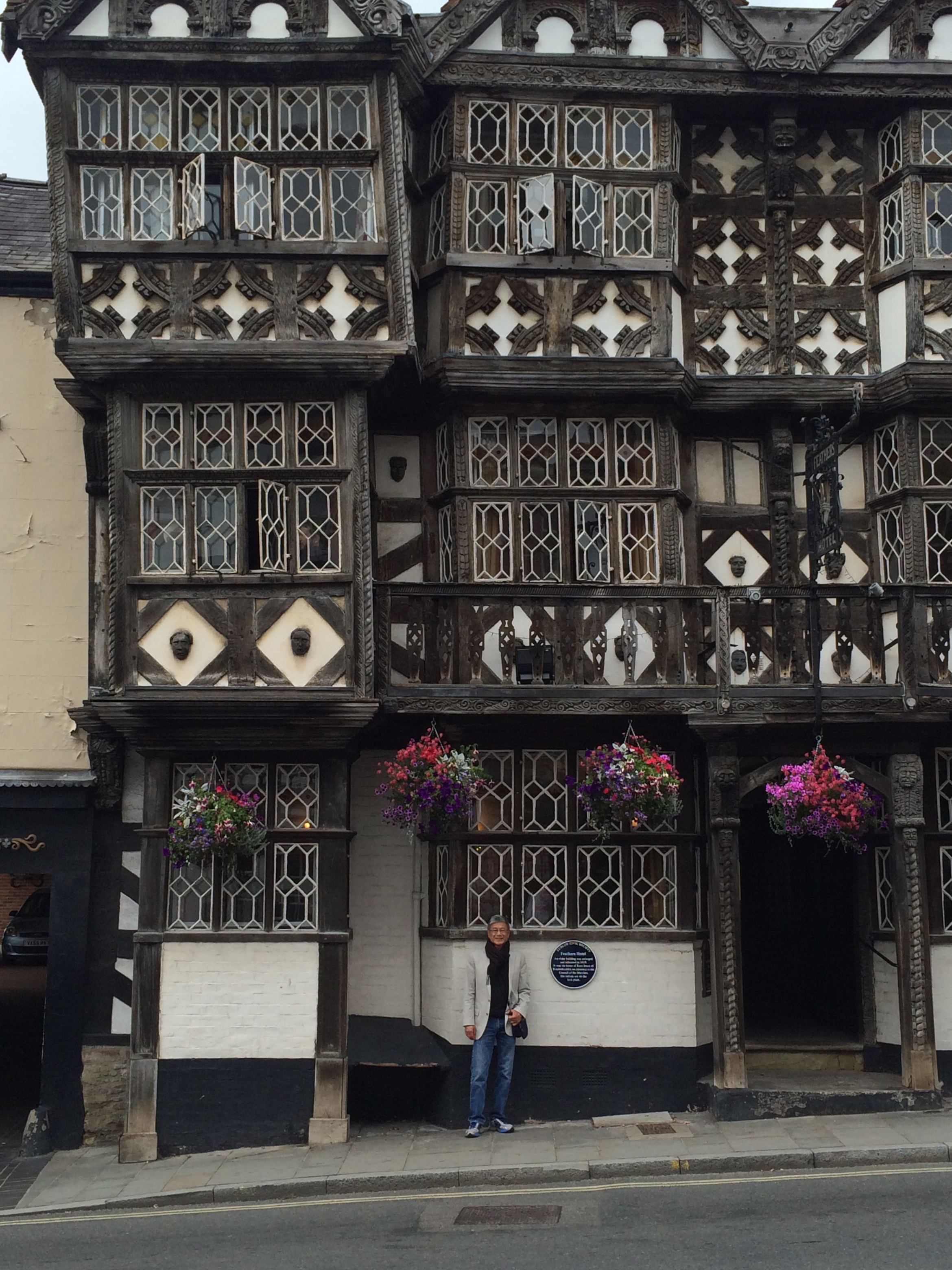
We had booked a room months ago in a 400-year-old hotel called “Feathers.” To our surprise, we had the largest, most beautifully appointed room of our entire trip, though all our accommodations were excellent by American standards.

IMG_2460My first guess on seeing this edifice, built before the invention of the plumb line, was that it gets its name from the force necessary to knock it over. However, if you can tolerate uneven floors and tiny elevators, this is a fun place to stay. The man on the front desk, who appears to work 24 hours a day, was willing to shoe-horn our car into the parking lot—space for 12, fits 36.

We had hit a quiet time for this visit. Apparently, graduation ceremonies start on the following week.

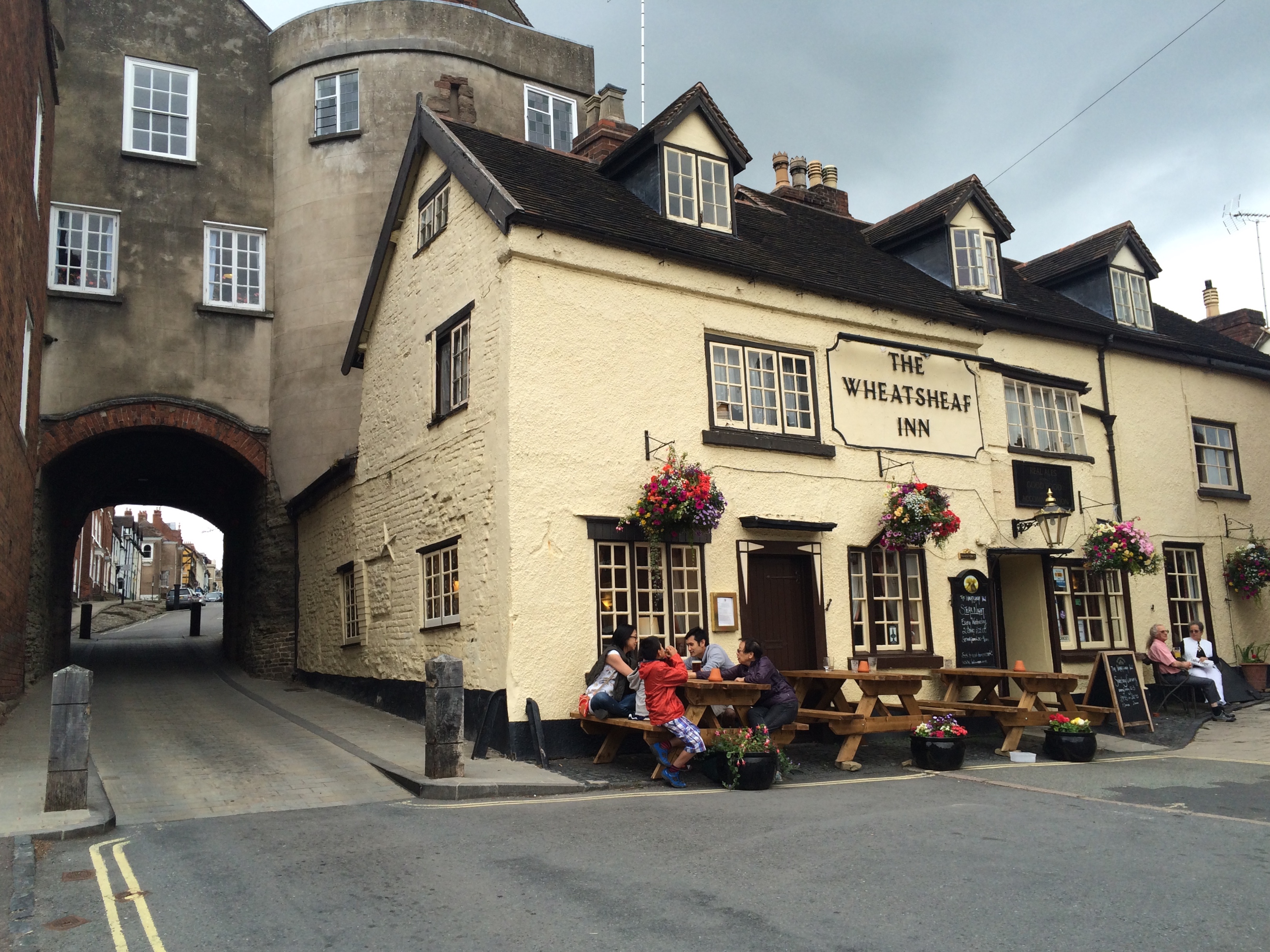
IMG_2465Ludlow can suck megapixels from your camera in short order. It is difficult to restrict oneself, but I will attempt to limit these photos to six favorites starting with this inn next to some city portal. IMG_2490

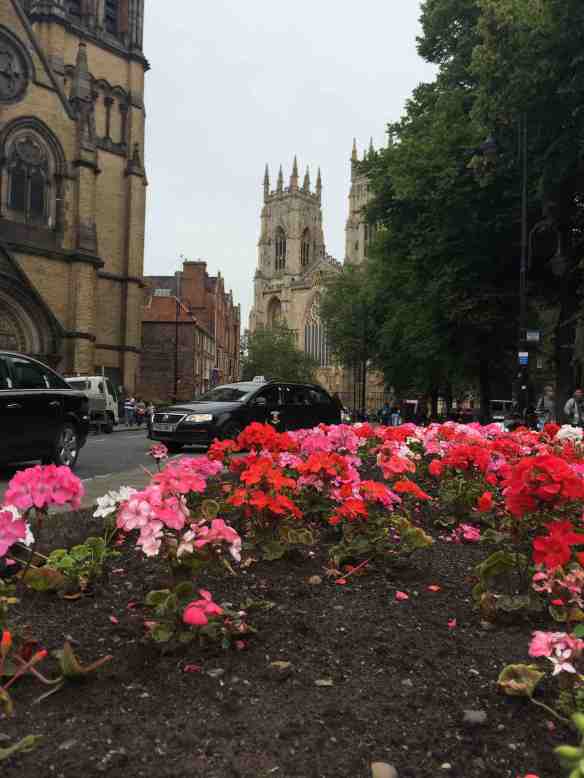
Like so many towns in the British Isles, people really like flowers:IMG_2454

Ludlow is situated on a hill by a river so that many streets from the center of town slope down to the river.IMG_2469

At the river, some first rate homes and hotels invite people to have a quiet stay.IMG_2497

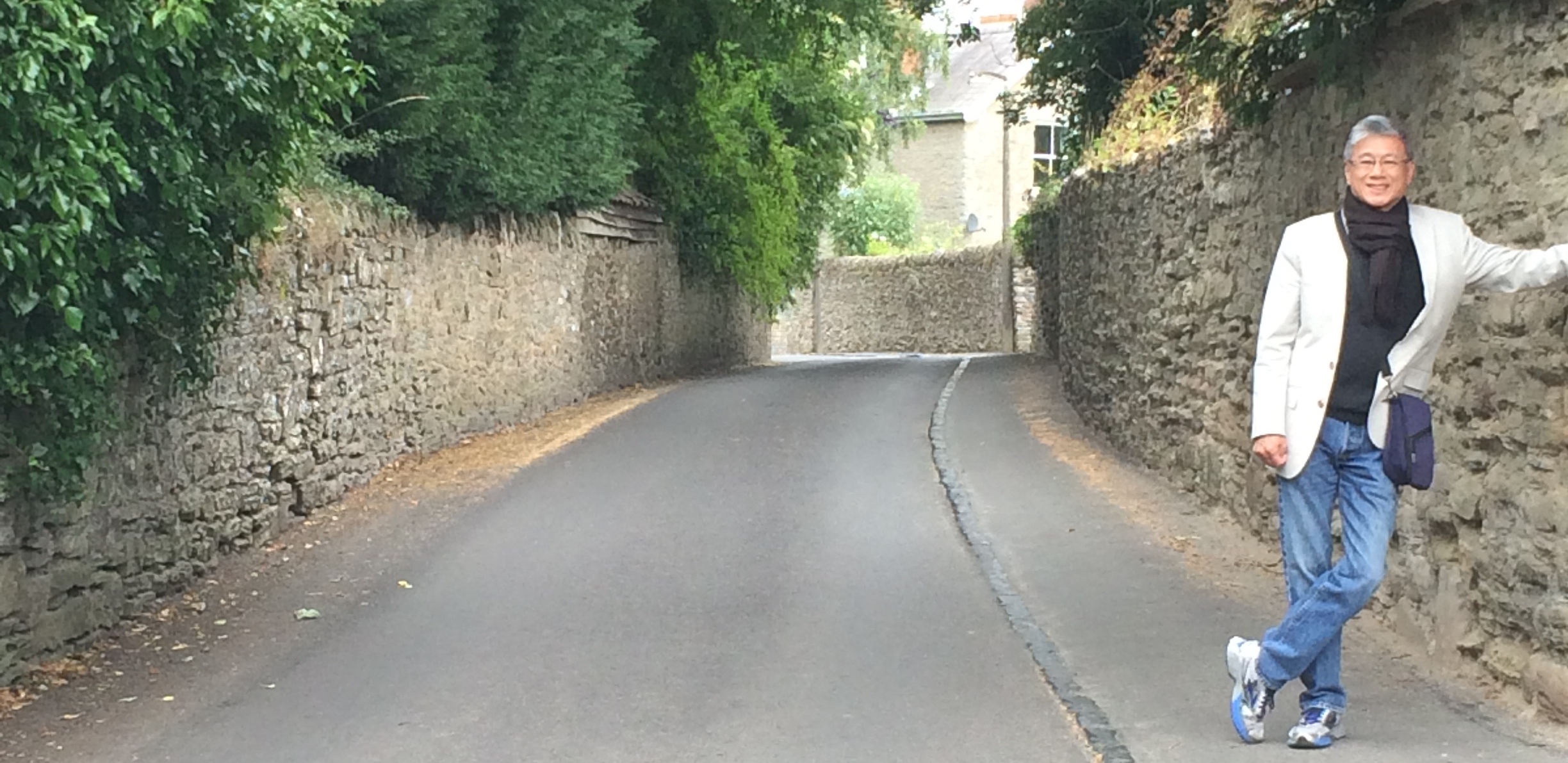
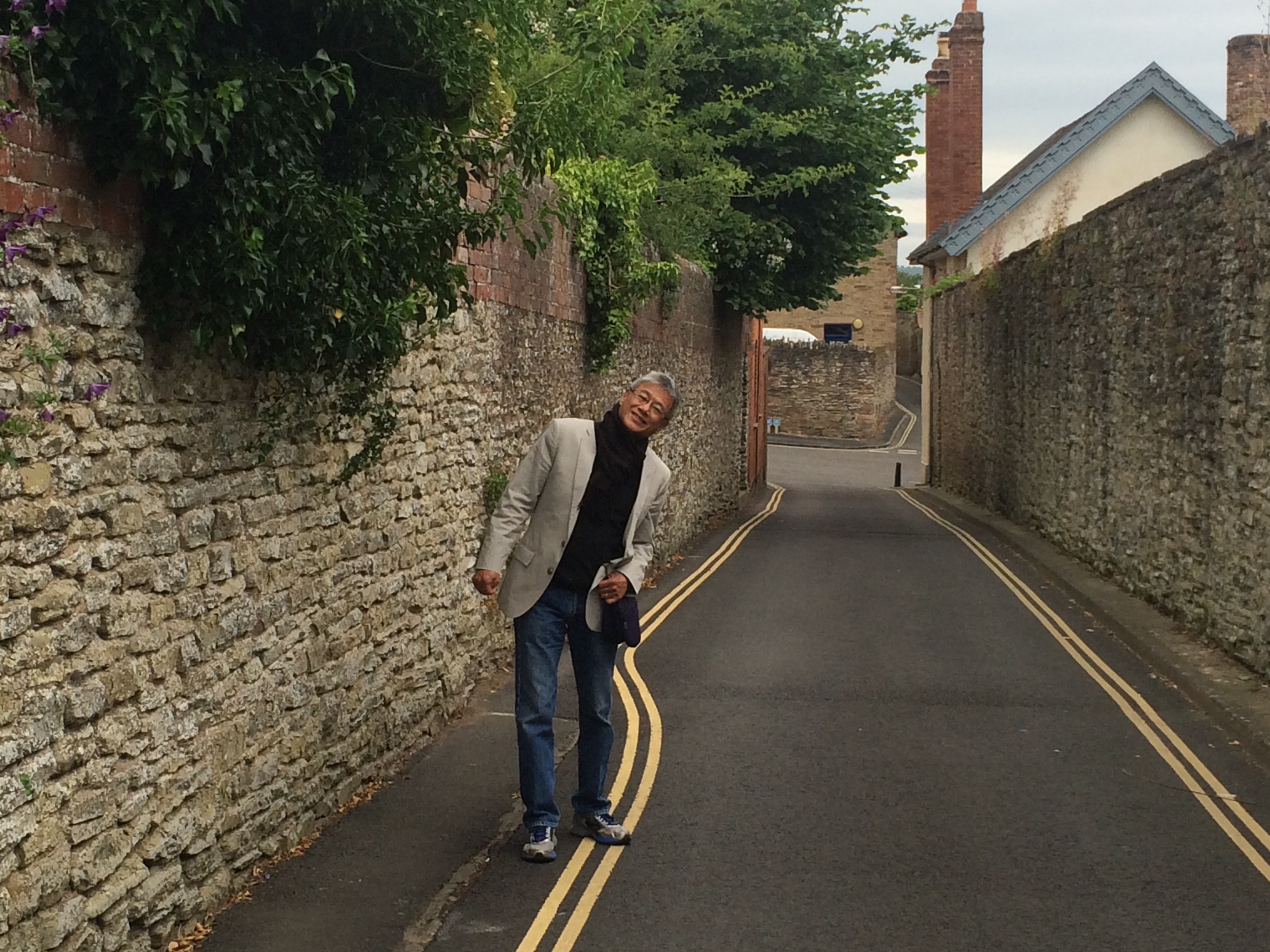
Rod was being playful, enjoying the magnificent homes behind these walled streets. One way? I doubt it.IMG_2478

There must be some rich florists living here.

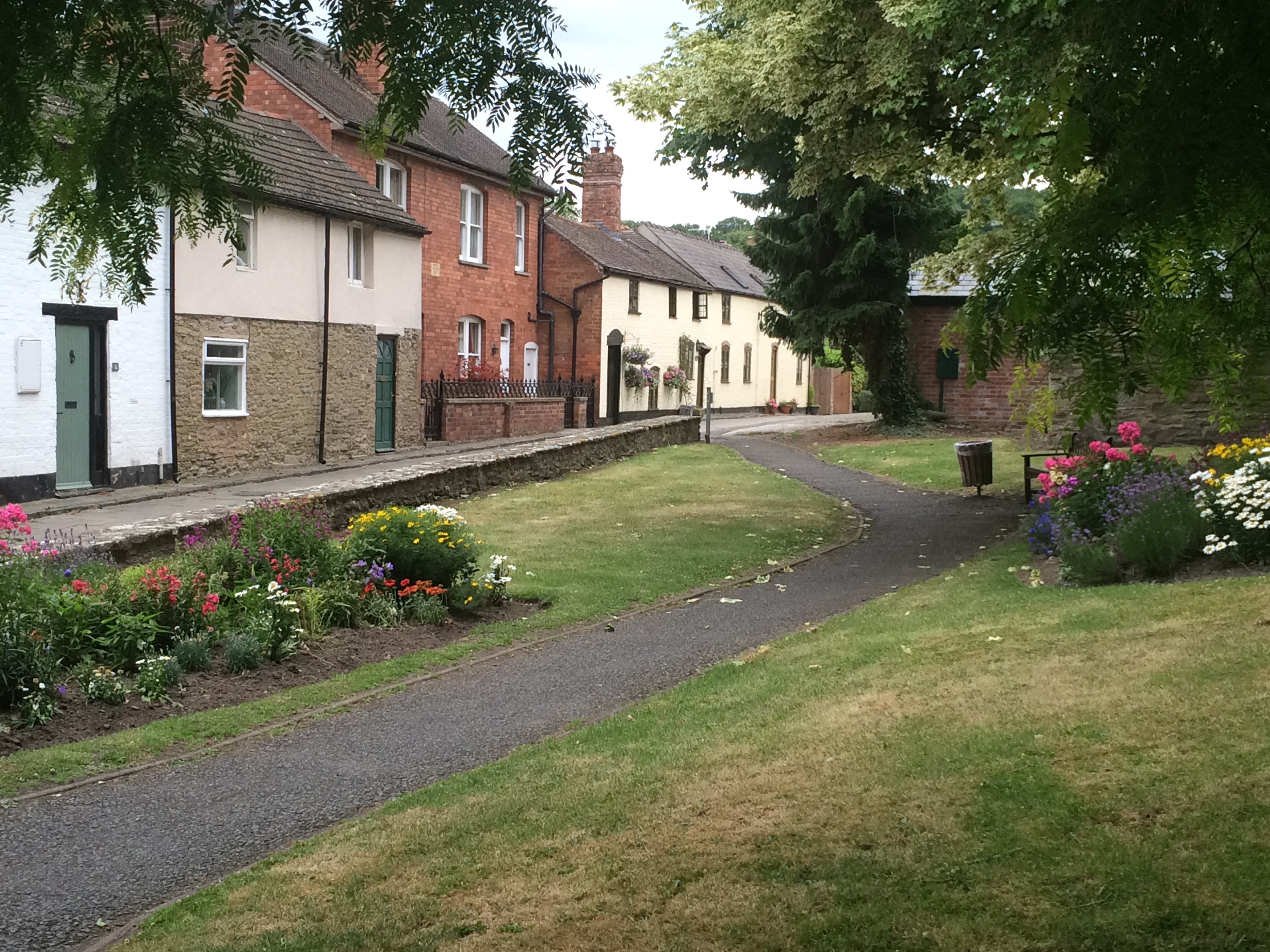
And see, I could not stop at six. I bet there was a time when people who lived on this street worked for people who lived behind stone walls, but the day when a workman could buy something across from this park have long ago ceased.

IMG_2500

Finally, this video gives the viewer a glimpse at the attractive town center.

Ludlow is famous for food. There are many terrific restaurants and a food fair in August that attracts swarms.

Manchester

July 10, Saturday

To criticize a city I have visited goes against the grain, but for Manchester, I make this small exception. So uninspired by the lay of the place, I am compelled to use a photo lifted from on-line (note the watermarks) to illustrate a place where we stopped for about an hour without taking the camera from my pocket. This photo illustrates, in the most favorable way, how the city has mixed old, the oyster bar in the background, with the new, a shopping mall in the foreground. More than Glasgow, this shopping area is an outdoor mall (long pedestrian-only street of several blocks) lined with indoor malls and shops, mostly high-end. The masthead photo above shows the exceptional popularity of Sinclair’s Oyster Bar, so crowded that we did not attempt to squeeze in.

Manchester mall

In fairness, Manchester is a city on the move. My problem is that I could not determine from where to where, and this, as you will learn if you read on (your fault), applies to many of its residents.

Our well-placed hotel, about 50 meters from the train station and about twice that from Canal Street, the heart of gay Manchester, was in an area undergoing construction for blocks in all directions. On what should have been a warm, sunny Saturday afternoon, the noise and dust were irritating. Perhaps this colored our perceptions, but Manchester seems to lack a focus, a theme, a soul.

The old and new in this city are jumbled together; they fight each other. Whereas Montreal and Edinburgh have “old towns” where history is maintained, refurbished, and replicated, Manchester seems to be the vision of a careless gardener, plucking weeds and runt plants haphazardly, planting new without much thought as to the overall effect, similar to my own gardening, making me an expert in this criticism. Perhaps at the end of another year or two, the planner’s original vision will spring to life in a sudden revelation of her intention. Good luck.

IMG_2425

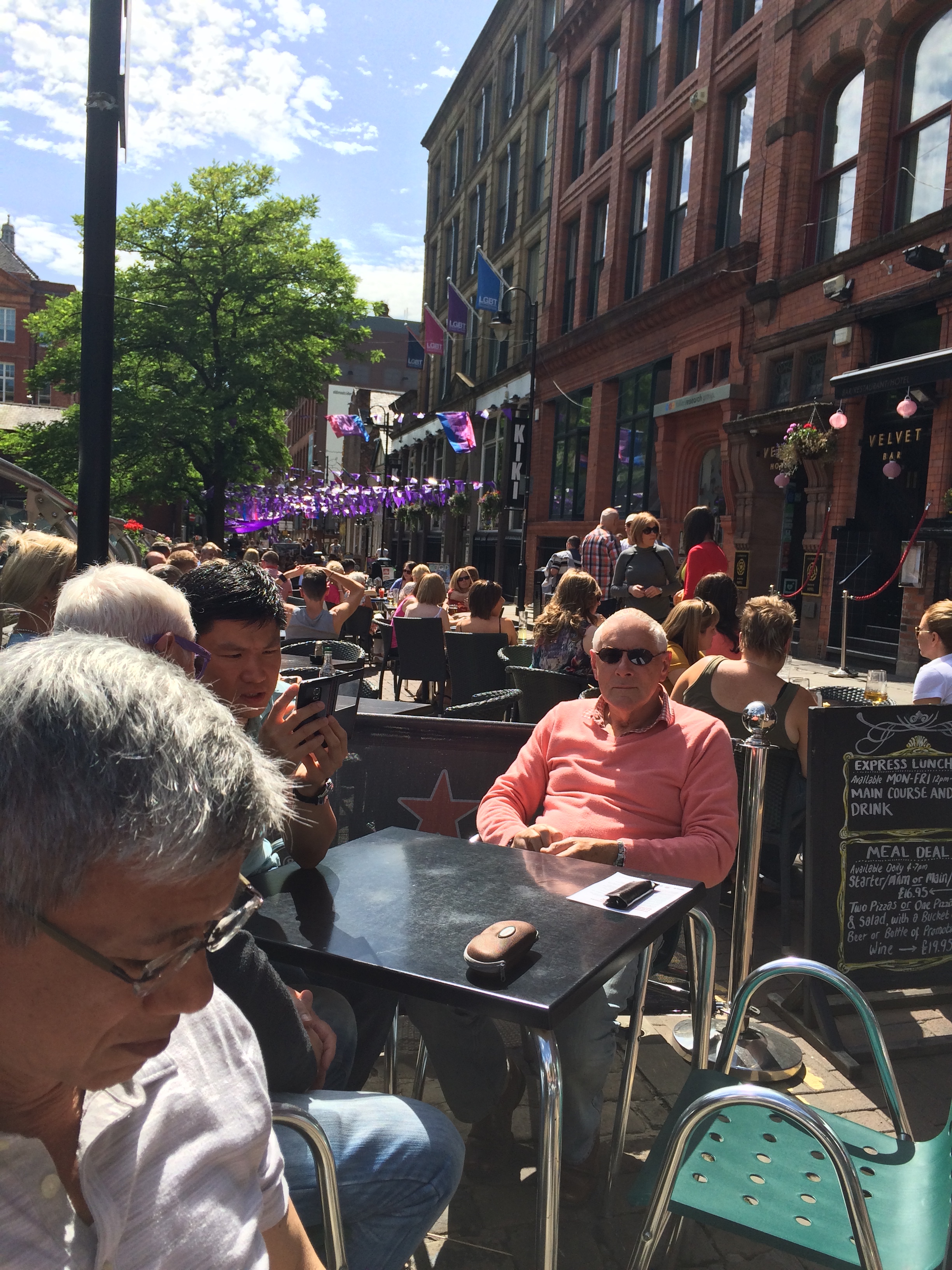
Manchester has a compact gay district inventively called “Gay Village.” It runs about three blocks of Canal Street forcing all the bars to be, cheek by butt crack, on the same side of the street—it’s a metaphor. It was a beautiful day, as this picture shows, but despite the balloons, flags, and pennants the crowds appeared dour.

Manchester must be the cross-dressing capital of the world, clearly accounting for over half of the world’s stiletto heels in size 12 and higher. Whereas my observation of these proclivities from years ago was of loud, audacious, campy, and funny queens, this crowd seemed spiritually confined by their cleavage-enforcing bras and tight skits. They identify with the genre’s moniker “sparkle,” but that seems to be the goat for the joy once given the world to hide some pain.

IMG_2431

At night canal street gets much louder and more crowded. Oh to be young and pretty again—or just one…either one.

IMG_2426

We searched for a decent restaurant, found one, but naturally, it was completely full. Fortunately, we discovered a new place called “New York New York,” while they were still celebrating the Fourth of July. Just a block from the wild popularity of Canal Street, there were tables to be found here. Better still, the food was excellent.

My only complaint about dinner was that we were seated next to the most distractingly handsome dude in all of Manchester. [below]
IMG_2428

When seeking breakfast in the morning, the Hilton Hotel (highly recommended for people arriving by train and visiting Canal Street) sat us next to two guys with whom they must have thought we would have something in common. They had enough tattoo ink to contain War and Peace in both English and Russian, but I could not imagine chatting with them about renaissance painting, so we ate in mutual silence.

IMG_2502

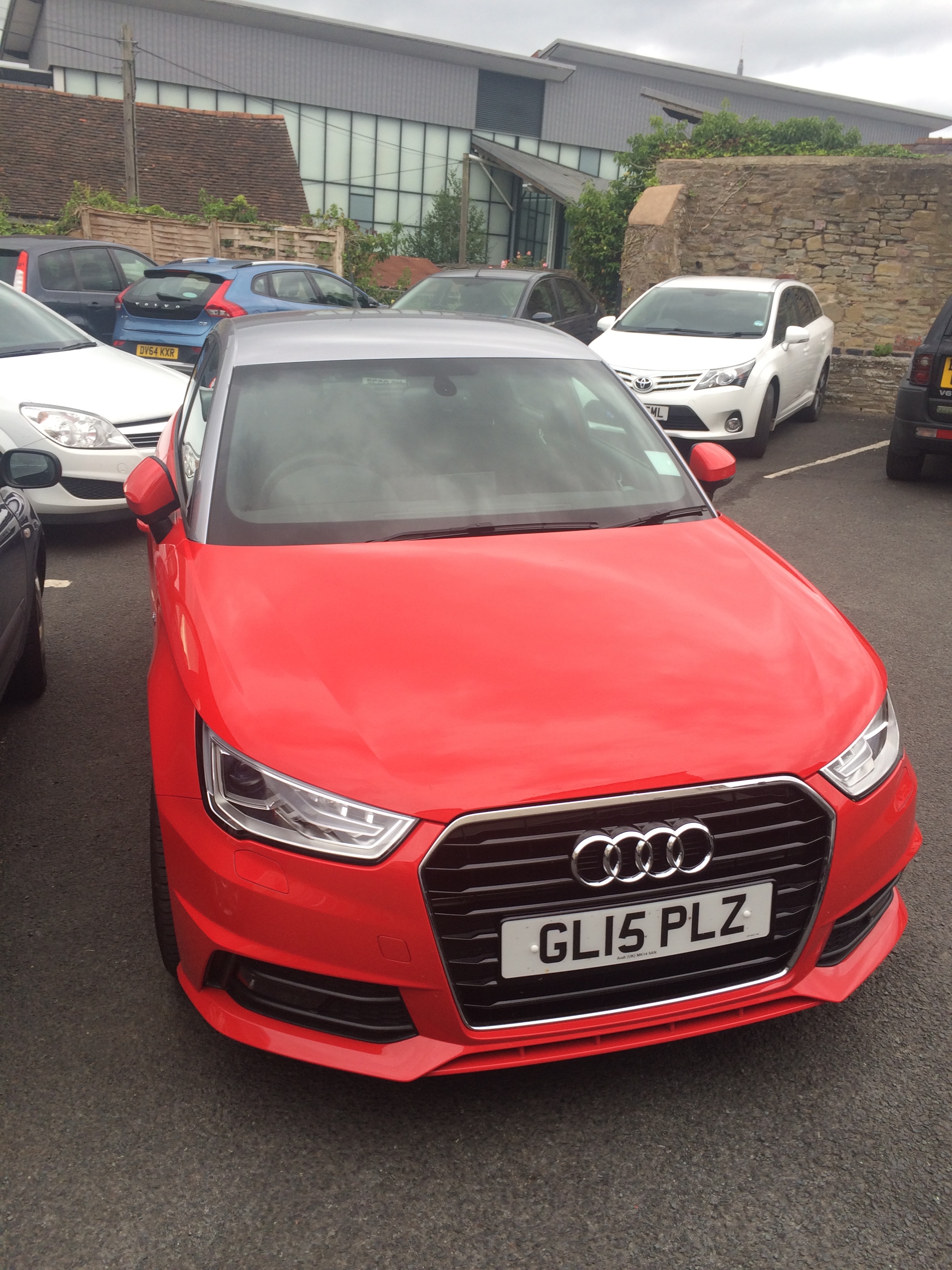
On Sunday morning we left Manchester in this beautiful Audi with an automatic transmission. The car had sensors for when it was getting close to some object and a GPS system that included the speed limit on each road, which is useful in a place where the speed limits change constantly.

European car engines turn off when stopped at a light and start up again when the driver takes his foot off the break. This is true for both diesel and petrol vehicles. Traffic lights in Europe turn red and yellow before green to alert the driver to put it in gear or take one’s foot of the brake to start the car. When it starts, it does not lurch forward or roll back.

Sun of York

July 9, Thursday

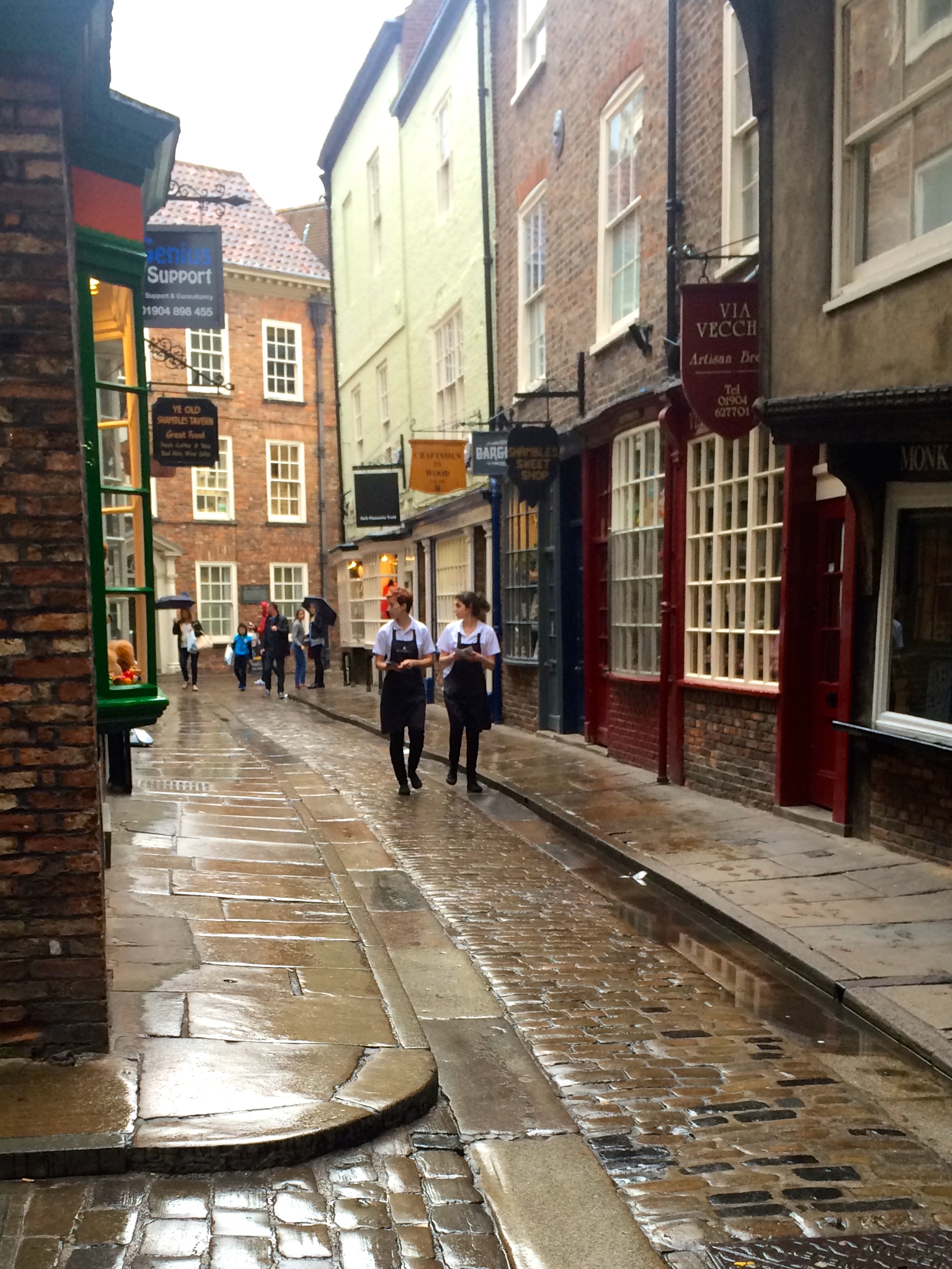
When Shakespeare wrote “made glorious summer by this son of York,” he was not referring to the skittish appearances of Helios. An azure sky can turn cloudy and gray in the few moments it takes to peruse a pub’s lunch menu, and vise versa. We got caught in a moderate evening rain while trying to find a particular restaurant. We settled for less.IMG_2364IMG_2362

The streets are just wide enough for the rain to sneak between the oddly angled walls of the storefronts. There are crooks and nannies, like English muffins, in which to seek momentary shelter, but the stones are slippery and the rain persistent.

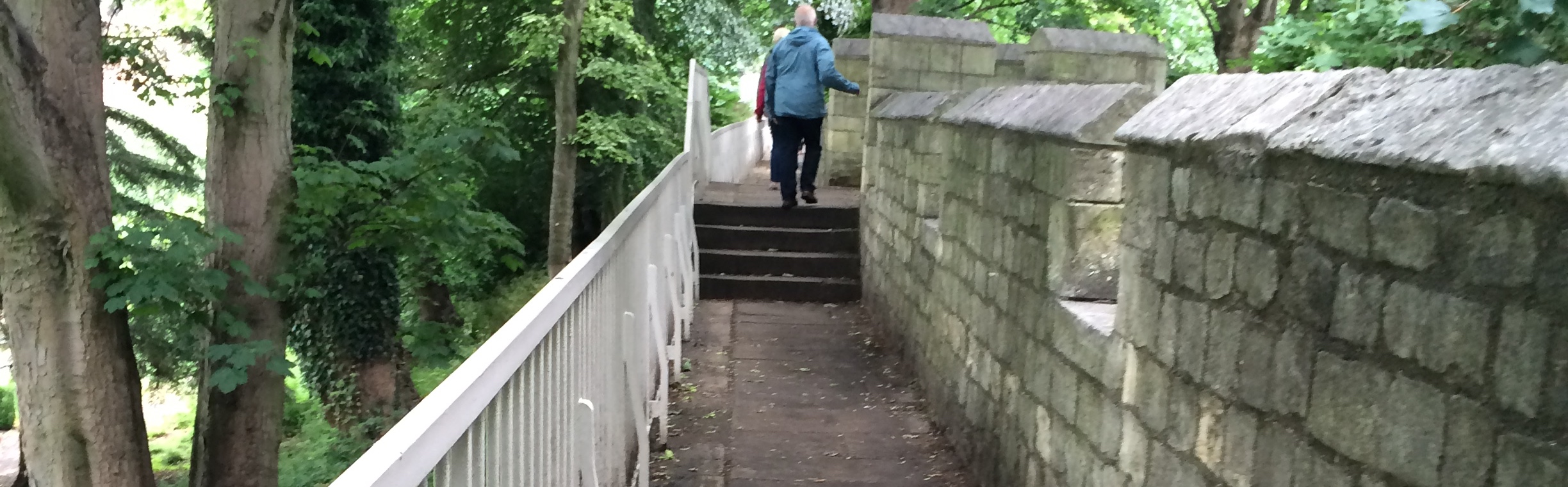
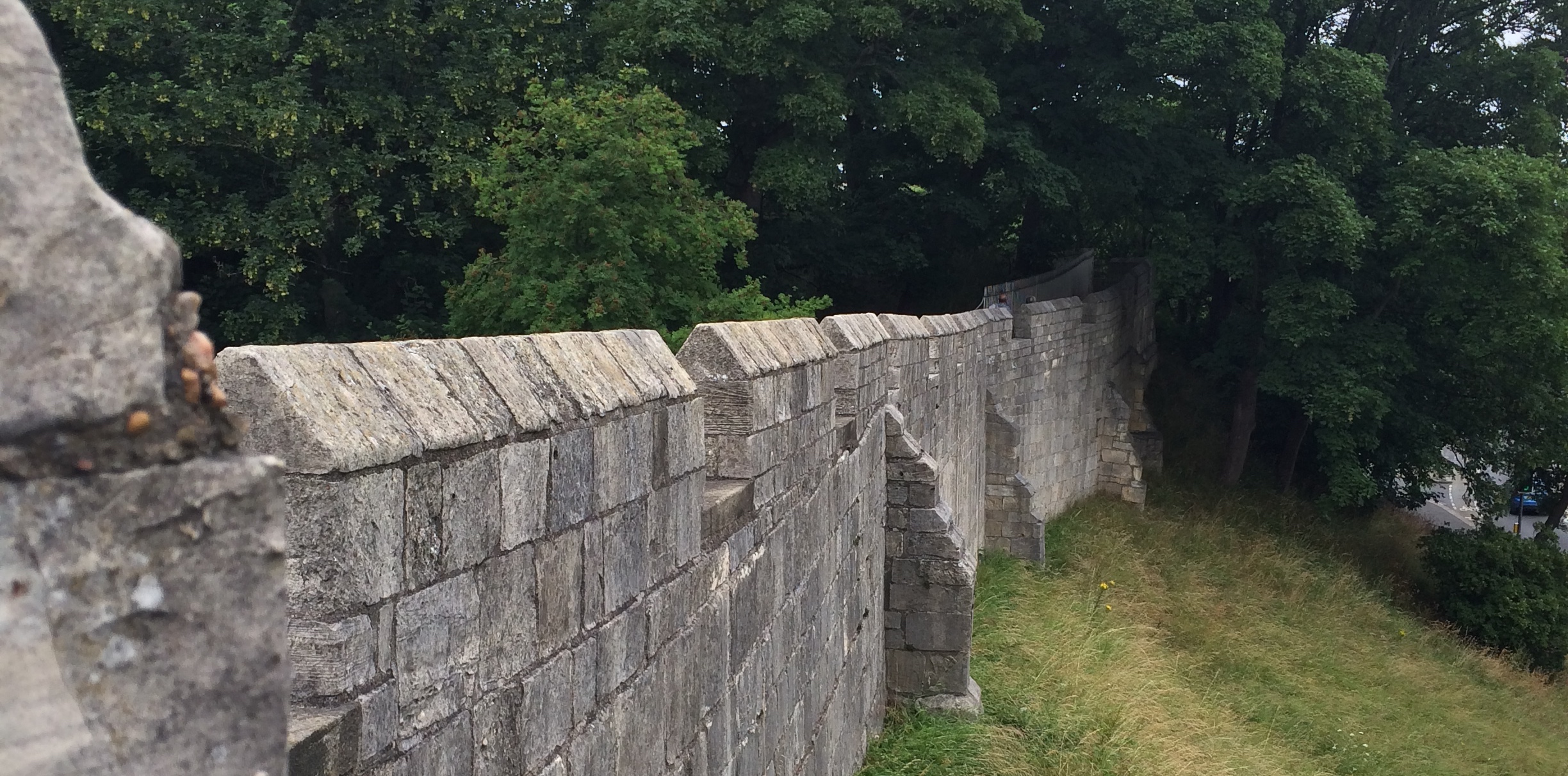
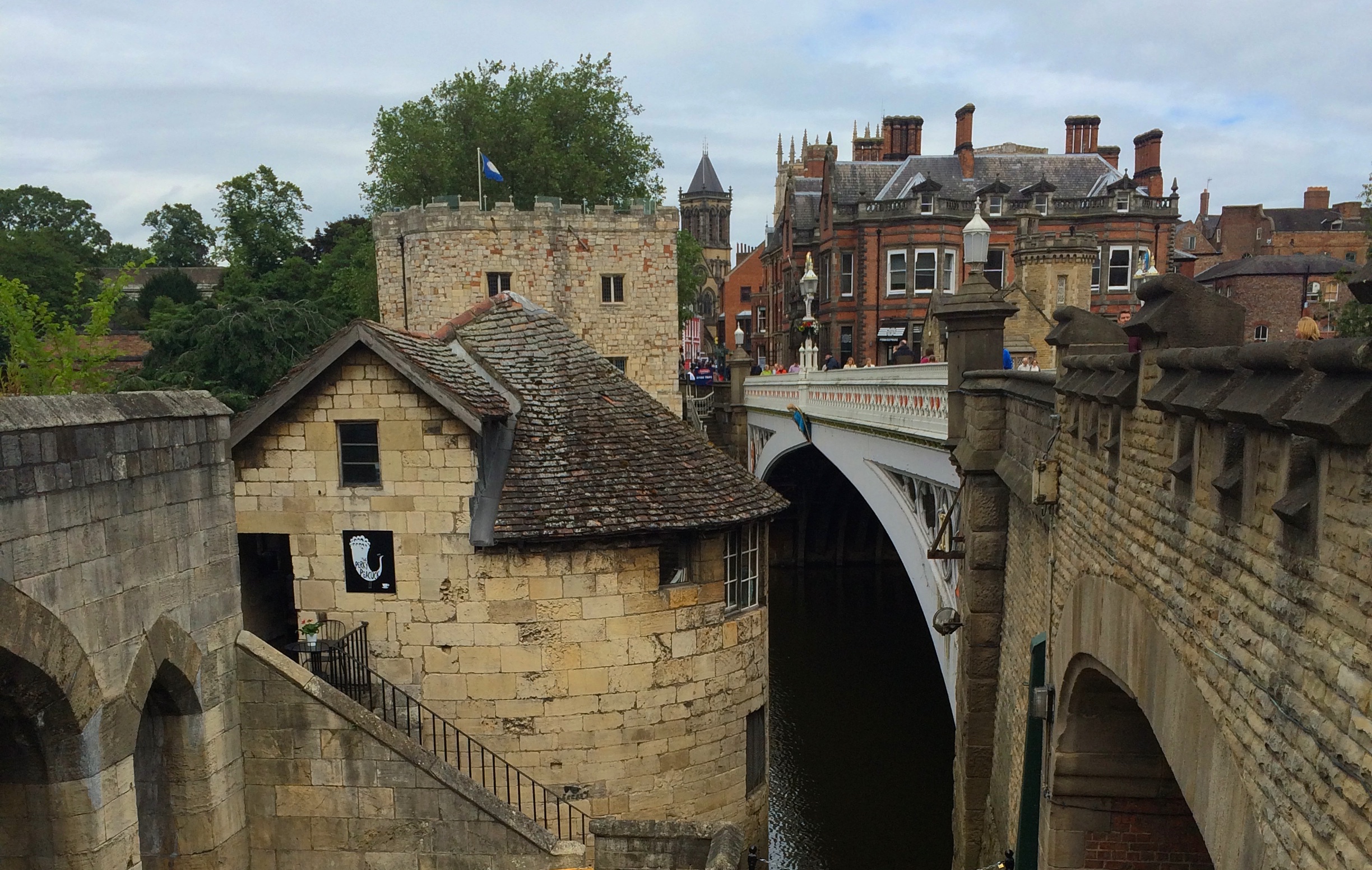
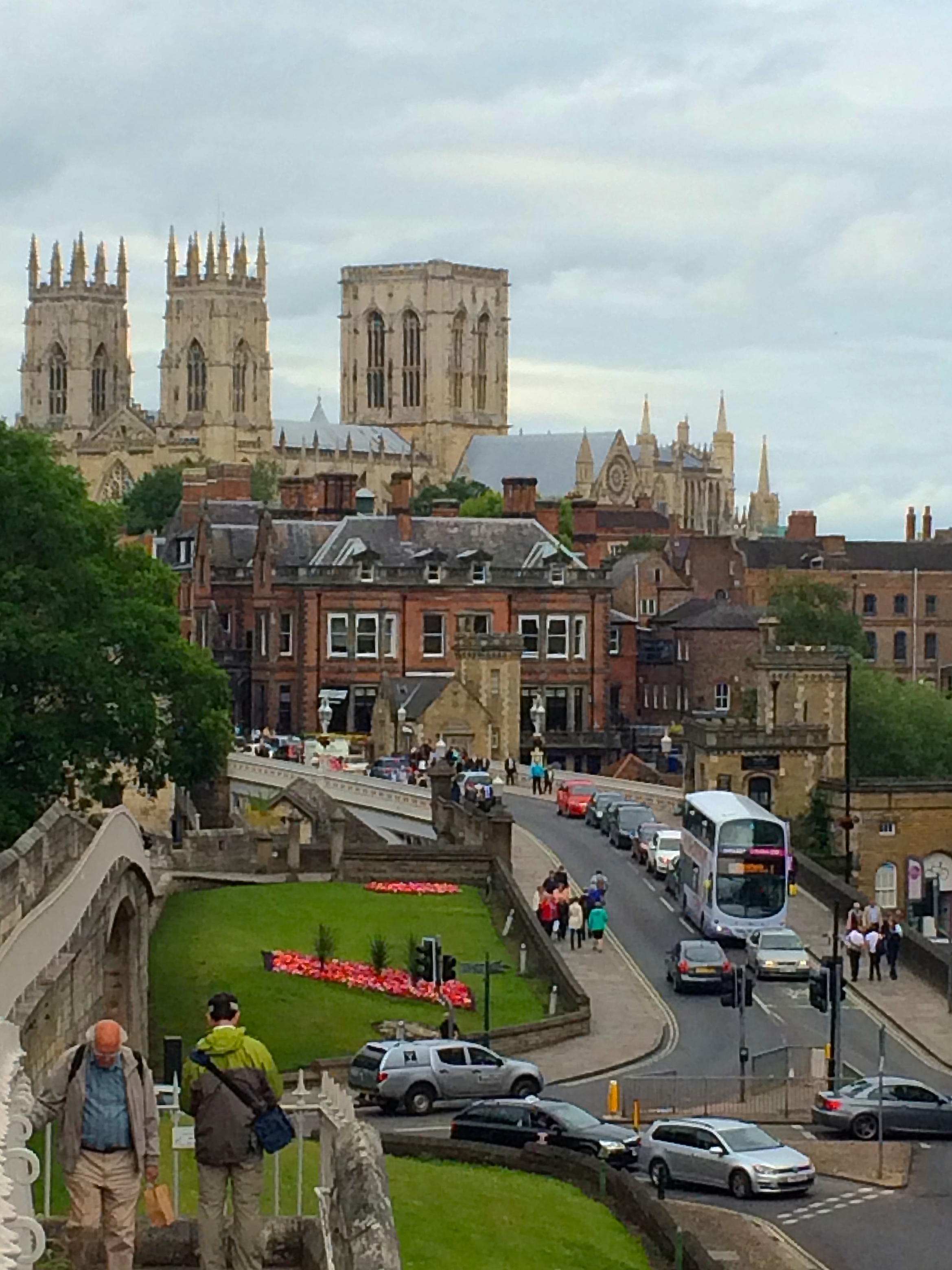
York is a medieval town with a stone wall that once provided some level of security against Vikings or Scots, but now serves the curious tourists who are encouraged to see the city from the long segments of wall that run from riverside to riverside. I doubt whether a crossbow touting Yorkshireman would actually recognize this well-tended, clean-swept, safety-railed stroll along the impotent battlements of yore.

IMG_2341

IMG_2355

IMG_2348

Here the wall is suspended were a modern bridge risks exposure to the hungry mobs laying siege. In a city where restaurants outnumber houses, hungry mobs are less feared.

IMG_2346

Guard towers barely maintain their dignity over passing cell phone users.

IMG_2350

Cars and busses pierce the walls at various gates (called “bars” like our hotel “Monkbar,” which is hard to avoid calling “Monkeybar”), but few are allowed more than a single block’s intrusion.

We had the good fortune of visiting the Railway Museum one morning. It is large, as it needs to be to house these wonderful old trains. Much of the museum is devoted to how royalty travelled in the early days of rail service.

A second museum recreates the Yorkshire streets of a few hundred year ago, with facsimiles of dinning, wedding, dying, farming, and penury (debtor’s prison). The reproduced streets, shops, barns, and homes have the fascination of a HO-scale model train set, but at full scale. There’s even the smell of horse shit where one might presume it would have been.IMG_2409

Our last meal in York was memorable:

York Minster

July 7, Tuesday
Rod on train

The trip from Edinburgh to York was pleasant. This particular train is operated under the Virgin organization (Virgin Atlantic, Virgin America, Virgin Records). It seems an odd decision to label one’s corporation with a term meaning “inexperienced,” even if you mean it in the nicest way, when the product you are selling, high speed travel, is among those where we usually want experience. The desire for inexperience is only valid when the customer is driving, so to speak.

IMG_2314

The land along the northeast corner of England is bucolic. Sheep roam over large green pastures. Less often, one sees cows and less still, horses, but none are crowded into the fattening pens common to I5 in central California.

Whether viewing from a train or by air, one sees that the landscape of central Great Britain and Ireland comprises small patches of pasture or produce delineated by rows of trees. This is obviously less efficient than the hundreds of square miles of corn and wheat farming common to the American “bread basket,” but it is less damaging to the top soil. I’d feel better if our food were produced this way.

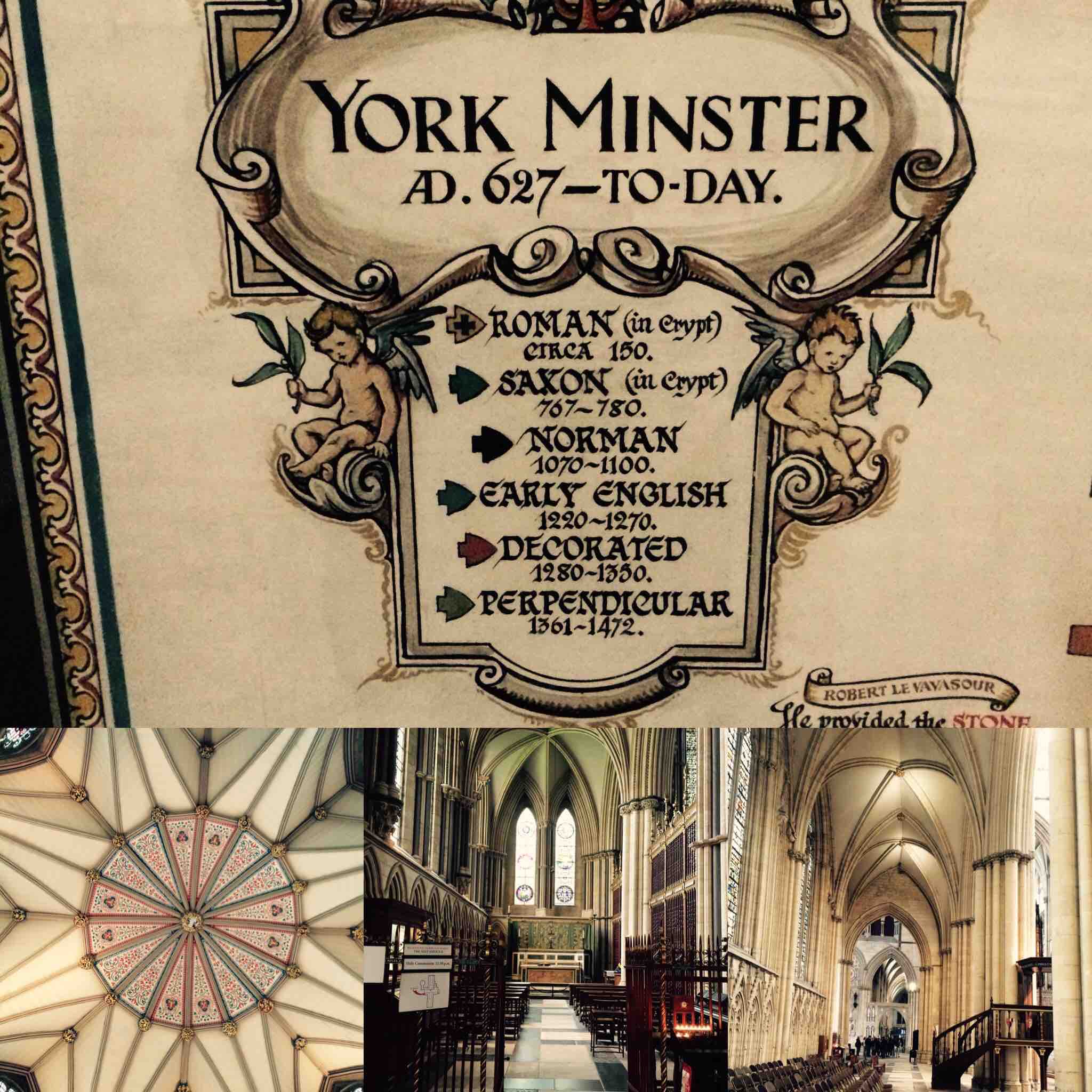
The town of York is dominated by a big church, called York Minster. It can absorb the better half of a day to gawk at. York-6The church has been under construction for about 1400 years. One has the impression that there was a time when someone thought construction would end. A roof collapse, a couple of fires, failing lead around the stained glass, vandalism, and acid rain have removed unjustified optimism. I was about to ask whether the guide thought these plagues might be the wrath of God, but in houses of worship, I feel an unwelcome guest without sarcasm.

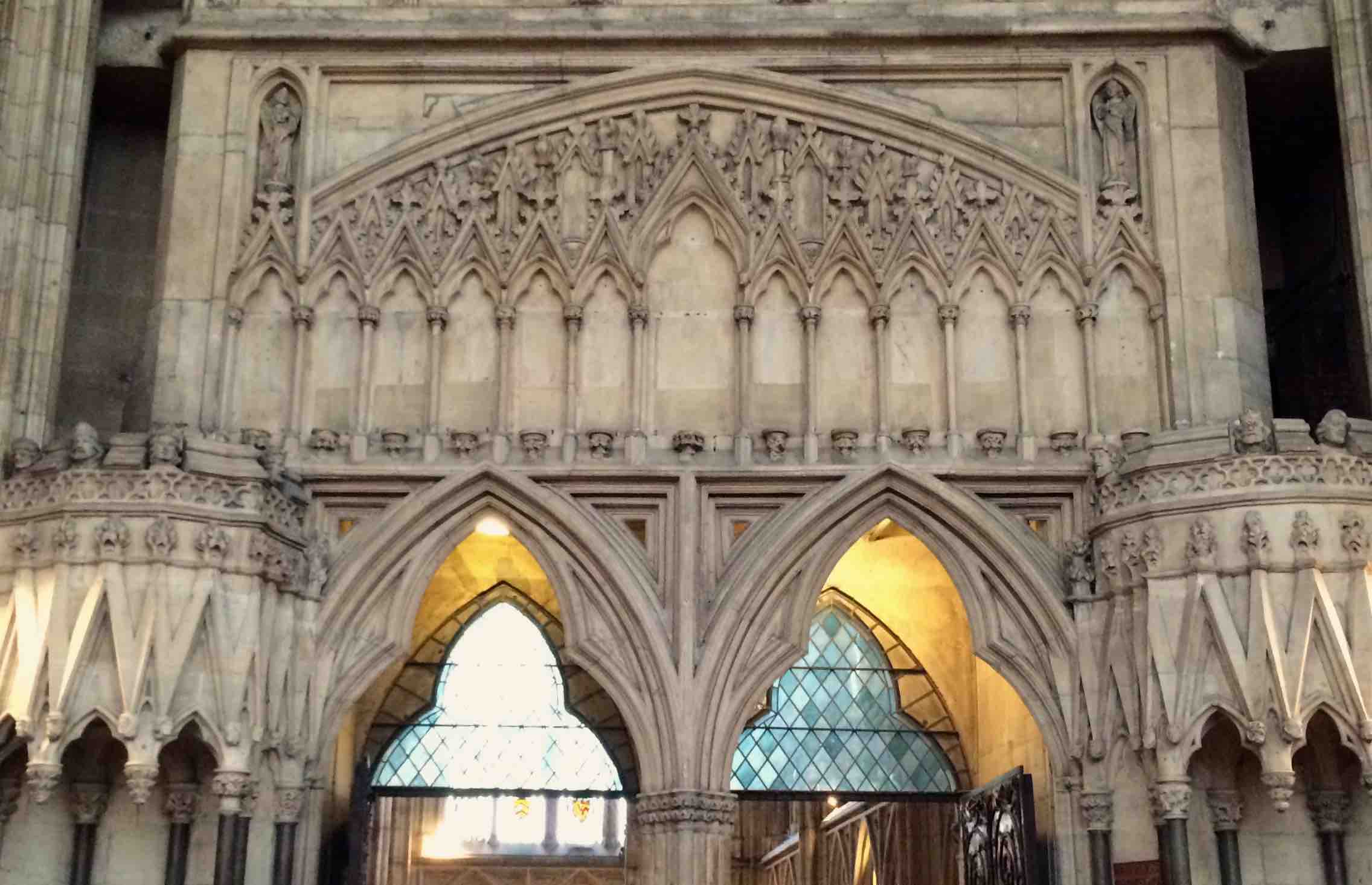
York-4These arched doors are from the inside of a room not used by parishioners. It shows how every square inch of this edifice is elaborately carved. The pointed arches appear designed so that the arch bishop and other high officials can walk upright without snagging a pointed hat. No pope. This is not a Catholic church.

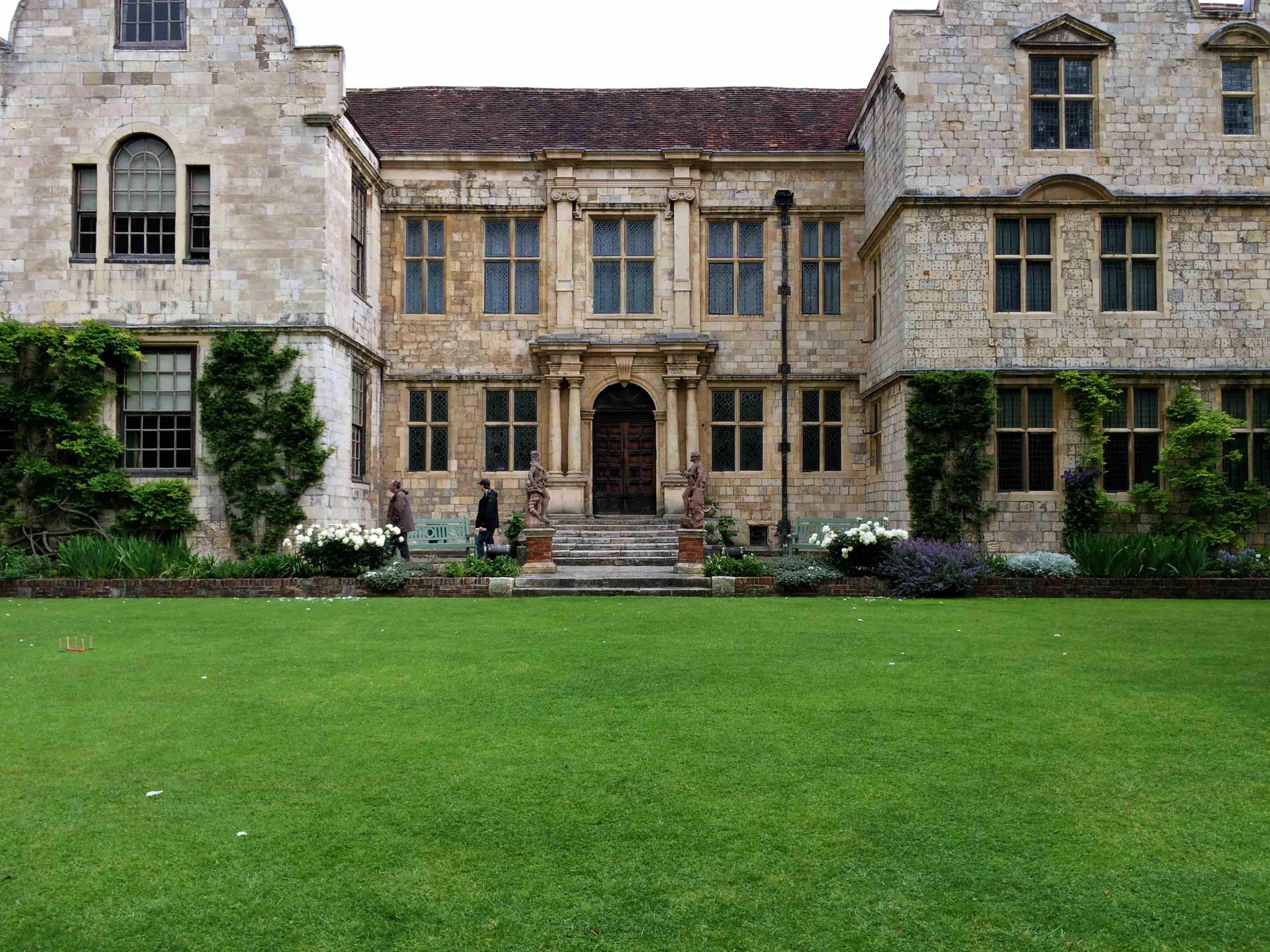
York-5The grounds are also attractive. One can easily see that Pope Francis’s desire to get his minions to focus more on the poor and needy can be difficult when priests get swaddled in marble and fed foie gras. The clergy’s palaces are a concession to the corrupting influence of luxury. But who would dress for Sunday mass held in a large shed? Well, maybe evangelicals in America’s deep south, but not the Brits.

Glasgow

July 5, 2015

It feels wrong to say that a destination disappoints, but Glasgow was below my expectations. Once it was twice its current population, it is an example of some positive things one gets from a population decline—cheap apartments, light traffic. There’s a strong sense that Glasgow is recovering from the losses it suffered when the shipbuilding industry left the city decades ago.

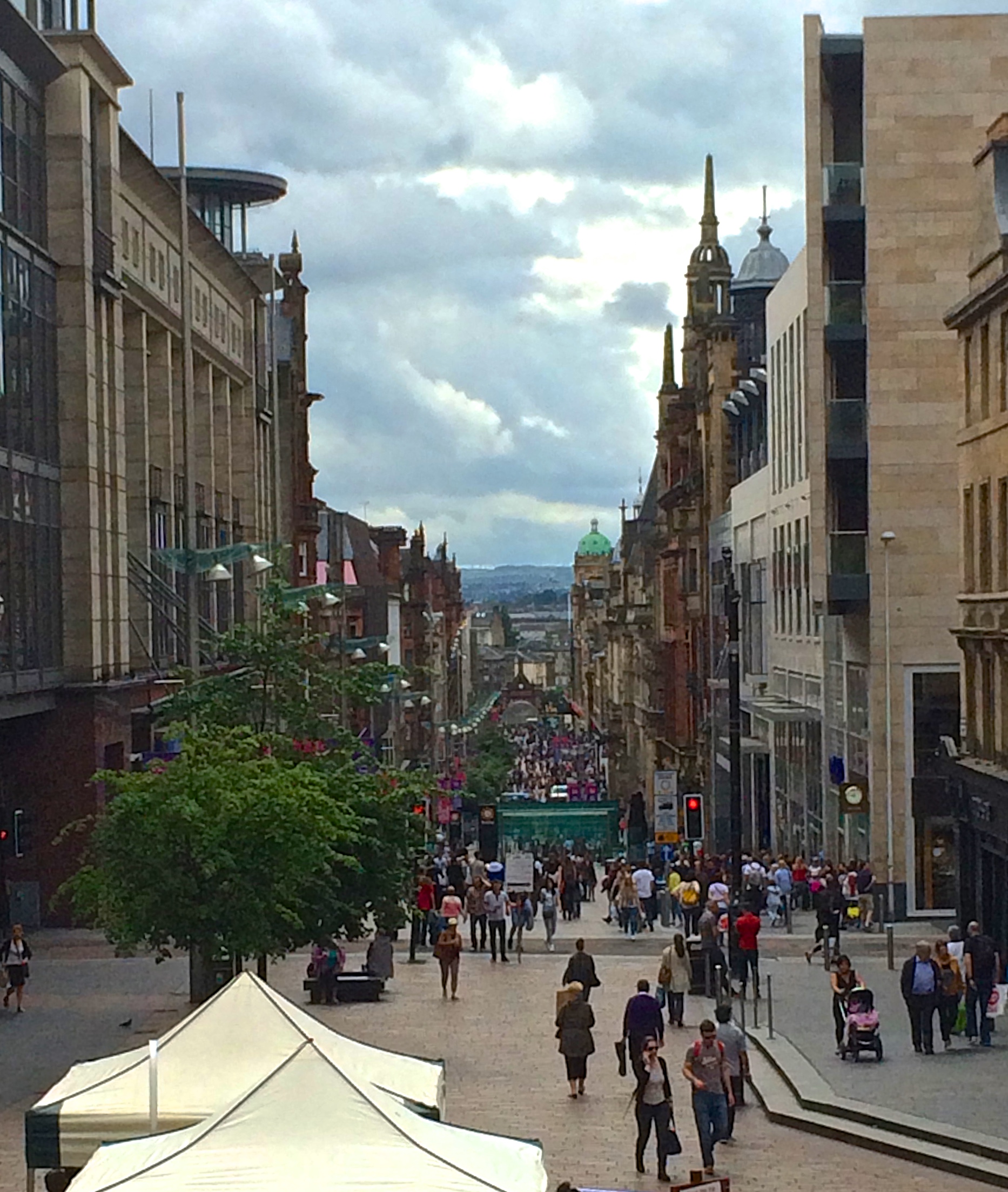
IMG_2272The center of Glasgow is this pedestrian mall that runs several blocks of high-end stores. The photo at the top of this post is of the quirky art nouveau designs that were the rage in the city’s hay days.

IMG_2266This indoor mall on the outdoor mall was puzzling. The style dates back to the 1890s, but there is hardly a scratch on the wood. Turns out, this accomplishment was done only 30 years ago. Scotland still has craftsmen who do something other than watch whiskey age. Those obvious stairs are escalators. It is called “Princess Square.” How precious.

IMG_2270

The stately plaza in front of city hall is reviving. A few buildings remain that shouldn’t, including the little subway train station stop with a cheap diner at the entrance. (Rick Steves says that a decent meal can be had there at bargain prices.) Here and there Glasgow is a little run down, but it was not torn down, so the future is bright.

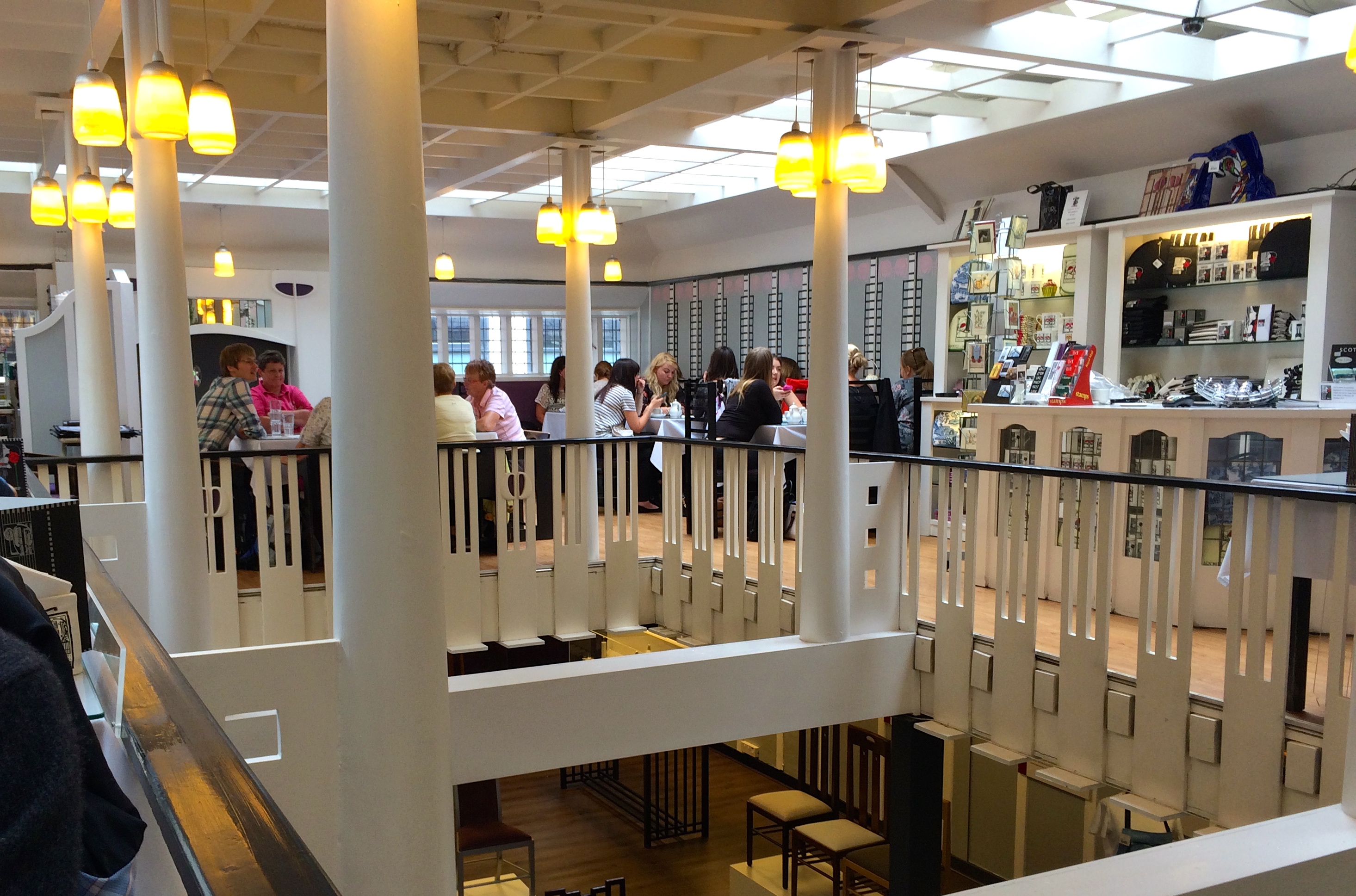
IMG_2273After walking around for 90 minutes or so, we ducked into a tea house to avoid an afternoon sprinkle. The nice thing about tea is that you can have a light meal and not feel guilty about the table service because the bill is so low. In the U.K. tea houses, the portions are inverse to the bill. It’s as if the most expensive item on your plate is the white space.

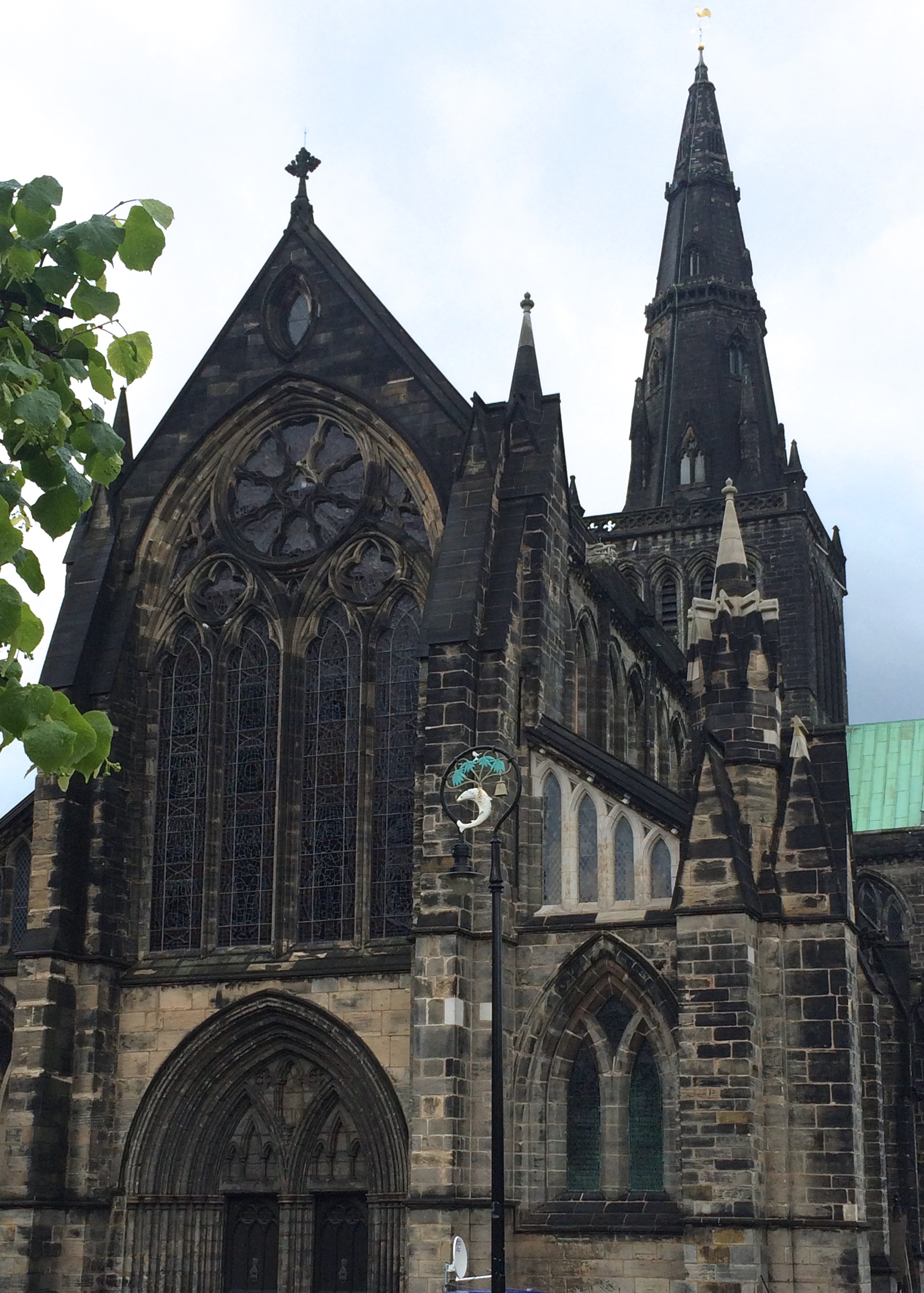
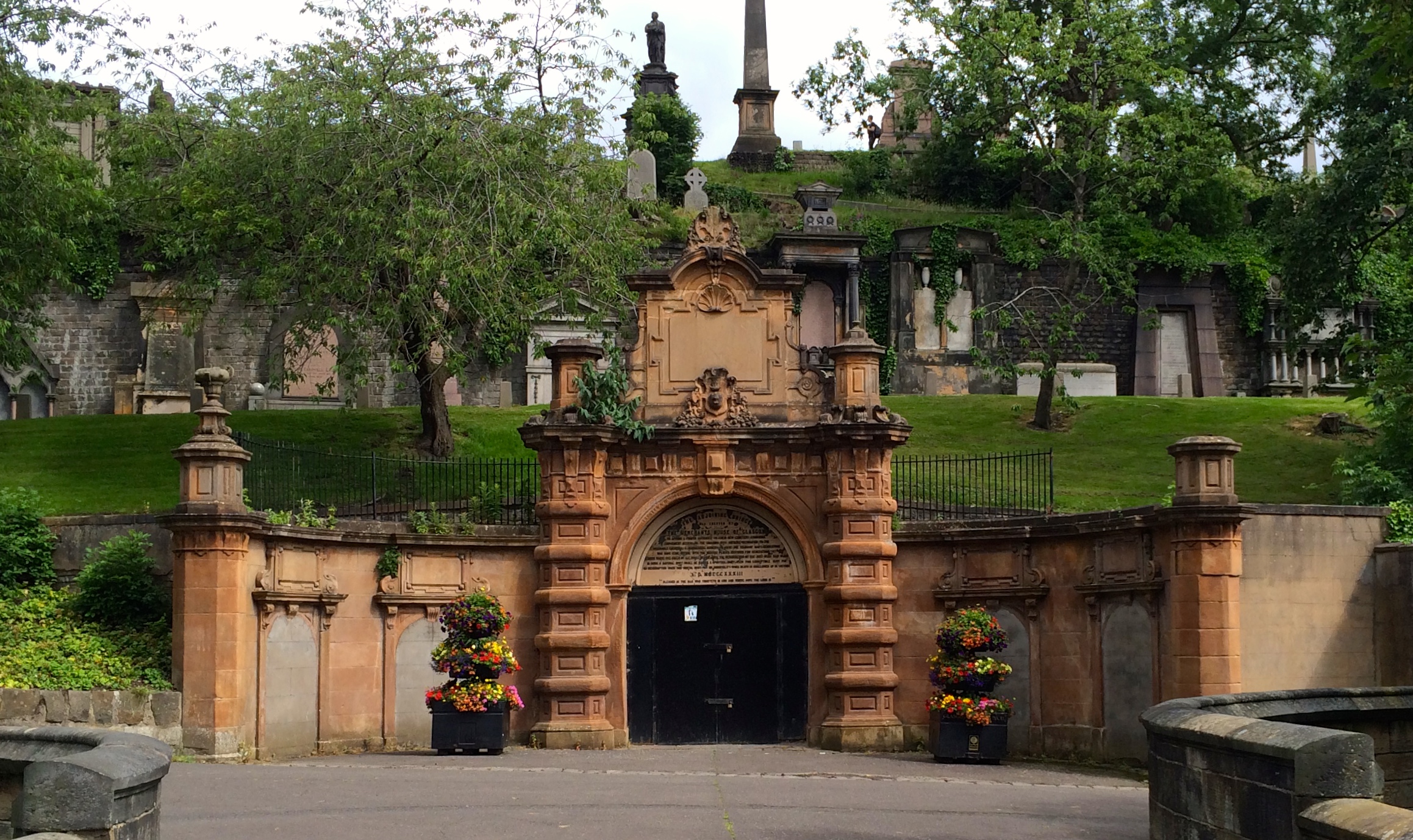
IMG_2274We walked an unnecessarily long distance from tea to tomb, but at long last we found ourselves at the Necropolis, a high-end cemetery at the foot of the cathedral. Even in death there once persisted the need for class, though always at the profit of the living. Must be time for church.

IMG_2276

The cathedral

Scotland has an inexhaustible supply of black stone. There are advantages—you don’t need to clean it and it is easier to find your house in a snow storm.

I’m a sucker for a big organ under the nave.

The Museums

Aside

July 3, Friday

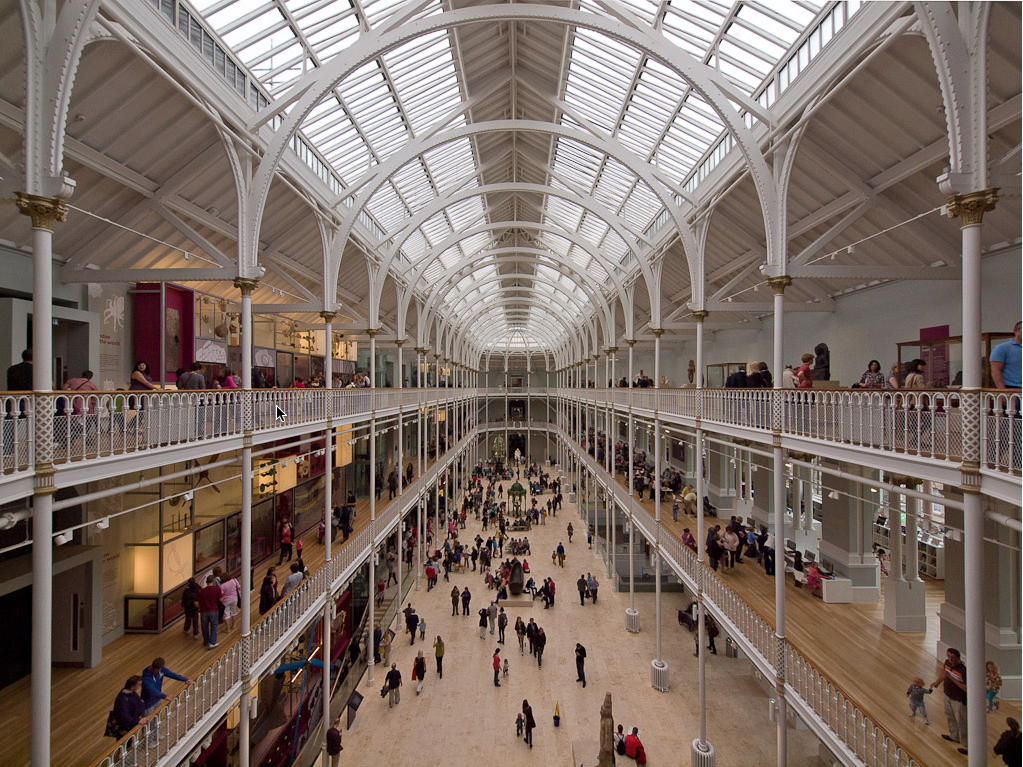
While we did not see these museums all in one day, it makes sense to put the stuff no one cares about in one place so that it can be easily avoided, like sheep shit on a…well, about every meadow, pasture, hillside, hiking trail, and lawn in the northern UK. The pano photo above is of the National Gallery, not to be confused with the National Portrait Gallery not with the National Museum of Scotland. Such inventiveness!

The National Gallery

Free to the public (donation encouraged), The National Gallery is in all ways marvelous. The works from the 1400s and 1500s are far less comprehensive than what one finds in Italy, but those that are here are in significantly better condition. The temperate Scottish climate over a few hundred years is probably the cause. Anyway, here are a few favorites:

IMG_2159

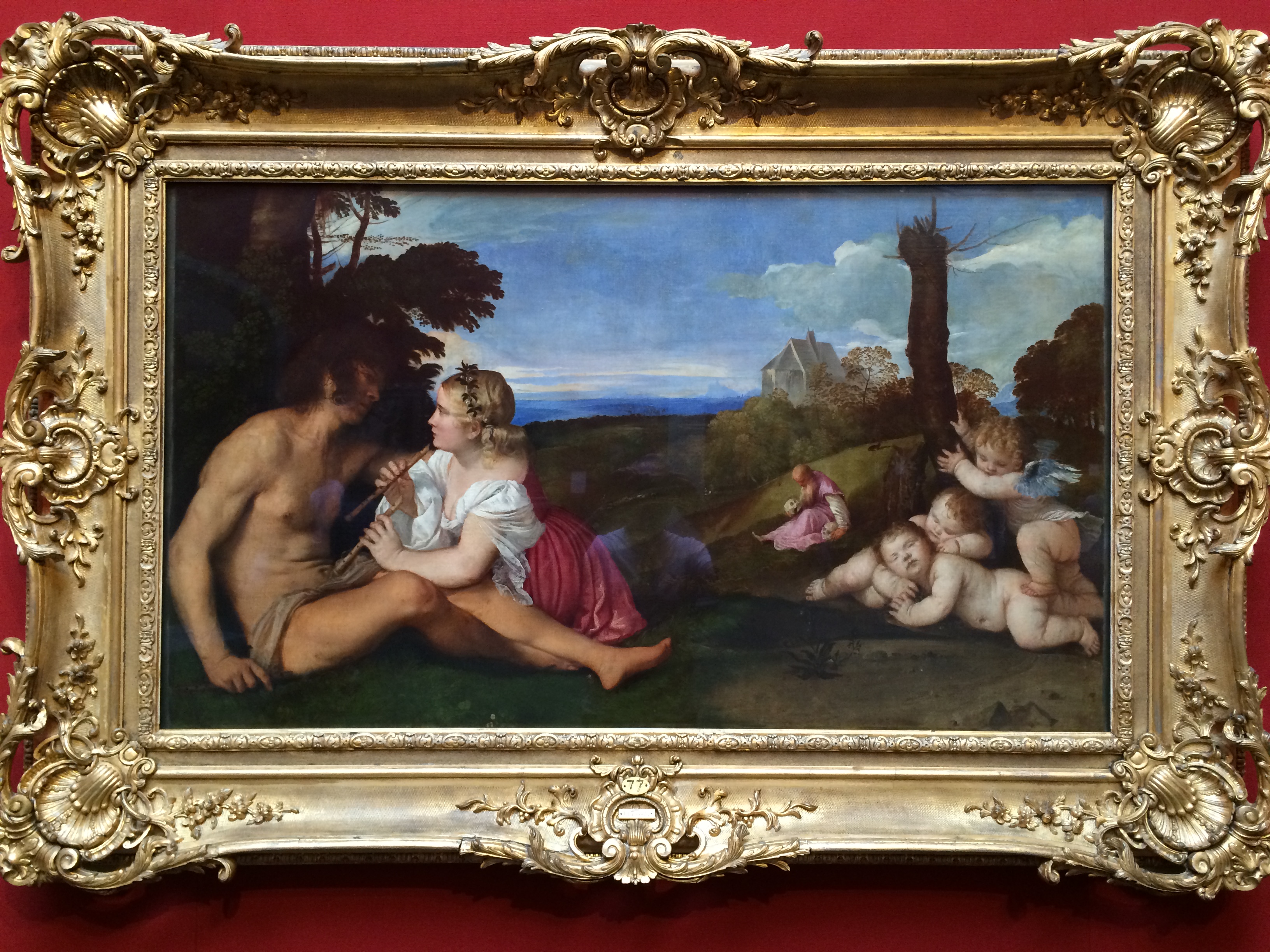
The Three Ages of Man —Titian

This Titian depicts, if one believes the wall card, “The Three Ages of Man.” It was painted in 1513, give or take a year. The first scene of babies climbing over each other foreshadowed the rise of Google, Yahoo, and Facebook and their hiring practices. The winged baby is Cupid, presumably FB. Yahoo is on the bottom.

The second phase, and doubtless the one that caught my attention, is of “young lovers staring ardently into one another’s eyes,” though I see a naked, eager man showing concern that the maiden has been practicing with tiny flutes.

The old man in the background seems to have forgotten from whose head he had removed this skull. Regret, dementia, or both?

IMG_2199

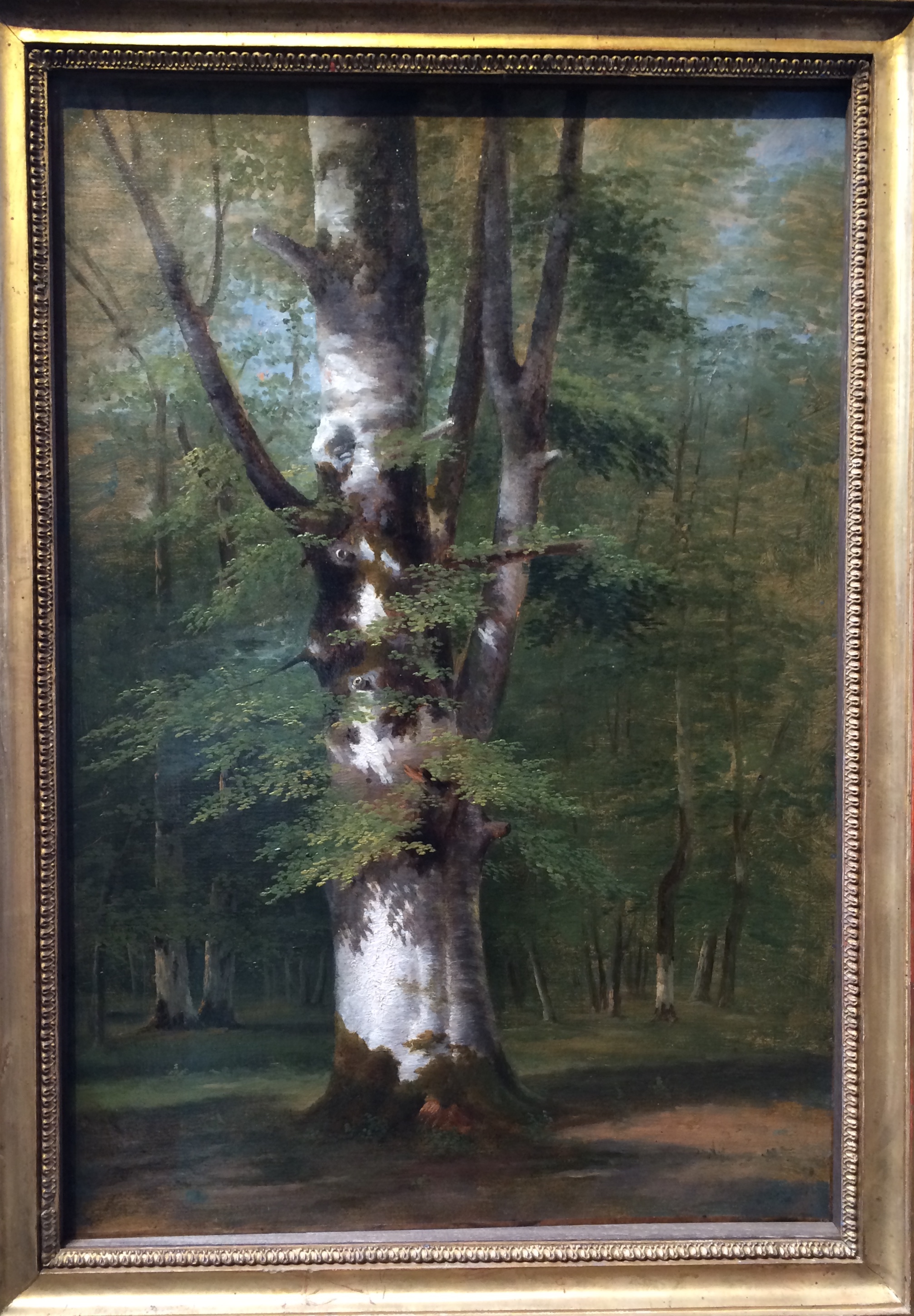
Forest Scene —Achille-Etna Michallon

Landscapes are rarely demanding. Sometimes they offer mystery, often they lack focus. This great white tree simply leaped off the wall at us. It is a commanding painting [click to enlarge]. Normally, I think that a tree with white bark is a birch, but this seems too large to be birch. Perhaps it is (was) sycamore.

The artist did not paint a tree, else he would no more have cut off its canopy than a photographer might crop a dancer’s feet. This is a painting of the space in the forest commanded by the might and success of single member. All competition is vanquished and the lesser trees huddle together at a safe distance. Like high school.

IMG_2215

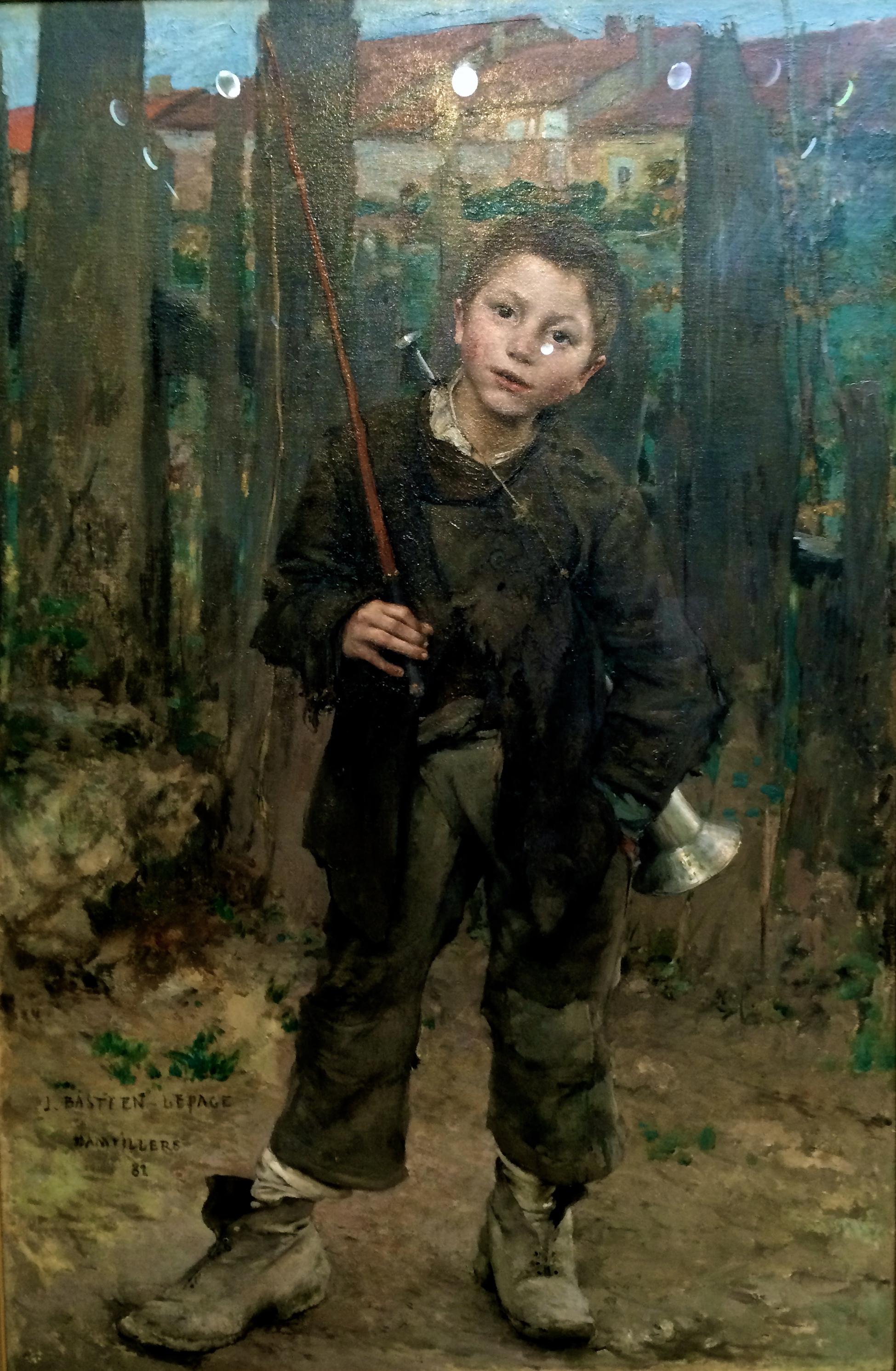
Pas Mèché —Jules Bastien-Lepage

Pas Mèché is the French equivalent of our expression “no way.” The subject is thought to be a barge boy, holding a whip for the horses and a bell to alert the lock masters. These painters of peasant life give us more value than do the portrait artists who painted rich people for commission. When you’ve seen one ego on canvas, you’ve seen them all.

Exactly what the boy is rejecting is left to the observer’s unsatisfied curiosity. He appears alert, confident, and optimistic. Lepage seems to admire his common subjects.

National Portrait Gallery

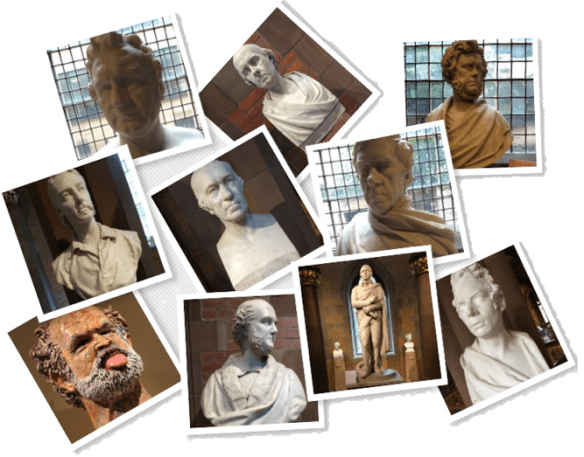
This magnificent museum does not allow photos from its primary galleries—where the paintings are. The building has a grand entrance hall with these busts, acknowledging in order of their appearance: architect, writer [to paraphrase Saturday Night Live, With a name like Cockburn, he has to be good], journalist, novelist, scientist, abolitionist, joke, publisher, poet, and painter. The selection demonstrates the Scots reverence for intellect. My purpose was a somewhat lower. I could not resist a Cockburn joke, like Didn’t he marry Sandy Vagina?

PagesScreenSnapz005

Bryce, Cockburn, Miller, Sevenson, Watt, Brougham, Attitude toward the English, Constable, Burns, Wilke

Edinburgh maintains this museum in a condition superior to the day it was built. There are modern touches, such as gift shop and lavatories, but as they were added, no expense was spared to make the new blend in. The love of architecture is ingrained. Everywhere in Edinburgh where the modern world has intruded on the past, great pains have been taken to keep from diminishing the old with the new. The Scots have a respect for open space. Americans treat civic buildings the same way Rod treats empty space on a dinner plate—why do you need a spot to rest your fork?

National Museum of Scotland

We spent little time here because we arrived about 45 minutes before closing. What we saw felt like a museum of natural history or a science museum.

SafariScreenSnapz080

IMG_2253IMG_2251I did manage to get a pano shot of Rod standing next to a totem that must have been 10 meters high.

The character on the right looks like a blind carpenter tried to crucify him.

Observations

July 2, Thursday

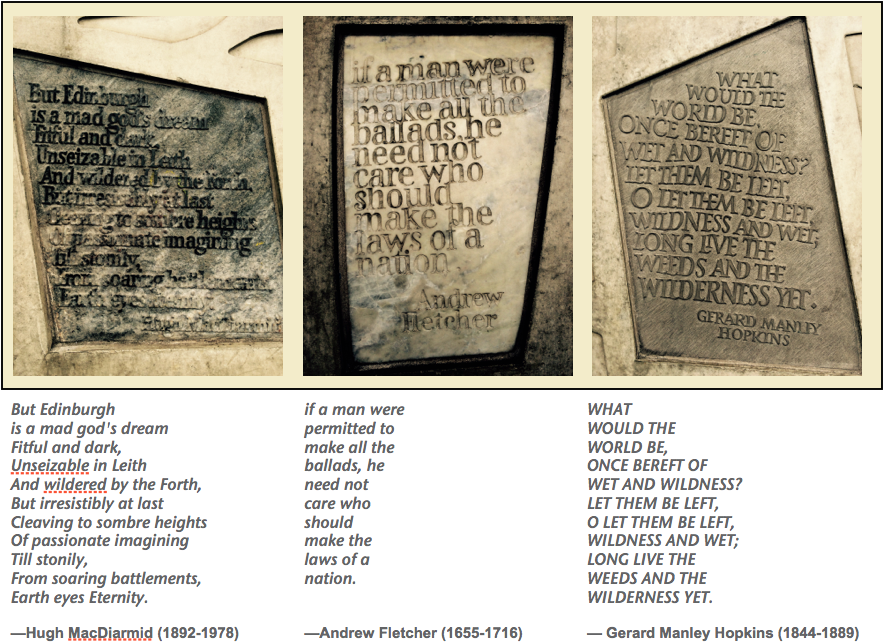
Rod and I get to know a city or town by walking the streets frequented by residents, for they are the people who love a place for its soul and not its trinkets. If a traveler were to find a city more beloved of its inhabitants than Dublin and Edinburgh, he would be wise to end his travels then and there. We spoke with cab drivers, bartenders (m/f), waiters (m/f), and other drinkers and none had anything but a broad smile for their city. These plaques are among many on a citizen’s wall of the parliament building.

PagesScreenSnapz003

IMG_2255

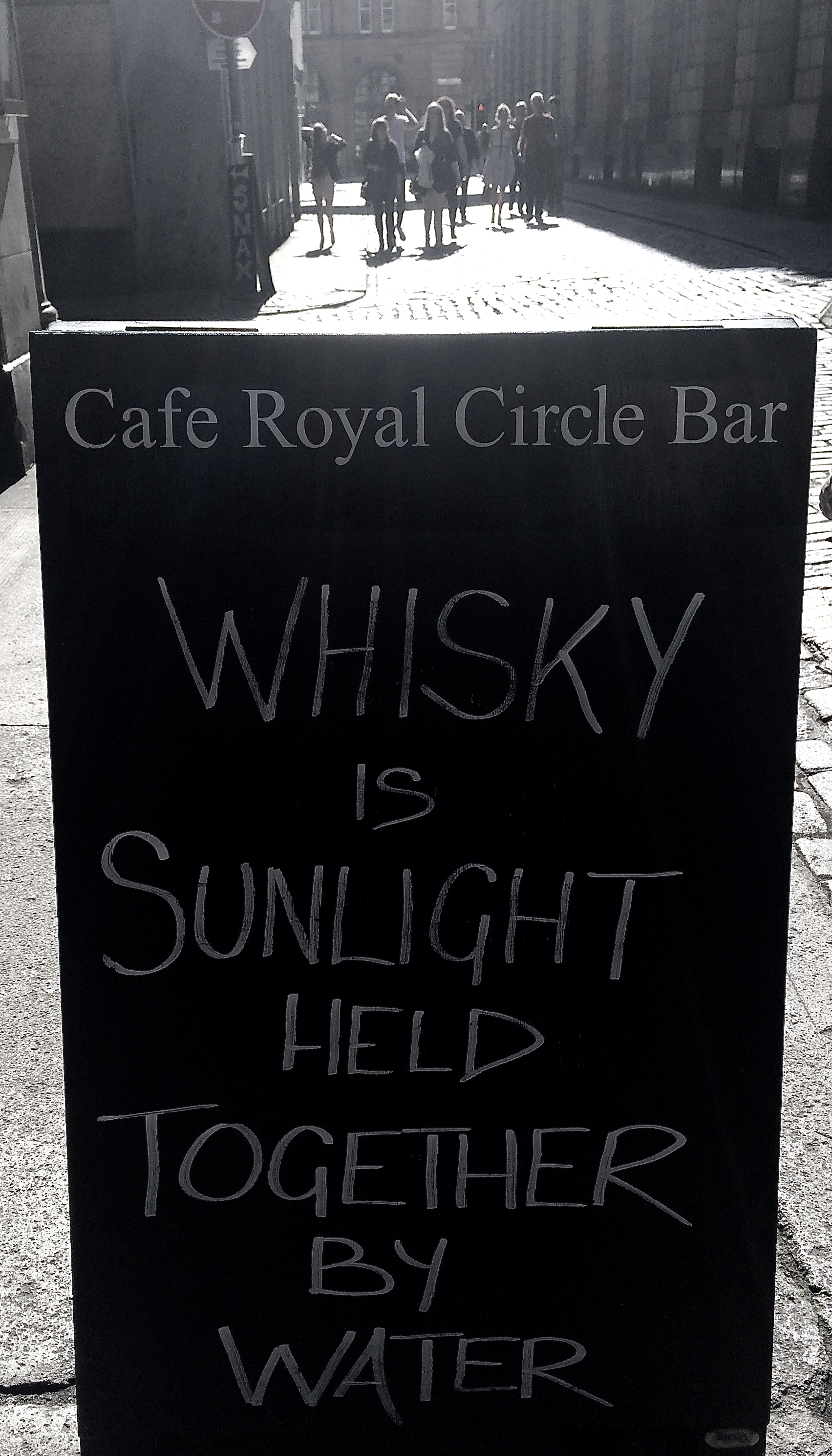
Of course one can always depend on a street poet to add something pithy to the staid pronouncements of the past. This one, “Whiskey is Sunlight held together by Water,” gives the pedestrian a clear sense of the people’s priorities.

One striking difference between Dublin and Edinburgh is the seriousness with which they handle their drinking laws. No one gets carded in Dublin, but it is as common in Edinburgh as in San Francisco or Oklahoma City [no compliment intended]. At last call, the police in Edinburgh swoop down on the nearly countless pubs from beneath their invisibility cloaks and drag off a drunk kid or two (presumably American, but who knows) unwilling to abandon an unfinished drink they will not quickly dispatch. In Dublin, you can drink outside the bars and the drinking age is a kindly advisory from the friendly folks at city hall.

Both cities have some exceptional street musicians. As one Dublin cabby told me, “If you can’t sing, then you become a comedian.”

I filmed an a cappella group who I thought better than The Manhattan Transfer (a low bar), but my recording equipment, which I carry in my back pocket without a protective case, fails to do justice to them (or my reader[s]).
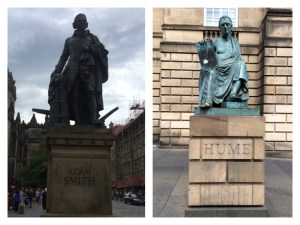
Smith&HumeWe who descend from empires are used to the honoring [sic] military men and politicians. The two largest statues in Edinburgh revere Adam Smith and David Hume, an economist and a philosopher.

The protective patina is worn from Hume’s exposed big right toe by college students eager to nail a test in the humanities. (That’s two, Dan and Tony.)

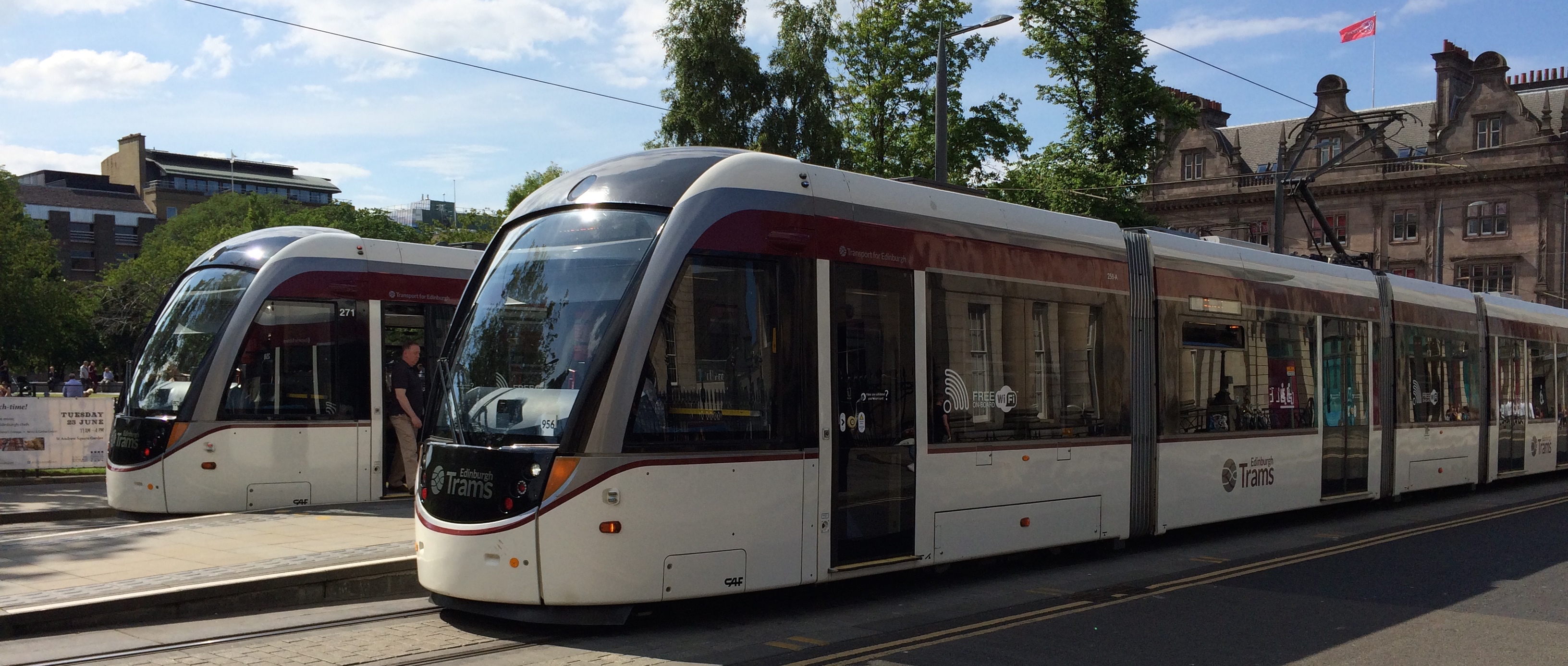
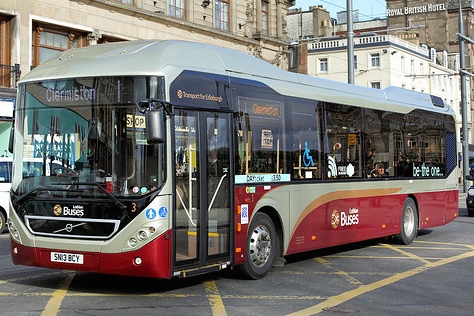
The public transportation system of both Dublin and Edinburgh are above ground, extensive, clean, remarkably quiet, and each has free wifi. They all have lots of glass, but before you hop onto one of these, take the three-week course on how the system works so as to learn how many zones you are about to travel. We took a double-decker bus from the airport and it was quite comfy.
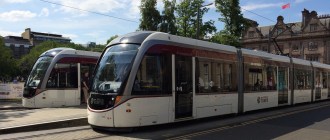
train

bus

The traffic signals have some minor differences with SF. First, the yellow caution is brief—it really means stop. Before a light changes from red to green, it first displays red&yellow together, to alert drivers to put the car into gear or, for those cars that turn off at stoplights, to let drivers take their foot off the brake in order for the engine to start in time for green. The pedestrian countdown clocks in Dublin give the number of seconds one has to wait at the curb before getting a walk signal. Ours are a threat; theirs, a promise.

Both cities have managed to keep the crosswalks free of the mangled corpses of American visitors who stand in the gutters while waiting for a walk signal (in my dreams). Bus drivers turn the corner at intersections at barely diminished speeds, polishing the sidewall of their tires with smoothed curbstones. There’s not much leeway for the daffy tourist unaware of speeding vehicles coming from the right. buh bye

Open Space

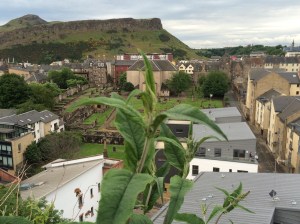
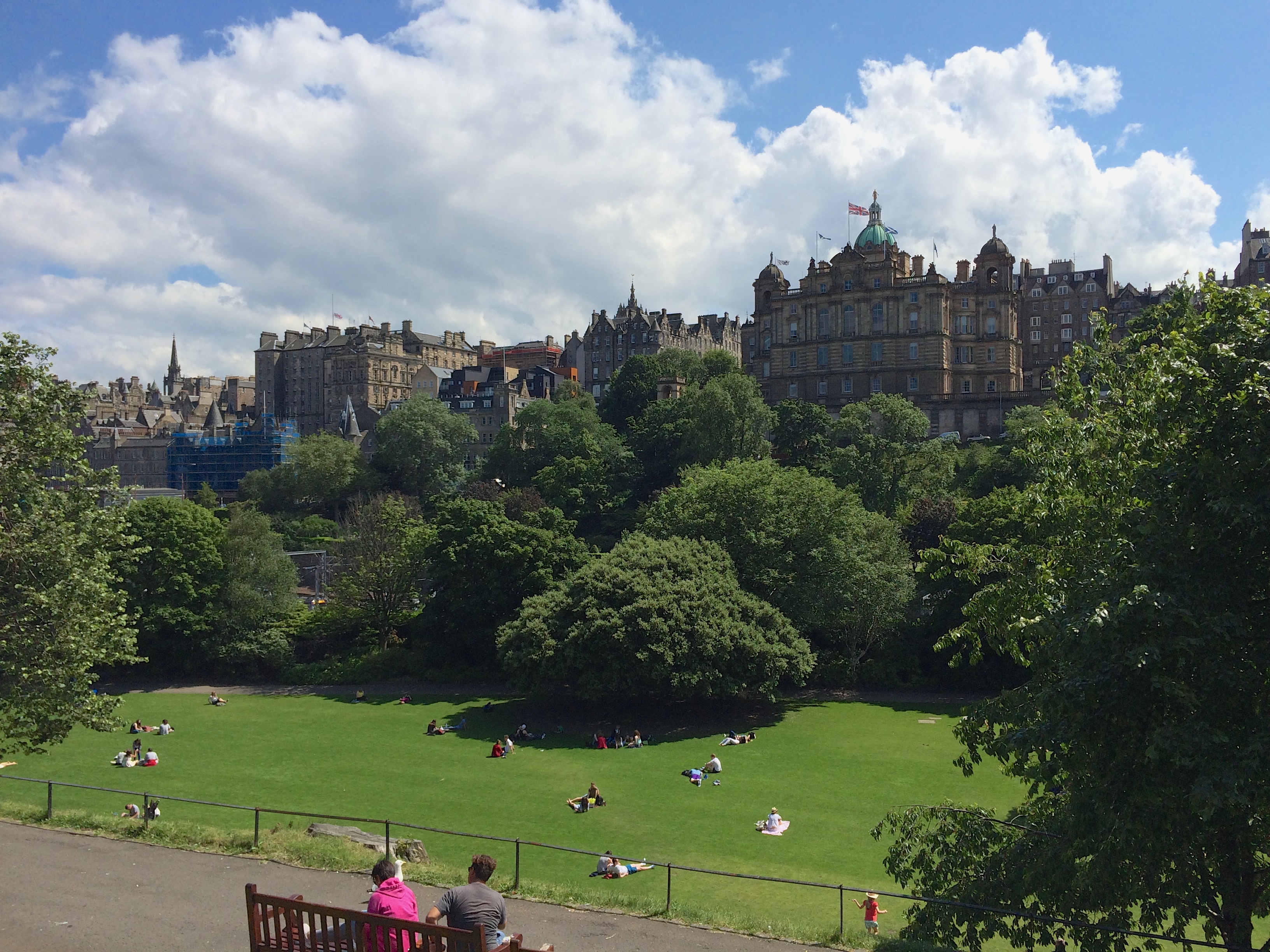
One feels that almost half of Edinburgh is public green space. The high hill in the background of the photo below on the left is Holyrood Park, attached to one of the Queen’s 10,000 homes and open to the public when she’s absent. The green space in the center of that photo is largely an ancient cemetery, serving some purpose for the living people in the apartments that surround it. On the right side photo, there’s a long, wide (we see across the width) park that divides Old Town from New Town.IMG_2219IMG_2125

This view of the distant Holyrood Park is introduced by another park, The Royal Terrace Gardens. Between the two, in a hidden-from-view valley, are a Palace, the Scottish Parliament, and several city blocks.
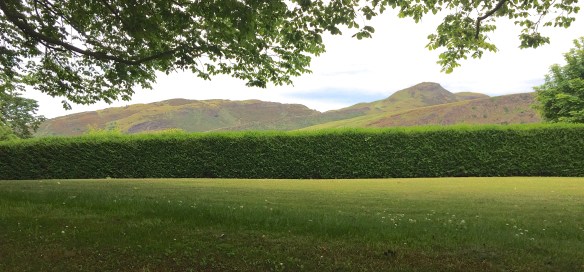
IMG_2120

The photo at the top of this page shows the independent George Heriot’s School, called “independent” where we would say “private.” The more confusing term “public school” is a left-over from a time when most schools catered to students by religious denomination and public schools admitted anyone with a 98.6 and money. (Today, because of the EU, the temperature requirement has been lowered to precisely 37.)
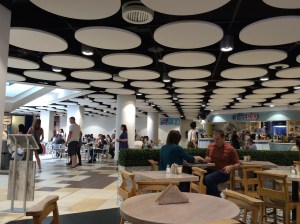
IMG_2222Edinburgh has modern buildings, too. They even have a large Apple store. I did not take many photos of new buildings, but I did notice that even simple apartment blocks have some nice refinements. This food court obscures the conduit, ducts, and pipes that run under the open ceiling with a series of white wafers that are remarkable simple and dramatic. There are many examples of this sort of attention to space.

This view from New Town looking toward the castle in Old Town shows a mix of Georgian and modern, but where modern buildings have been inserted, they fit.IMG_2228
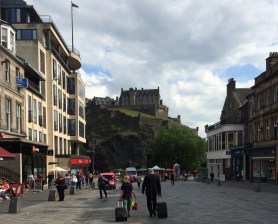
 

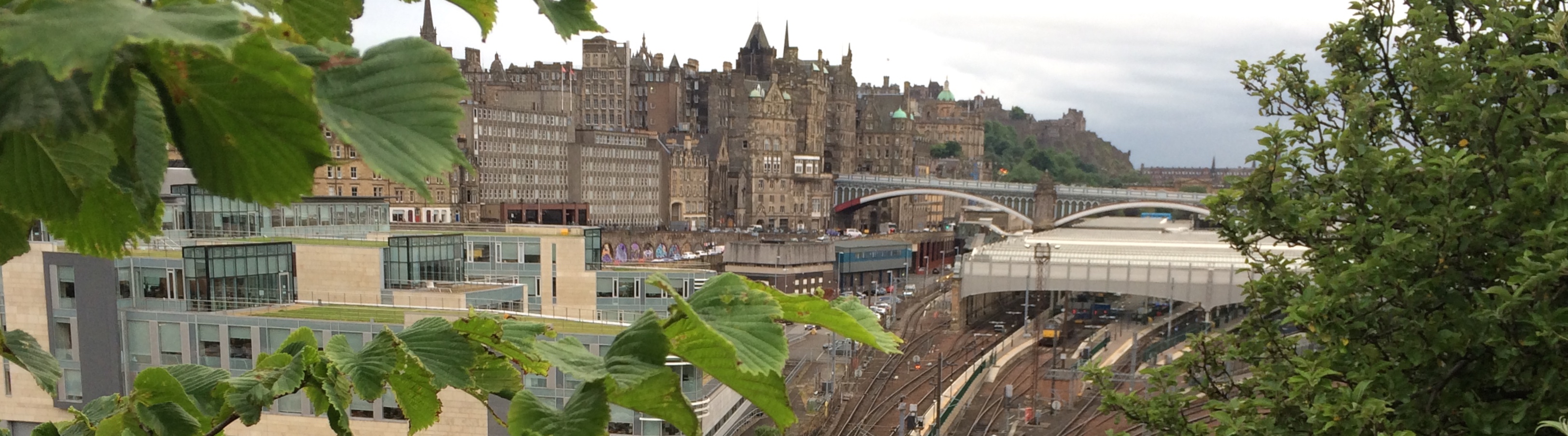
Where the rail tracks divide the city, old from new, modern office buildings take advantage of the open space. Notice the high bridge that crosses the rail station from New Town to a high hill in Old Town. It connects street-level to street-level.IMG_2127
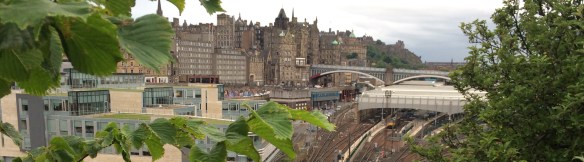
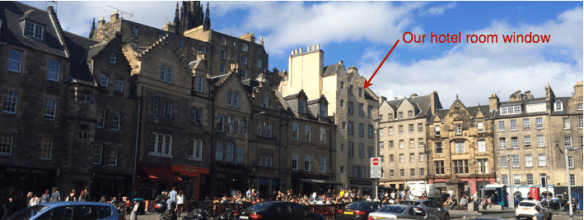
Another, strained example of open space is the plaza in front of our hotel where much younger people enjoy a collection of pubs and sports bars with fish and chips. My favorite shop on the square (where Rod bought a solar powered waving queen—don’t ask) is called “The Mutt’s Nuts,” which is a more visually accessible, if a less welcome, alternative to our expression, “the bee’s knees.” Whether a bee has knees, I have never seen, but the mutt… .PagesScreenSnapz004
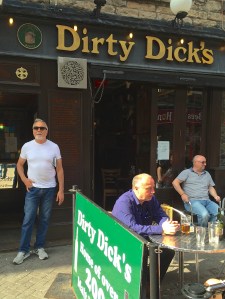
IMG_2232And what more appropriate place to insert Dirty Dick’s than after the Mutt’s Nuts.

(Well, yeah, “appropriate” probably does not apply.)

The Castle

July 1, Wednesday

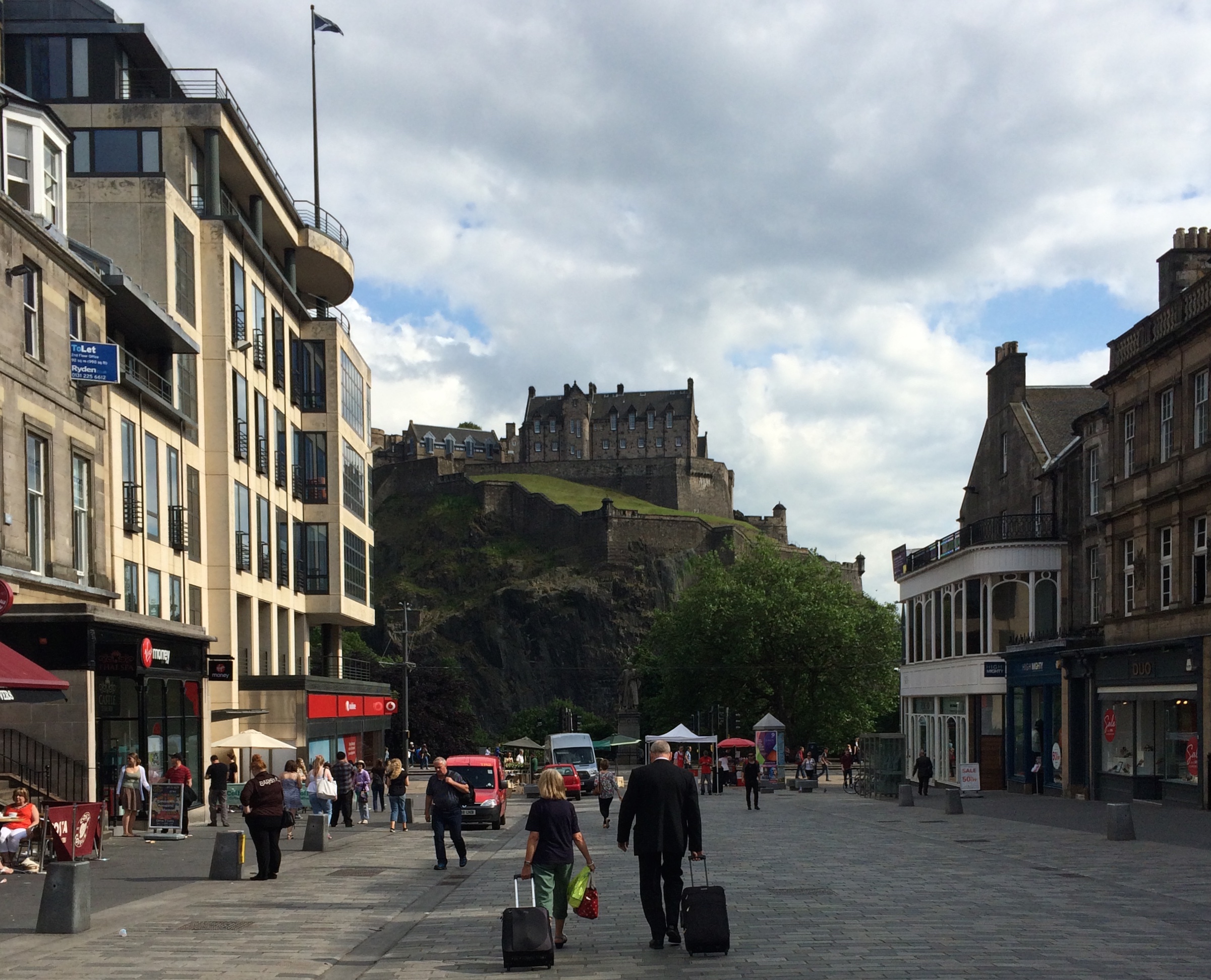
The Old Town of Edinburgh is nestled at the foot of a the hill on which a castle stands. The castle is more than a building, but a cluster of buildings within the thick walls that seem to grow from the cliff-side rock to protect them.

IMG_2067

Where there are flags, there’s a guy who thinks he’s king.

This view [left] supports the illusion of a unified castle fortress. The stone gives spine to the boast that the castle has never been taken by force, though today it was overrun with we wee tourists.

In the panorama above, the castle would be off to the right and just out of sight.

Stonework        Each building demonstrates a Scottish talent for remarkable stonework. If you enlarge this image [click on it] you will see that the upper sections of the tower, together with columns that support the corners of the tower, and the crenelated parapet across the top are all set with large, rectangular, smooth blocks, presumably for strength. The walls are fashioned with irregular stones and pebbles that give the surface between the windows a soft, tweed look. One might first think that the masons got lazy, but it is hard to believe that the building would be as beautiful it the surface were all flat stone.

We happened to be there at the changing of the guard, but IMAX entertainment this ain’t:

Big musket.

At the gates of the castle lies a large open space into which a temporary arena is constructed annually, partially overhanging the cliffside. These newest stands cost about $25 million and can be erected in one month. From August 7 to the 29th, the military tattoo and other musical spectacles will entertain over 200,000 people. Already erected, the Scots would rather be early than late. Cantilevered or not, what the Scots build does not fall down. For more information about the seating, Tattoo seating

IMG_2066

We hope it does not rain…too much.IMG_2106

Off to Edinburgh

June 30, Tuesday

The drive from our hotel to the airport, stopping to fill up (saves £30), proceded without incident. In the shuttle from the rental agent to terminal 2, Rod noticed our boarding passes were for a flight 7 minutes away—we had missed our plane. Not to worry, Aer LIngus was happy to sell us two more tickets. Whether in search of a silver lining or suffering from Chinese fortune cookie poisoning, I began to imagine that fate had spared us from a crash on the missed flight. But this sword had a second edge.

By the time we were boarding the second plane, it had become clear by the absense of tragic news, that the earlier flight had made it safely and that superstition was working against me. I recalled that Albert Camus had died prematurely in a car crash with an unused train ticket to a common destination in his pocket. I’d have to get there eventually, so what was the point of taking a ferry, or swimming when the ticket in my pocket might be a lifesaver?

When the second plane landed safely, I had only my sheepishness for consolation; that I had braced myself against the existential angst of violent dismemberment for nothing.

A real terror was to follow when my carry-on bag, having been deemed too large to fit into the overhead compartments, was taken from me on the tarmac and then failed to materialized on the carousel in Scotland. Assured by a baggage handler that there were no more bags, I became convinced that another passenger had spirited away with my confirmations, my electronic devices, my clean underwear, and my residual future. Adding to my woes, a chubby East European with time to kill was chatting up the only agent that might have addressed my dilemma.  So I took to misbehaving like a Brit footballer fan, which did not exactly bring down the house in sympathy, and when I did finally get to the window, as if to mock me, the carousel had started up again and the bloke behind the counter asked, “Is that your bag there?” This was a cold reception from a people who are blissfully unaware of their distance from the equator. It was not typical.

Edinburgh (which the locals pronounce Ed•in•boor•uh, or something like that to irritate the English) has startling street charm. Here are a few snaps of “Old Town”: [click to enlarge]
Castle

Rod below castle.

Royal mile

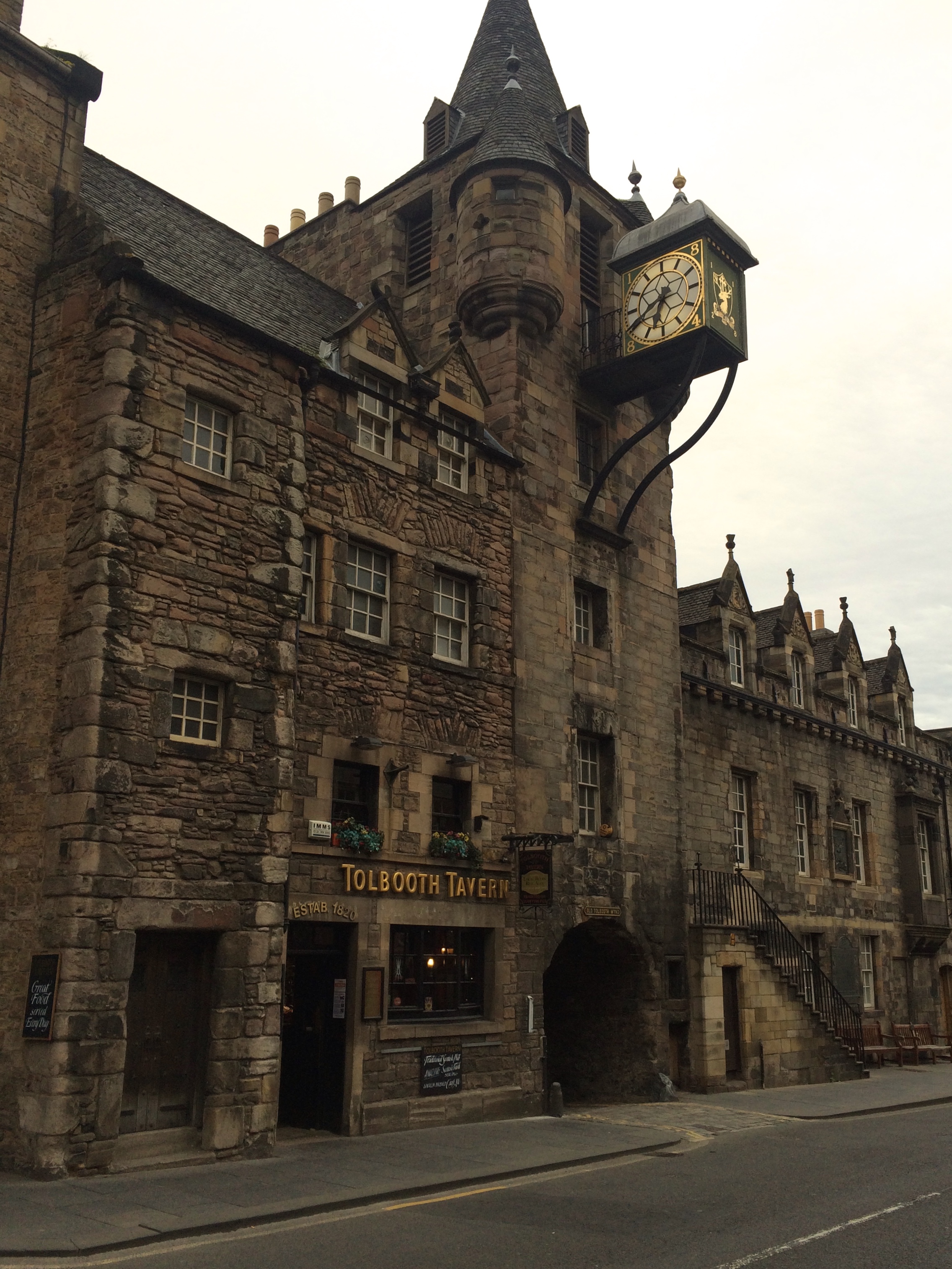
Was the clock an afterthought?

IMG_2060

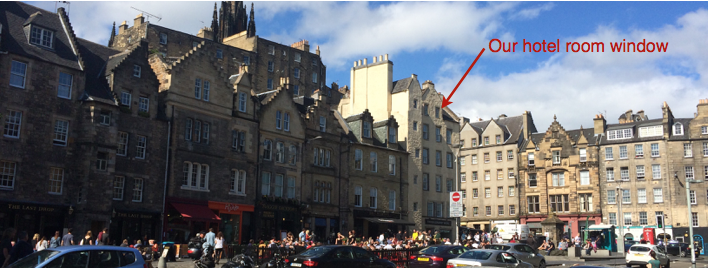
View from our room of Grassmarket

IMG_2104

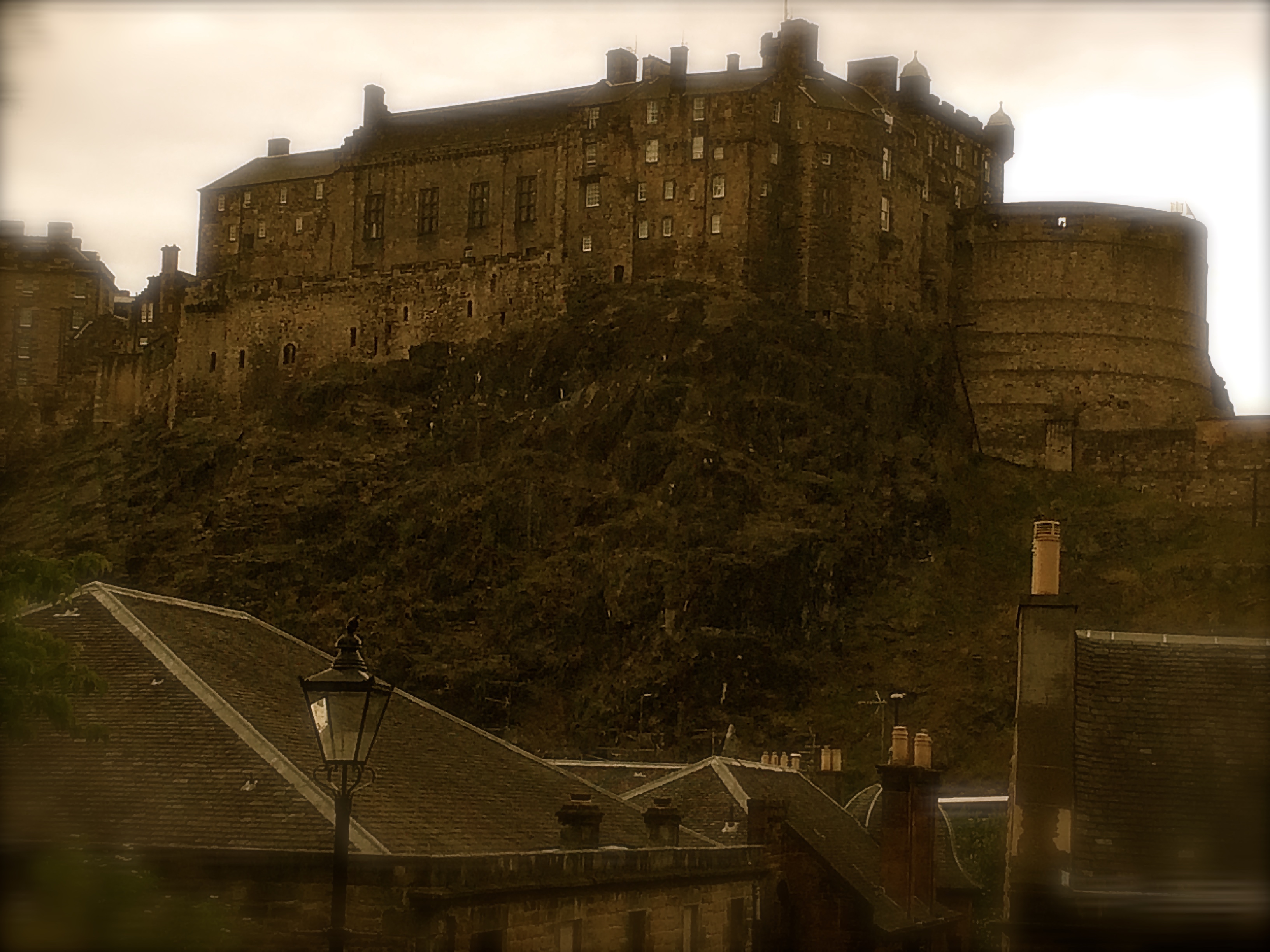
The castle dominates, as castles sometimes do.

IMG_2063

Here’s where Rowling got Hogwarts (poor girl).