When in Rome, Do as Roamins

With just two nights in Rome, and having been here for a week 19 years ago, our interest was simply to enjoy the city with a series of exhausting walks. No meal was exceptional, except for a lunch on a hot afternoon with a wine merchant/sommelier/man-of-the-world reduced to being our waiter at a sidewalk cafe about three blocks from the Spanish Steps. (Whatever a “block” is in Rome—it ain’t rectangular.) He was knowledgeable and well-spoken and when he advised that I might change my order of an afternoon negroni cocktail to a “broken negroni,” made with Prosecco in place of gin, I foolishly rejected his sound advice. How was I to know that a €7 cocktail might contain six shots of booze? Who said Rome wasn’t built in a daze? Looks that way to me.

That faux pas aside (my Italian is improving), the orange salad and quattro formaggi pizza were outstanding, as was our chat with the waiter (which Rod says was excessive due to my being undeniably bombed) about European politics and Donald Trump.

Otherwise, we saw both the familiar and the previously unexplored, often by accident.

Notice the subject trend? Nope, he was not traveling alone, but with all these Roman ruins, photos of his companion would be redundant.

The city has lots of neat buildings.

Sant’Angelo (top two) is hardly noticed in Rome. We would notice it in San Francisco! Looks like there is more stone than interior space.

The national museum is oddly phallic…I mean the scale of the three items?

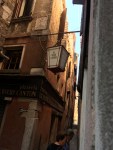
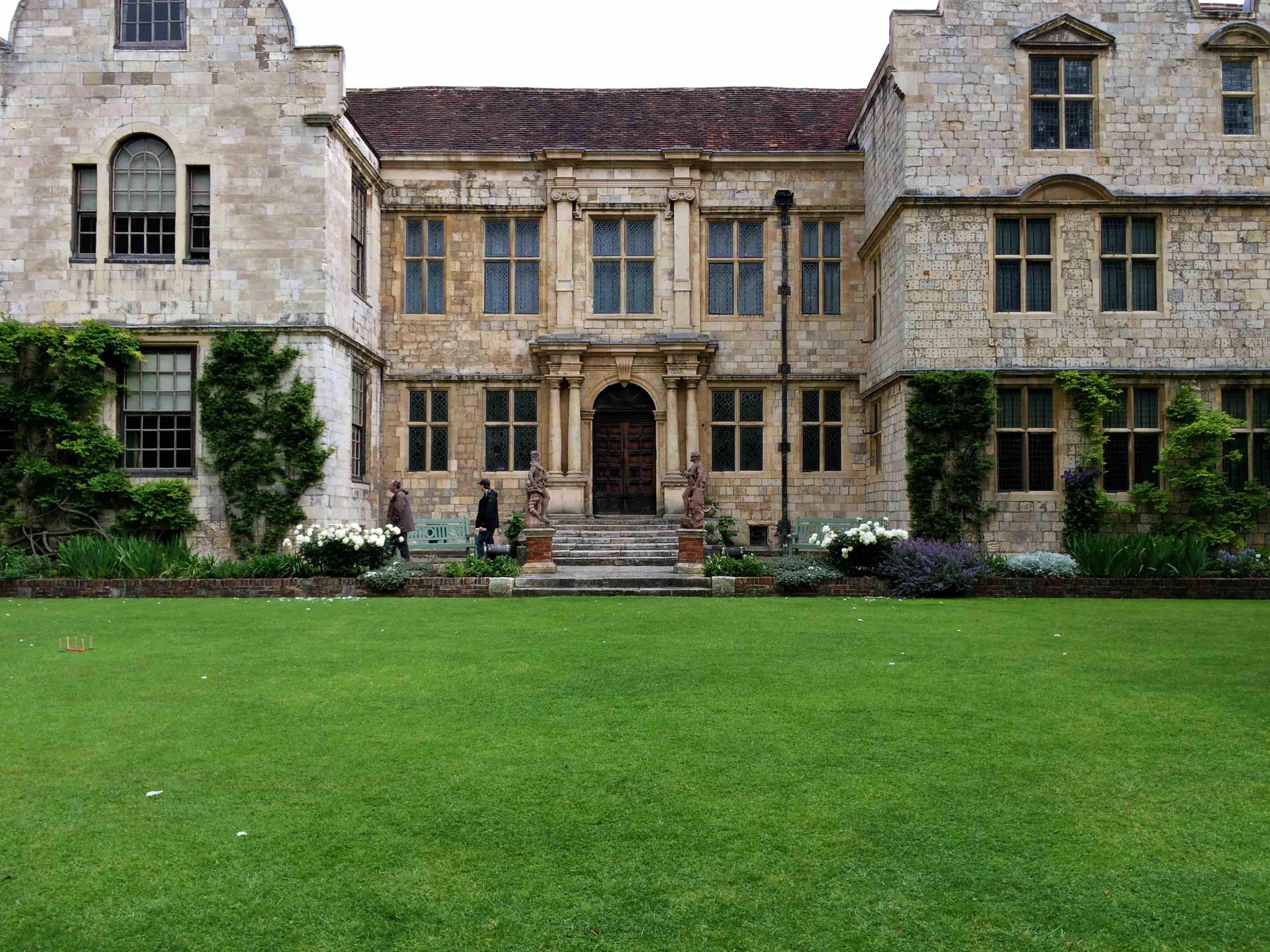
The Forum Boarium (sounds like a place on Sesame Street) we missed the first time we visited the “real” Forum, across the street. Apparently, Caesar was not at the Forum when assassinated, but heck, neither was I, thankfully. The Forum Boarium and the site next to it (shown at the head of this page) were easy to overlook from across a busy street that probably was not there in 44B.C.

The fifth photo is of a gallery building. It housed this elegant courtyard covered in glass and probably 150 years old, but cool just the same. Rome did not quit building great stuff just because the empire fell on its arse.

And quaint views.
 

image

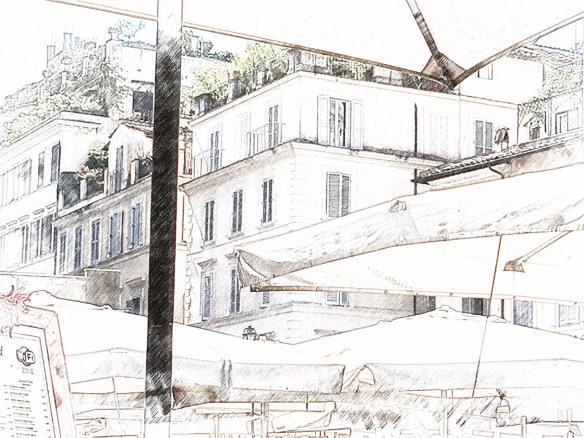
Campo de’ Fiori

We stopped for iced tea at a bustling open-air fruit and veggie market when I noticed how many apartment buildings have rooftop gardens. Because Rome has never allowed highrises cluttering the skyline, views from the tops of four- and five-story buildings are unobstructed, except by their own greenery.

At the end of a long shopping street stands a significant obelisk.

[These movies were shot with the best intention of editing both video and audio, but time  has been the great enemy of achieving desirable results.]


Florence, maybe this time

Oscar Wilde once observed that “When a woman remarries, it is because she detested her first husband. When a man remarries, it is because he adored his first wife. Women try their luck; men risk theirs.” I guess my return to Florence was a womanly thing to do, as I hated Florence 19 years ago. Such is the triumph of optimism over experience. Florence is a pleasure.

The train station is modern and central. The walk to our hotel was mercifully short in the blazing heat, though oddly, our excellent hotel maintains secrecy at the border of a large city park, featuring volunteer entertainers and the ubiquitous slingshot, blue roto-toys so prevalent in Venice, by providing no hint of its name or business except with a small, but well-polished brass sign best suited to identify a mail box.

Step into the park and admire the launch of a toy to make a friend for life…or at least for three blocks as the well-meaning tourist is pursued as by a San Francisco real estate agent with a hot lead.

Our bellboy, seeing two old men and one bed, dropped our bags and headed for the door, getting one foot into the hallway before accepting a €3 tip dropped from a sanitary height into his cupped palm.

image

Our elegant suite was about 600 sq ft.

It is an annoying phenom that the quality of internet service is inverse to the elegance of the sleeping quarters—a poor exchange for the literary insomniac. “Who’s that?” I hear you ask.

Friends remind me that Italy is about food, not gratuitous commentary about the influence of the Roman Empire. So I must suspend, if only for a few paragraphs, my self-appreciated comic observances for dinner.

The restaurant was small and unpretentious, but the food…image

Click once for descriptions, twice for enlargements. The Chianti Classico worked well.

After dinner we strolled to the famous Ponte Vechio, a bridge that serves as an entertainment center on warm nights. My intention had been to edit this long video, but getting it onto the page was tough enough.

Venice, Day 2

No great inventor is less admired by Venitians than the cave dweller who invented the wheel. If you doubt that is true, I have for you a deal on bicycle rentals in Venice. It is an untapped monopoly. You simply need to wait for the day when the Americans with disabilities lobby builds ramps for the myriad bridges. This is not a place for wheelchairs.

The canal waters of Venice rest, when behaving, about a foot below the streets, so all bridges must arch the water with many ascending and descending steps for boats and gondolas to pass beneath. The bridges that span the Grand Canal must rise high enough for working barges to pass in four lanes. We who flock here must hold a secret hatred for our cars; it is their absence that romances us.image

Venice is dense. There are no sidewalks, no parking spaces, no parking garages, no gas stations (a couple for boats, but those are on the water). Upon reflection, it feels as though the modern city gives more space to cars than to citizens.

Rod expressed his concern for the old ladies who have to schlep their daily groceries over three bridges to get home. They all seem to be over 80 and can still schlep. What’s to worry?

We toured the city by private boat and a bottle of prosecco:

Venice, Day 1

Many have said that a tourist in Venice can wander the tangled streets and alleys of this ancient city lost for hours in search of a destination. They should say it louder. The street maps squeeze 47-character Italian names onto each represented alley in 4-point type, making a high-powered magnifying glass a requirement to determine that street names on any map have little in common with the names posted on the sides of buildings. 80% of streets are deadends and several bridges serve only one large building. Such is Venice’s charm.

There are alleys in Venice so narrow that Walmart shoppers can only navigate them with hired flagmen at each end to prevent blockage.

Our hotel, when located, turned out to be quite charming.

image

A siting room on every floor.

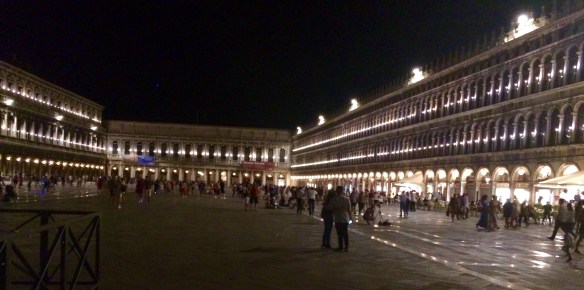
We bravely left our luggage, after a quick shower, and headed out for dinner and a stroll about town, certain to get lost again. In that regard, Venice never disappoints. Nevertheless, it was wonderful to see St. Mark’s Square in after dark:

image

A place to gather

You might be able to see a blue spec in the upper left sky. It is a strange new toy that is being flogged in all the open squares. A slingshot-like device hurls it far into the air. An on-board light traces the gentle fall to earth using some spinning mechanism that acts much like the seed of a maple tree.


Coming home

July 15, Wednesday

We left Wales for one last night in Dublin, where we had planned to catch an early flight to Paris the following morning. Three weeks before, we made reservations to have dinner at “the oldest pub in Ireland.” For those who have heard, correctly, that the food on the British Isles has improved substantially over that past two decades, there are hold-outs. The company at our assigned table were pleasant enough (all Americans), but the overpriced meal was served in the manor of a wedding reception where the bride’s mother spent a few weeks paring down the price in creative, if gastronomically questionable, ways. Of this there are no photos.

IMG_2639On our long walk to said pub, we stopped at this quiet pub for a whiskey and coffee, respectively. Somehow, I got into a long conversation with another patron. Rod says that this was just a ploy for me to show off my political erudition—hardly an opinion auditioning for the Book of Revelations.

The walk back to the hotel at about 10:00 took us one last time down Temple Bar, the street of many pubs. Costco on a Saturday afternoon handing out free pizza and beer would be less busy. These people do not understand the excitement of seeing a stranger “voted off the island,” asshole though he may be. There must soon be a push to install televisions in Irish homes.

We were early for both flights, but noticed that our return flight from Paris to SFO would be La Premiére or first class. It was, in a word, acceptable.

IMG_2640

The food was outstanding and the beds were a nice way to pass the time…sleeping.

Here’s some examples of the food we were served on Air France:

It was the extraordinary salmon tartar with caviar and gold leaf that made me realize that this was not a meal to be ignored. Rod had duck foie gras; I had yellow zucchini soup, Rod had (heart healthy) salmon pàté and sesame duck foie gras; I had grilled mixed vegetables in Creole-style aïoli sauce; Rod had slow-cooked fillet of John Dory with a tomato and eggplant compote. The banner photo is of a salad of ingredients, specified by the passenger, with a selection of cheeses. The Chardonnay and Burgundy were more than tolerable. An 18-year-old Glenlivet rounded out the meal nicely.

This proved to be an outstanding trip. All accommodations were exceptional and many of the places we visited were completely outside and beyond our expectations. The people of Ireland, Scotland, and Wales are more advanced than one might think. They put a high value on education and on common, social space. Edinburgh appears to be about 50% park. Wifi is everywhere and free. Scotland’s unemployment rate is under 5%. Ireland’s is higher (though now under 10%) but the country has infectious optimism.

There remains substantial acrimony in Scotland and Wales toward Maggie Thatcher, but it is hard to see how the absence of coal dust has dulled life in these quasi nations. I once thought it crazy for writers and artists to move to Ireland to avoid taxes on their windfall incomes. Now I only wish I had the talent, skill, intelligence and energy to have earned an invitation.

Portmeirion

Aside

July 14, Tuesday

The previous night’s rain had cleared by morning. Except for a few scattered clouds, the day was promising, but as we readied ourselves to drive to the seaside town of Portmeirion, there crept in premonitions. Thinking of the long, winding, narrow road in and out of Beddgelert that we would travel twice, I could not shake off parallels to Woody Allen’s fears depicted in Everything You Wanted to Know about Sex as a sperm-trainee preparing to be shot down a pre-moistened urethra to an uncertain fate.

Wales has an answer to William Randolf Hearst’s castle in the artificial village of Portmeirion built on an estuary along the middle coast of the country. The Hearst estate is described as Mediterranean Revival, while Portmeirion is a touch less formal, more playful, and referred to as “Italianate.” It, as fate would have it, was a receptive ovum.

This work of a rich architect, started about five years after San Simeon (Hearst’s castle), was created in part to protect an important estuary from untamed development. It is self-sustaining both by sales of parking/entry fees, by the rental of cottages and rooms, and by the sale of overpriced doodads at the gift shop and poorly prepared food at the 50s-style restaurant-dinner. Come to think of it, the limp fries and dirty water glasses might have been an intentional concession to the the period. Otherwise, the little village made for a thoroughly enjoyable few hours.

Portmeirion has been used by film studios as a set, most notably as the set for the short but popular British series The Prisoner from the late 60s, when it served as “the village” where the title character was held. The series kept the location unidentified until the credits of the last episode, giving the caretakers time to arrange for fee collection when the adoring swarms descended.

I cannot resist this quote from Wikipedia, which car rental agencies could use to prod cheap customers into springing for the GPS option no mater how overpriced:

The village is located in the community of Penrhyndeudraeth, on the estuary of the River Dwyryd, 2 miles (3.2 km) south east of Porthmadog, and 1 mile (1.6 km) from the railway station at Minffordd, which is served by both the narrow gauge Ffestiniog Railway and Arriva Trains Wales (Cambrian Line).

IMG_2626

We returned to Beddgelert without incident. Smiling though we are, it is sad to think that we are unlikely to return to this unusual part of the civilized world. Our three nights in Wales will long standout among the most charming destinations we have had the good fortune of finding.

Beddgelert

July 13, Monday

A light rain confined us to the car on the drive from Lledrod to Beddgelert. Considering how little rain we had seen until this point, the weather could only be regarded as cooperating. We had intended to stop at a particular town (tomorrow’s trip). It was best that we did not.

Our approach to this town was miles down narrow, houseless roads, leaving me to think I had booked another remote farmhouse, kept amused by shorn sheep. Not so.

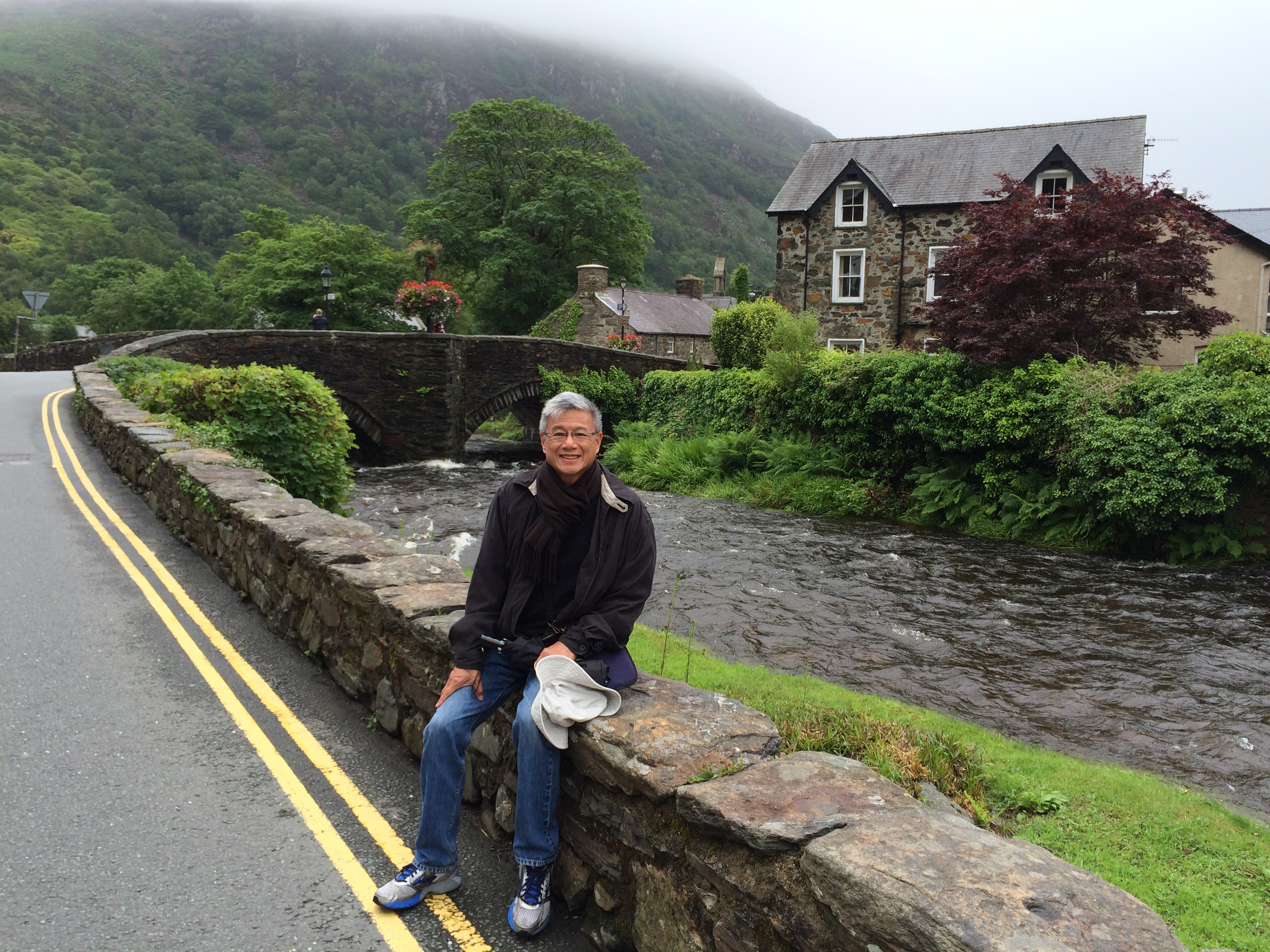
IMG_2559The town of Beddgelert boasts three pubs, several restaurants, three decent hotels, and a few novelty shops. Our GPS took us down this narrow alley to a foot bridge that even a European-sized sedan could not traverse. The actual road to our hotel required crossing the two tributary rivers.

IMG_2563

Rod found it easy to enjoy this immaculate town with its fine stonework, freshly painted details, and superb setting. We made two dinner reservations immediately, one at our hotel where the owner buys and cooks from a selection of what the market offers; the other at a restaurant recommended by our hosts in Lledrod.

IMG_2564

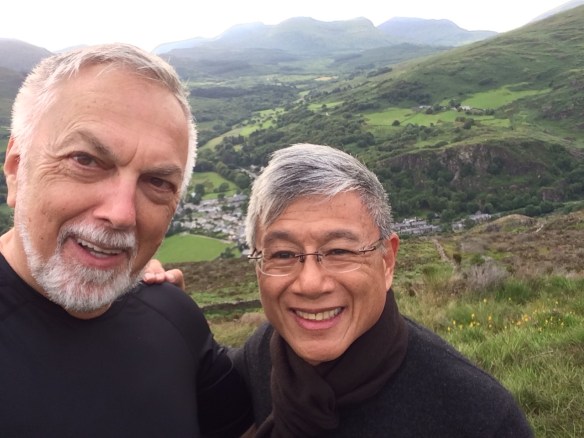
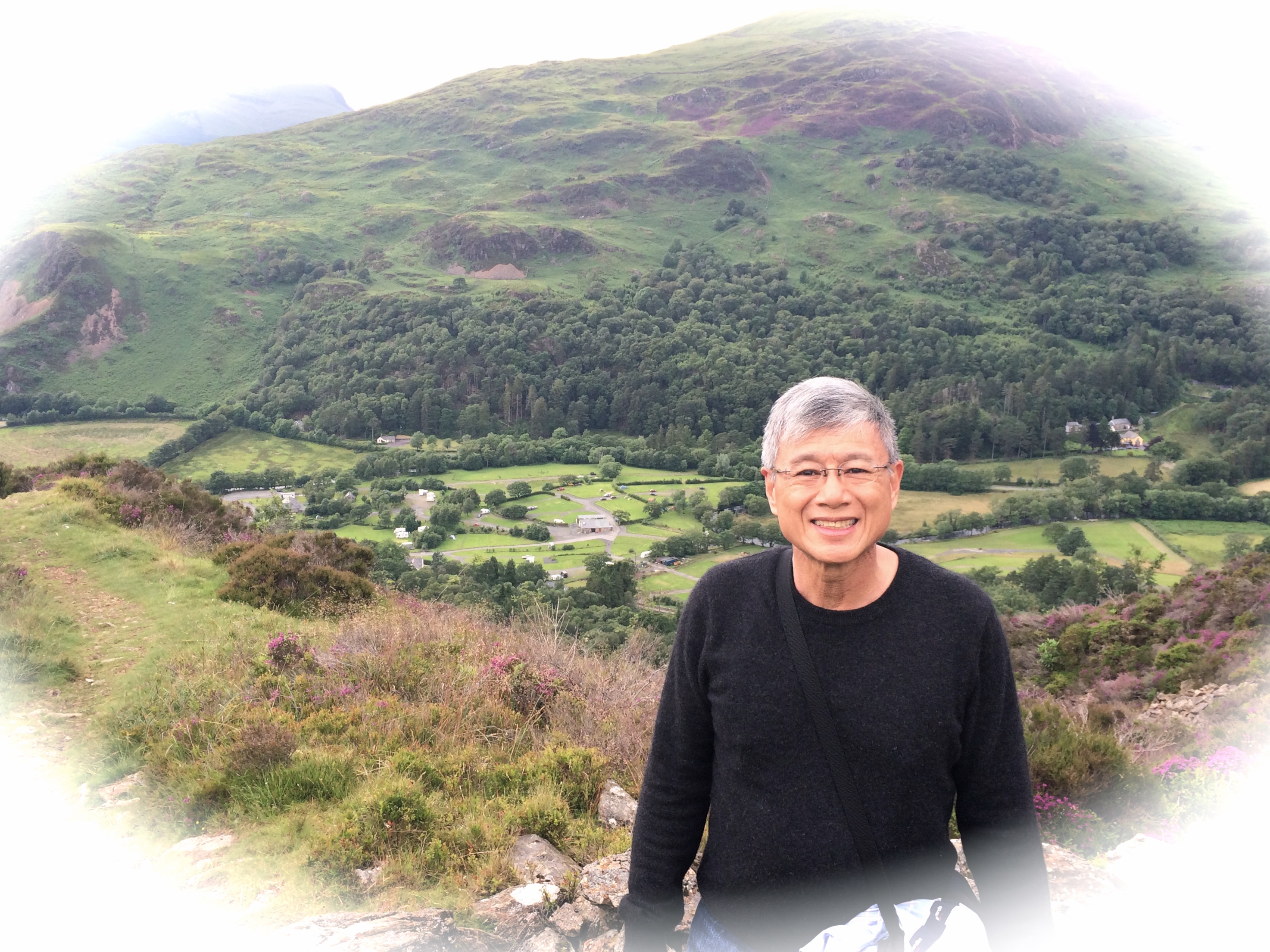
We took a hike to the top of the mountain behind our hotel. By California standards, this is not especially high, but the Welsh make up for that by leading unsuspecting tourists into what we thought might be our alpine grave when we completely lost track of anything that could be called a trail. Had it not been for a small series of better equipped hikers appearing and disappearing, apparitions from what must have been our town, we might have spent the night with the mountain goats. (Not their best choice, either.)

IMG_2619IMG_2623

IMG_2636
We showered quickly and reached our restaurant at 8:31 for a 8:30 reservation. As Oscar Wilde once quipped, “Punctuality is the thief of time.”

Lledrod and New Quay

July 12, Sunday

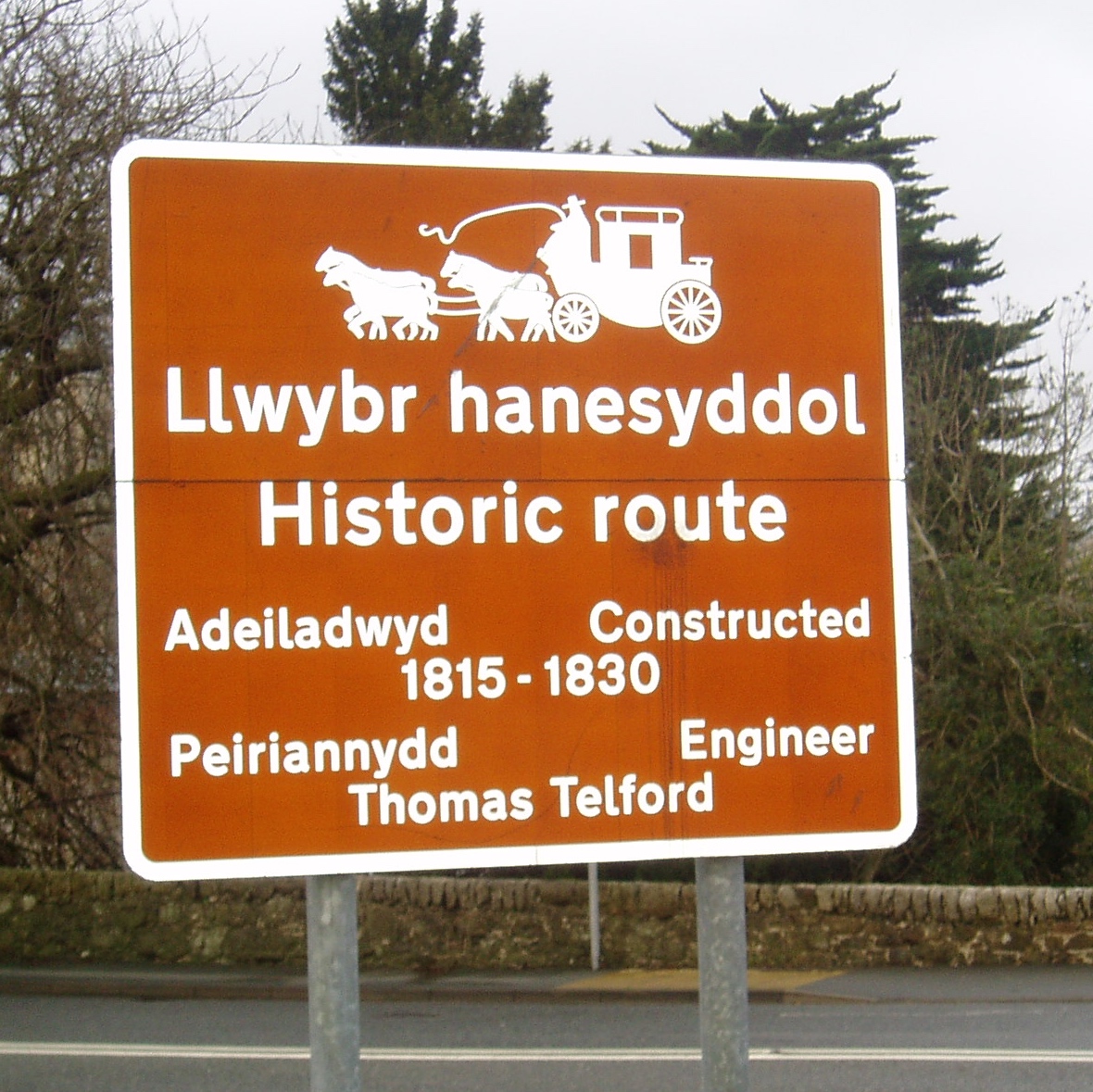
Whereas Ireland and Scotland can be regarded as English speaking, Wales is English tolerant. That applies to both the language and the people. There’s an odd feeling of disorder that goes beyond driving on the “left side” of a curvy roads barely wide enough for one car. It is the sign work.

OLYMPUS DIGITAL CAMERA

All signs are in both Welsh and English, but unlike countries that consistently put one at the top and the other below, Welsh sign makers use a (probably British) coin to make the selection both random and roughly even. Not only are you expected to untangle Aberaeron from Aberavon or Llanfyllin from Llangefni, but you must also scan through these unfamiliar names at full speed to determine which is the English. In a country where finding a citizen with a driver’s license who speaks only Welsh is more challenging than interviewing Yeti in a summer heat wave, the insistence of language equality is akin to a southern’s attachment to the Confederate flag, but without the belligerence and absence of humor.

Sometime during our stay in Edinburgh, we discovered that our travel planner (yours truly) had hired overlapping hotel stays in Dublin and Edinburgh which must mean that elsewhere in the trip, there was to be a night without an assigned bed. This was corrected in a most agreeable way.

IMG_2535 IMG_2511

Our booking at Brynarth Country Guest House was serendipity on a performance-enhancing vibrator. This impossible-to-find country guest house is run by two youngish guys who moved from England to find peace among the sheep. Stuart is a landscape gardener; James, a hotelier extraordinaire, or as the Welsh would say, extraordinary. The place is spotless. James gave us some great advice on places to eat in Wales, both in the wonderful town of New Quay, nearby, and in Beddgelert, where we were headed next. [I have discovered that the bleating of sheep, whose plaintive cries are discontented and pessimistic, make the most insipid life seem more bearable. That’s how the Welsh have tolerated the English—by comparison with a desolate creature whose coat is hot and scratchy.]
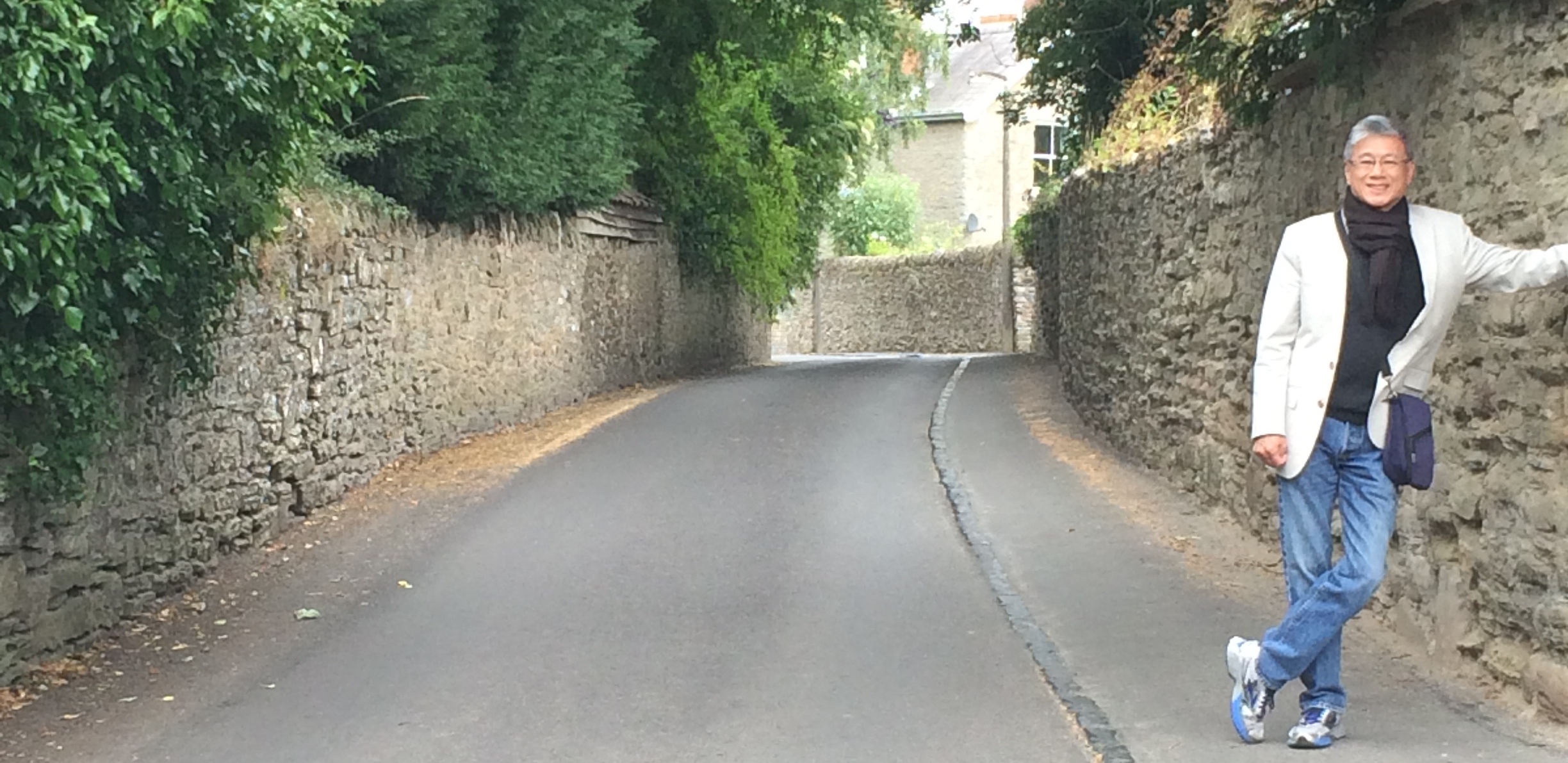
The local pronunciation is not as I say on the video “new quay” but “nooky,” probably a joke on the gullible tourist. Just as Lancaster County, Pennsylvania depicts boys on the road to [the town of] Intercourse, I imagine the Welsh have a similar joke of young people searching the winding coastal roads in search of nooky.
IMG_2546

We found a fine restaurant with a harbor view and excellent seafood.

IMG_2551 Our appetizers were a vision of more good food to come, a promise well kept.

Ludlow

July 11, Saturday

Few people that we met in the British Isles know anything of Ludlow, so it seems unlikely that my reader(s) will know of it. It has a population of 11,000—not an industrial giant. There is a Ludlow college, which boasts five tennis courts and lots more. The college is over 800 years old. Take that, Harvard.IMG_2466

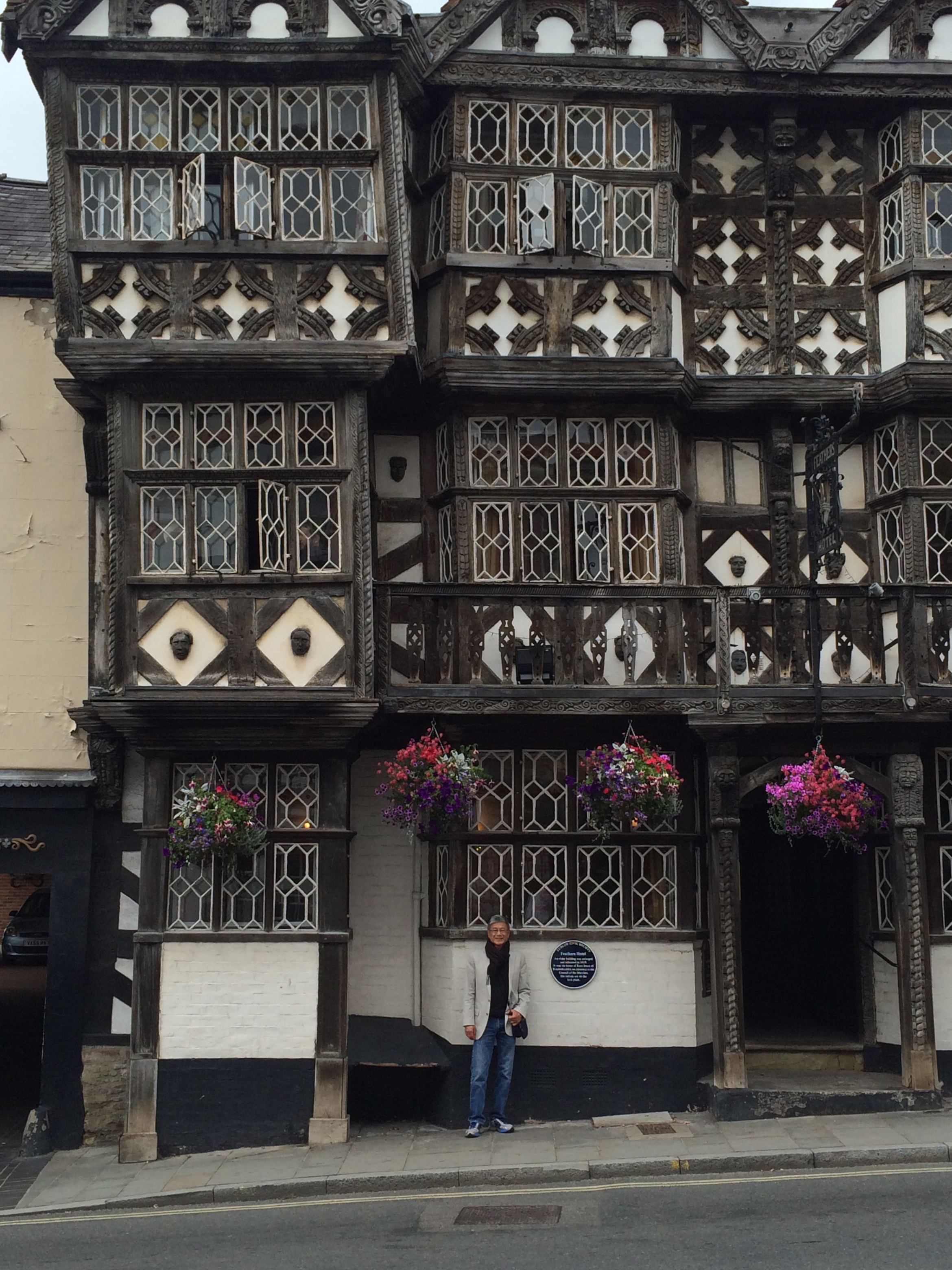
We had booked a room months ago in a 400-year-old hotel called “Feathers.” To our surprise, we had the largest, most beautifully appointed room of our entire trip, though all our accommodations were excellent by American standards.

IMG_2460My first guess on seeing this edifice, built before the invention of the plumb line, was that it gets its name from the force necessary to knock it over. However, if you can tolerate uneven floors and tiny elevators, this is a fun place to stay. The man on the front desk, who appears to work 24 hours a day, was willing to shoe-horn our car into the parking lot—space for 12, fits 36.

We had hit a quiet time for this visit. Apparently, graduation ceremonies start on the following week.

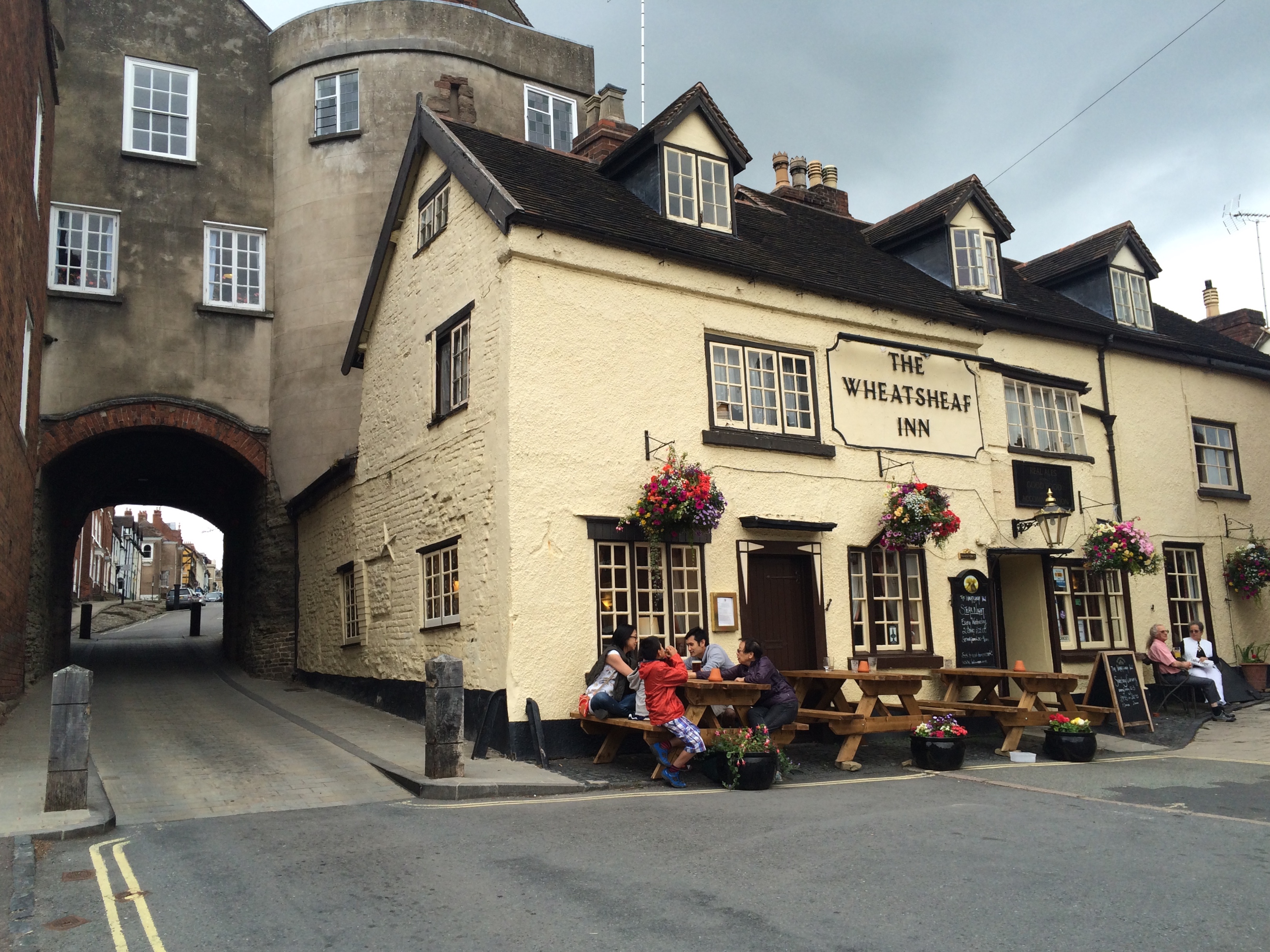
IMG_2465Ludlow can suck megapixels from your camera in short order. It is difficult to restrict oneself, but I will attempt to limit these photos to six favorites starting with this inn next to some city portal. IMG_2490

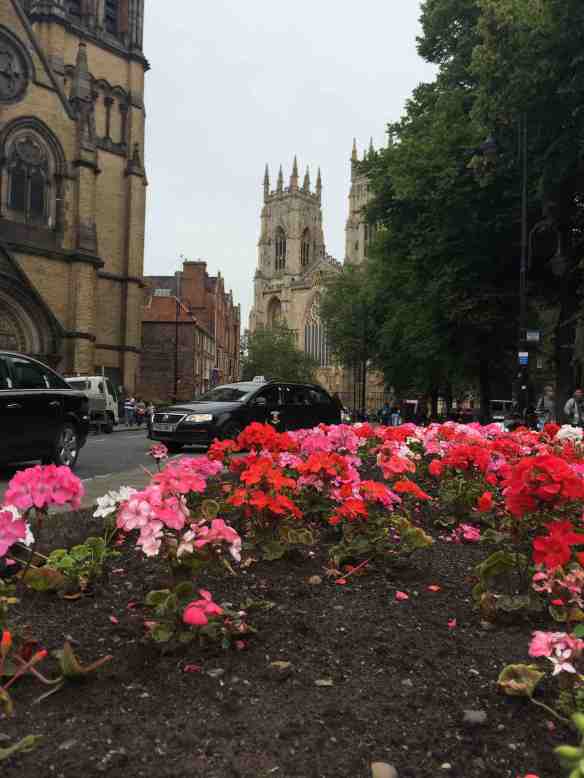
Like so many towns in the British Isles, people really like flowers:IMG_2454

Ludlow is situated on a hill by a river so that many streets from the center of town slope down to the river.IMG_2469

At the river, some first rate homes and hotels invite people to have a quiet stay.IMG_2497

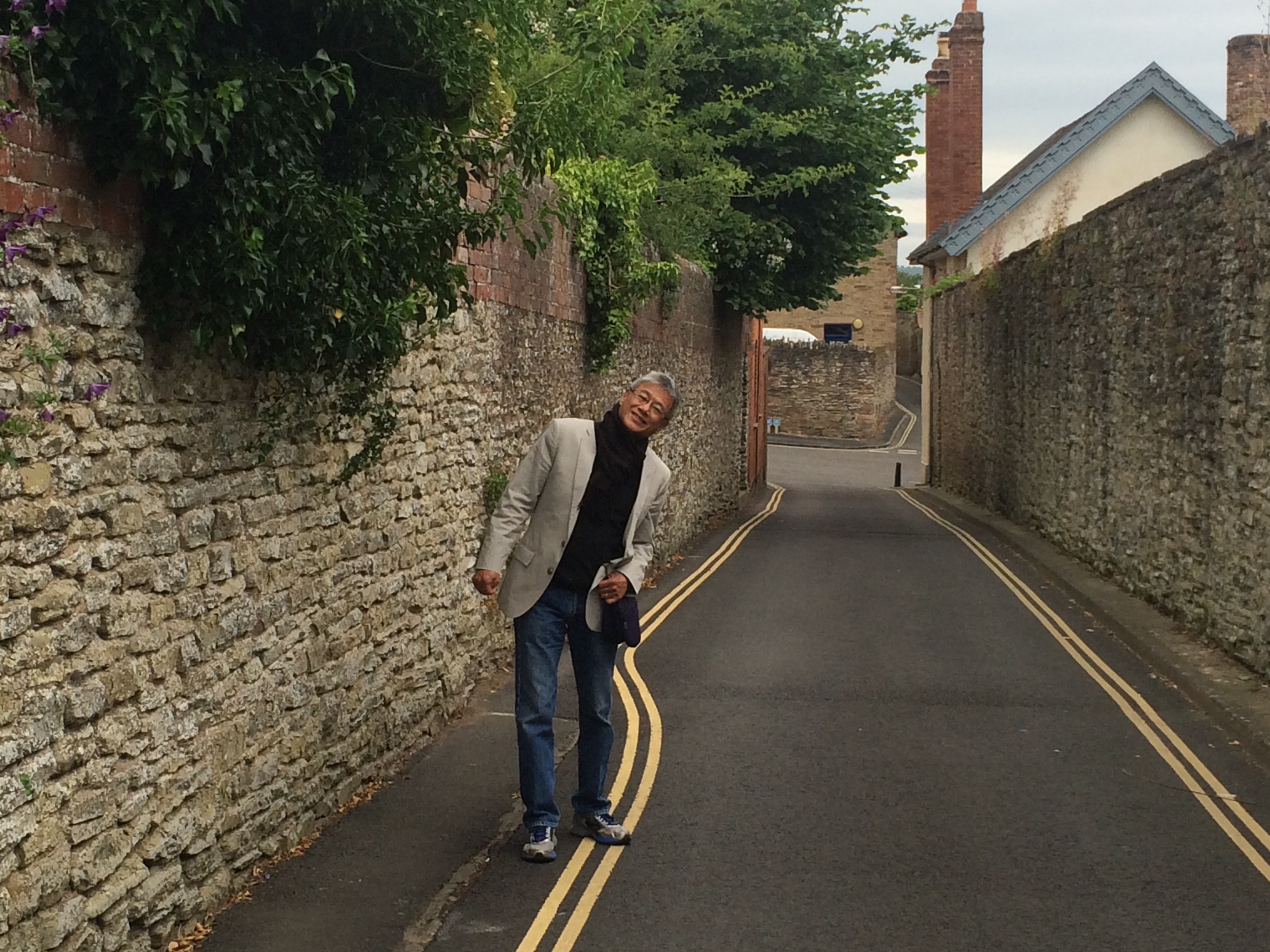
Rod was being playful, enjoying the magnificent homes behind these walled streets. One way? I doubt it.IMG_2478

There must be some rich florists living here.

And see, I could not stop at six. I bet there was a time when people who lived on this street worked for people who lived behind stone walls, but the day when a workman could buy something across from this park have long ago ceased.

IMG_2500

Finally, this video gives the viewer a glimpse at the attractive town center.

Ludlow is famous for food. There are many terrific restaurants and a food fair in August that attracts swarms.

Manchester

July 10, Saturday

To criticize a city I have visited goes against the grain, but for Manchester, I make this small exception. So uninspired by the lay of the place, I am compelled to use a photo lifted from on-line (note the watermarks) to illustrate a place where we stopped for about an hour without taking the camera from my pocket. This photo illustrates, in the most favorable way, how the city has mixed old, the oyster bar in the background, with the new, a shopping mall in the foreground. More than Glasgow, this shopping area is an outdoor mall (long pedestrian-only street of several blocks) lined with indoor malls and shops, mostly high-end. The masthead photo above shows the exceptional popularity of Sinclair’s Oyster Bar, so crowded that we did not attempt to squeeze in.

Manchester mall

In fairness, Manchester is a city on the move. My problem is that I could not determine from where to where, and this, as you will learn if you read on (your fault), applies to many of its residents.

Our well-placed hotel, about 50 meters from the train station and about twice that from Canal Street, the heart of gay Manchester, was in an area undergoing construction for blocks in all directions. On what should have been a warm, sunny Saturday afternoon, the noise and dust were irritating. Perhaps this colored our perceptions, but Manchester seems to lack a focus, a theme, a soul.

The old and new in this city are jumbled together; they fight each other. Whereas Montreal and Edinburgh have “old towns” where history is maintained, refurbished, and replicated, Manchester seems to be the vision of a careless gardener, plucking weeds and runt plants haphazardly, planting new without much thought as to the overall effect, similar to my own gardening, making me an expert in this criticism. Perhaps at the end of another year or two, the planner’s original vision will spring to life in a sudden revelation of her intention. Good luck.

IMG_2425

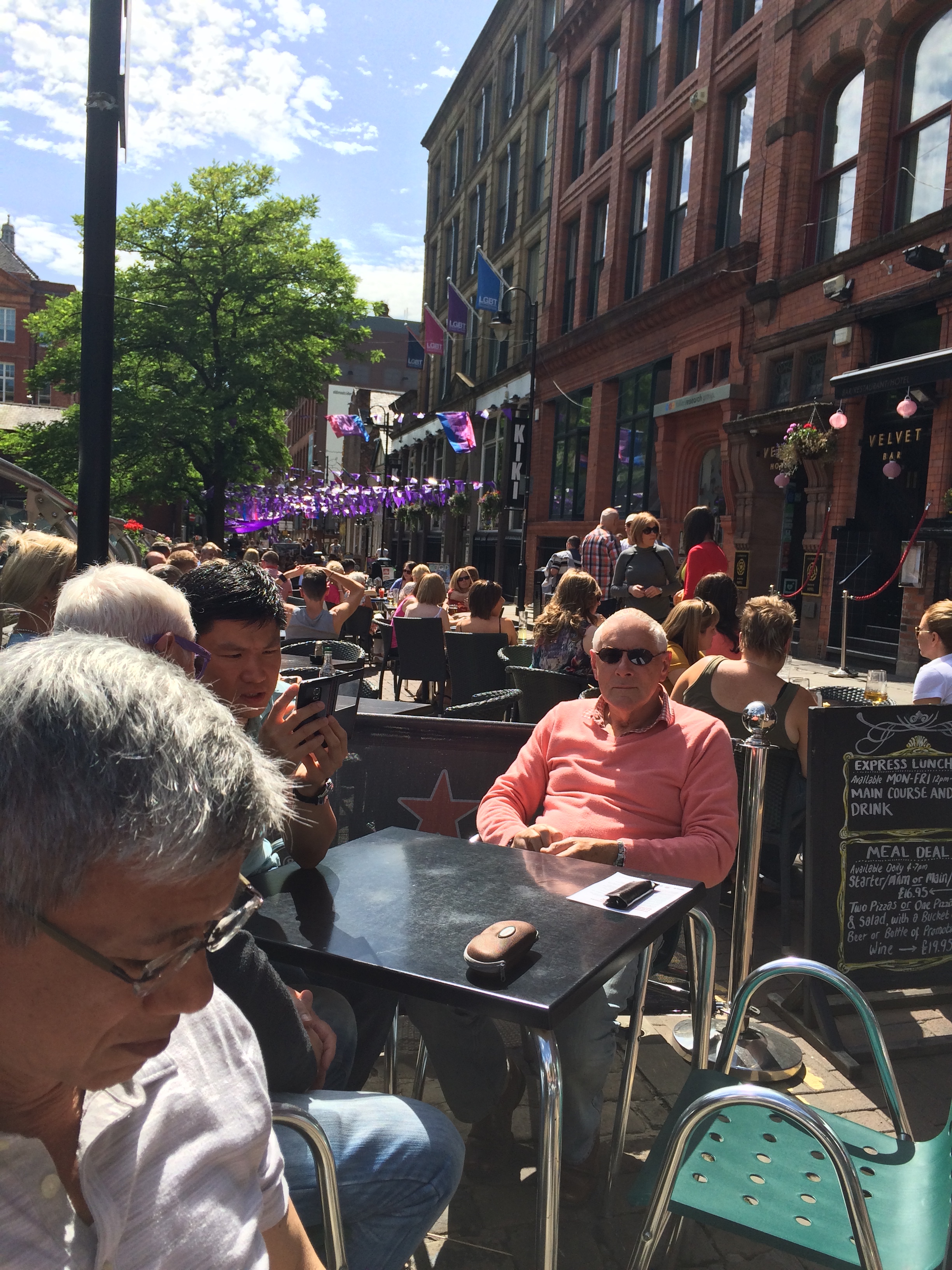
Manchester has a compact gay district inventively called “Gay Village.” It runs about three blocks of Canal Street forcing all the bars to be, cheek by butt crack, on the same side of the street—it’s a metaphor. It was a beautiful day, as this picture shows, but despite the balloons, flags, and pennants the crowds appeared dour.

Manchester must be the cross-dressing capital of the world, clearly accounting for over half of the world’s stiletto heels in size 12 and higher. Whereas my observation of these proclivities from years ago was of loud, audacious, campy, and funny queens, this crowd seemed spiritually confined by their cleavage-enforcing bras and tight skits. They identify with the genre’s moniker “sparkle,” but that seems to be the goat for the joy once given the world to hide some pain.

IMG_2431

At night canal street gets much louder and more crowded. Oh to be young and pretty again—or just one…either one.

IMG_2426

We searched for a decent restaurant, found one, but naturally, it was completely full. Fortunately, we discovered a new place called “New York New York,” while they were still celebrating the Fourth of July. Just a block from the wild popularity of Canal Street, there were tables to be found here. Better still, the food was excellent.

My only complaint about dinner was that we were seated next to the most distractingly handsome dude in all of Manchester. [below]
IMG_2428

When seeking breakfast in the morning, the Hilton Hotel (highly recommended for people arriving by train and visiting Canal Street) sat us next to two guys with whom they must have thought we would have something in common. They had enough tattoo ink to contain War and Peace in both English and Russian, but I could not imagine chatting with them about renaissance painting, so we ate in mutual silence.

IMG_2502

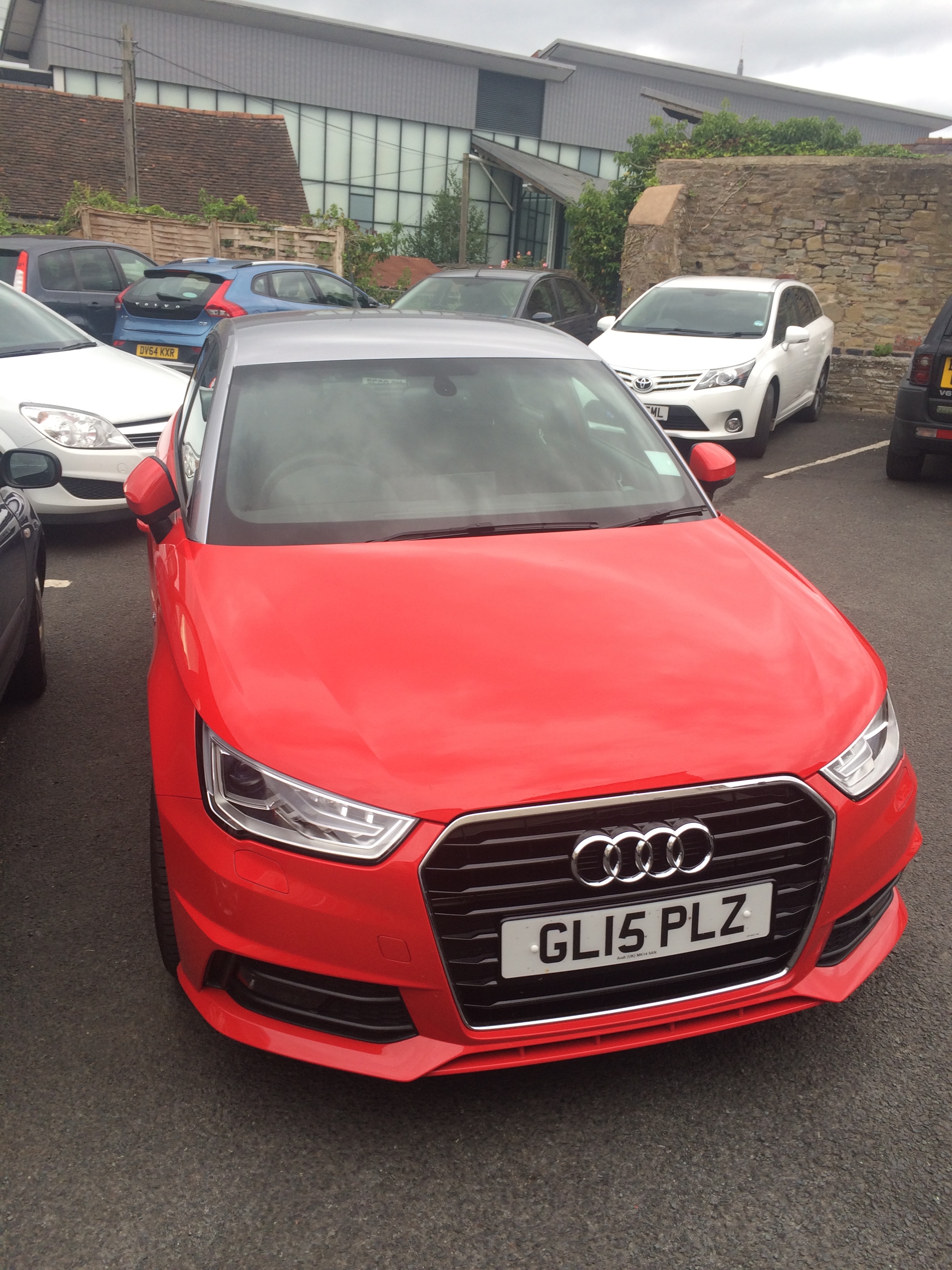
On Sunday morning we left Manchester in this beautiful Audi with an automatic transmission. The car had sensors for when it was getting close to some object and a GPS system that included the speed limit on each road, which is useful in a place where the speed limits change constantly.

European car engines turn off when stopped at a light and start up again when the driver takes his foot off the break. This is true for both diesel and petrol vehicles. Traffic lights in Europe turn red and yellow before green to alert the driver to put it in gear or take one’s foot of the brake to start the car. When it starts, it does not lurch forward or roll back.

Sun of York

July 9, Thursday

When Shakespeare wrote “made glorious summer by this son of York,” he was not referring to the skittish appearances of Helios. An azure sky can turn cloudy and gray in the few moments it takes to peruse a pub’s lunch menu, and vise versa. We got caught in a moderate evening rain while trying to find a particular restaurant. We settled for less.IMG_2364IMG_2362

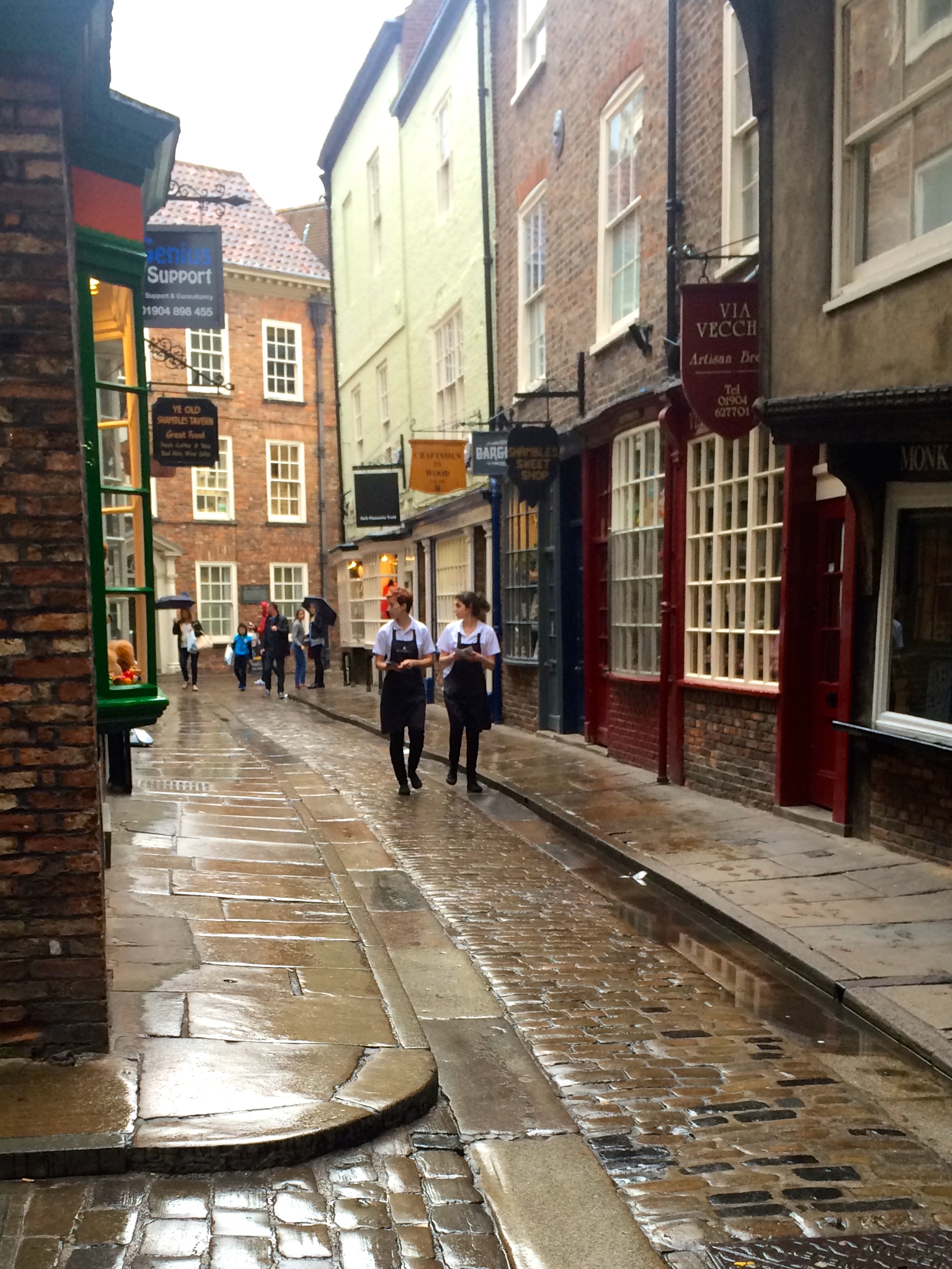
The streets are just wide enough for the rain to sneak between the oddly angled walls of the storefronts. There are crooks and nannies, like English muffins, in which to seek momentary shelter, but the stones are slippery and the rain persistent.

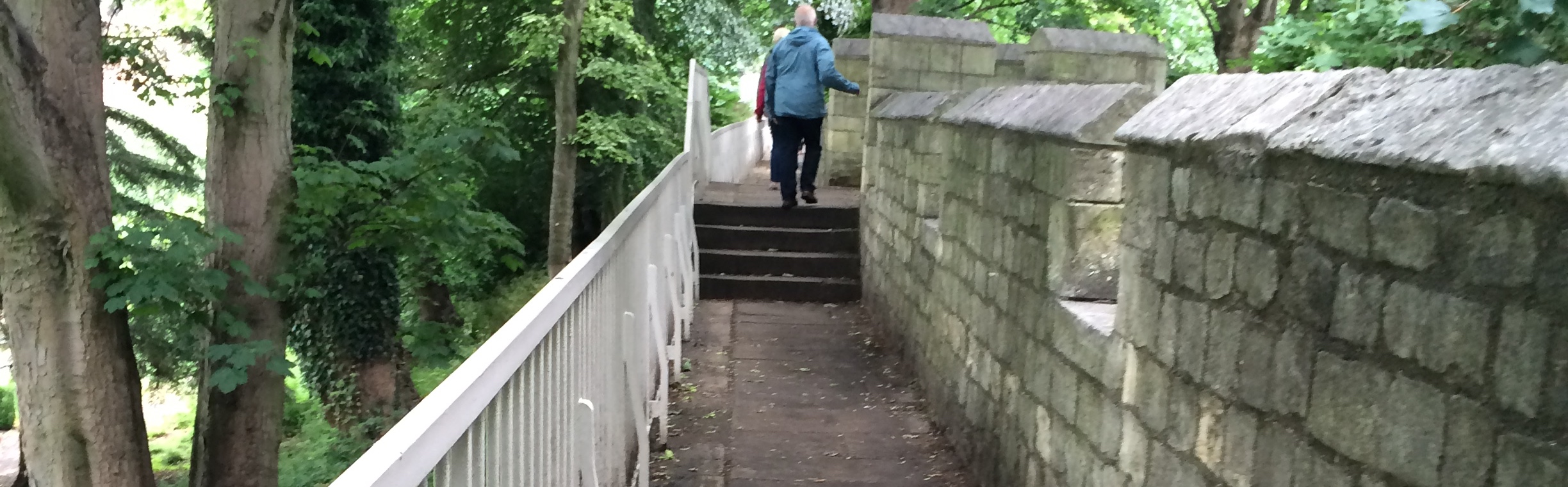
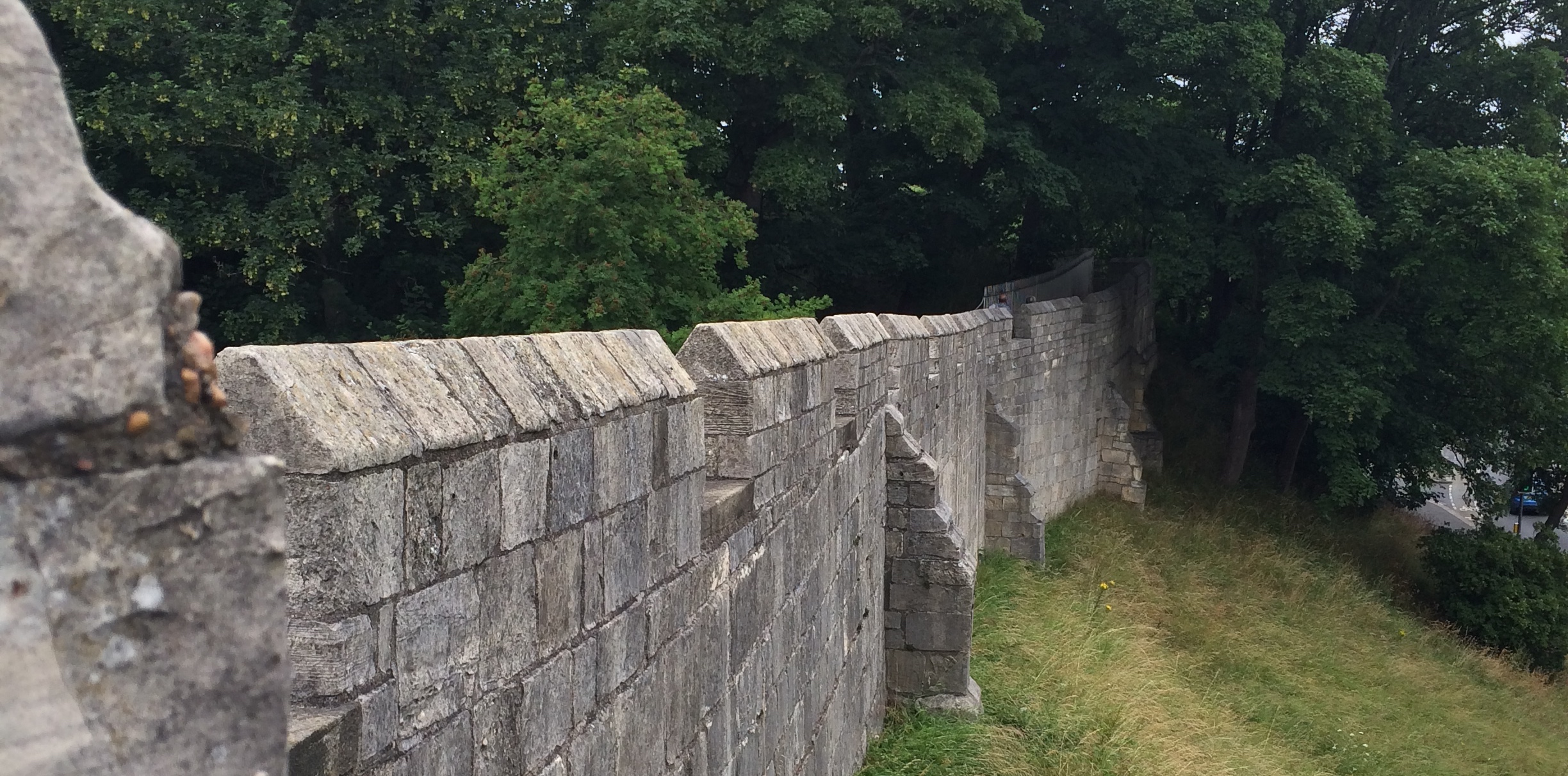
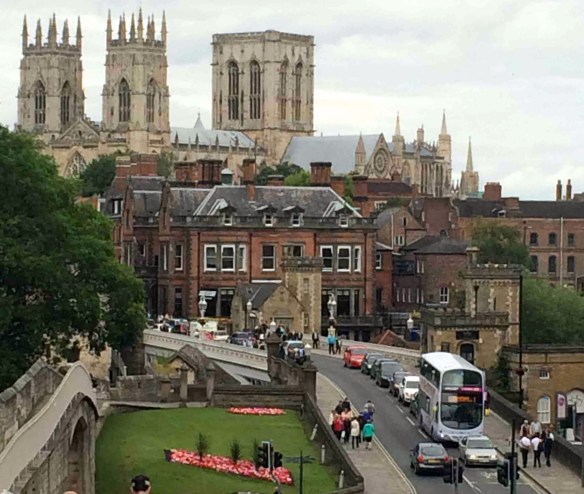
York is a medieval town with a stone wall that once provided some level of security against Vikings or Scots, but now serves the curious tourists who are encouraged to see the city from the long segments of wall that run from riverside to riverside. I doubt whether a crossbow touting Yorkshireman would actually recognize this well-tended, clean-swept, safety-railed stroll along the impotent battlements of yore.

IMG_2341

IMG_2355

IMG_2348

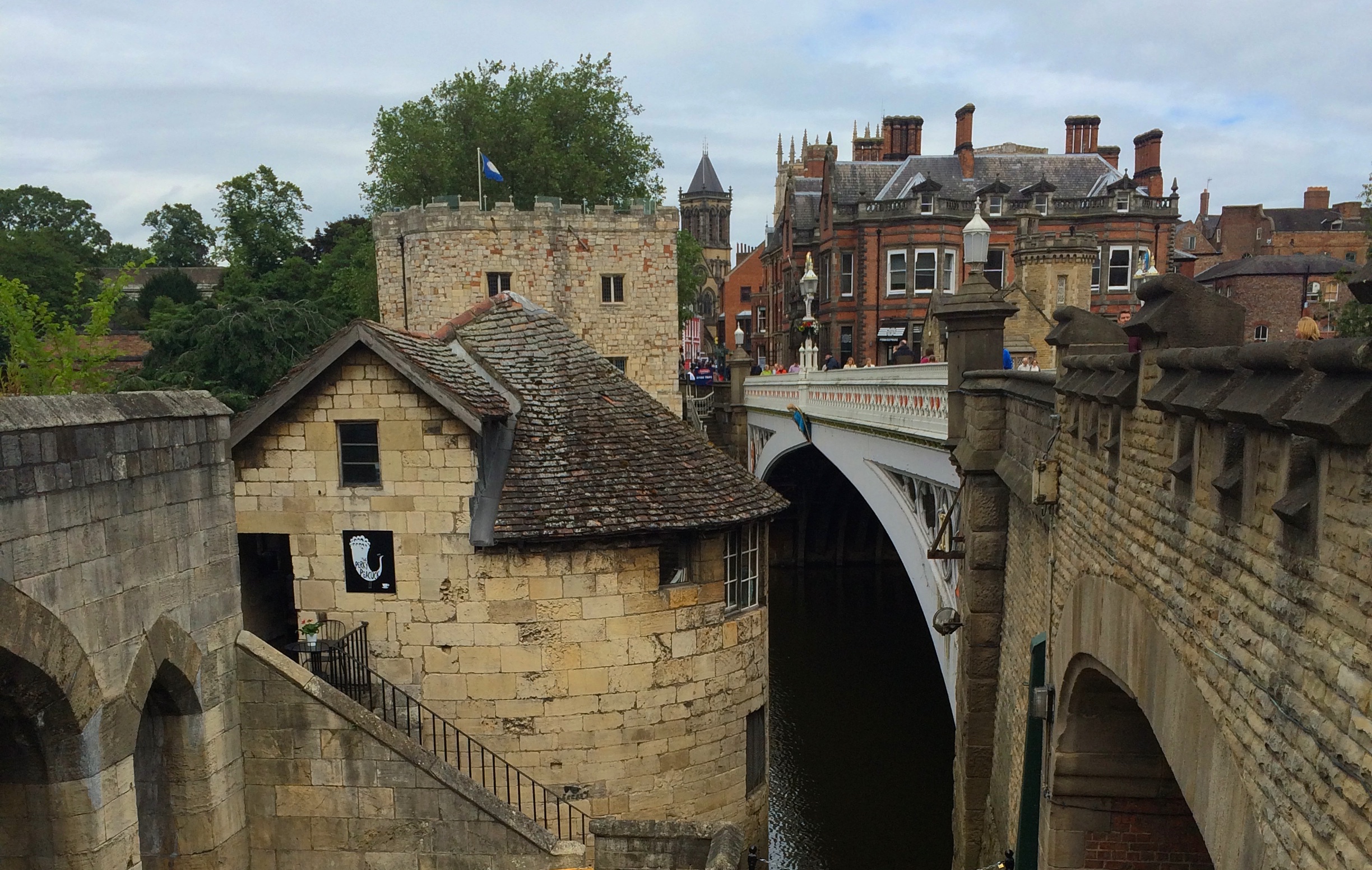
Here the wall is suspended were a modern bridge risks exposure to the hungry mobs laying siege. In a city where restaurants outnumber houses, hungry mobs are less feared.

IMG_2346

Guard towers barely maintain their dignity over passing cell phone users.

IMG_2350

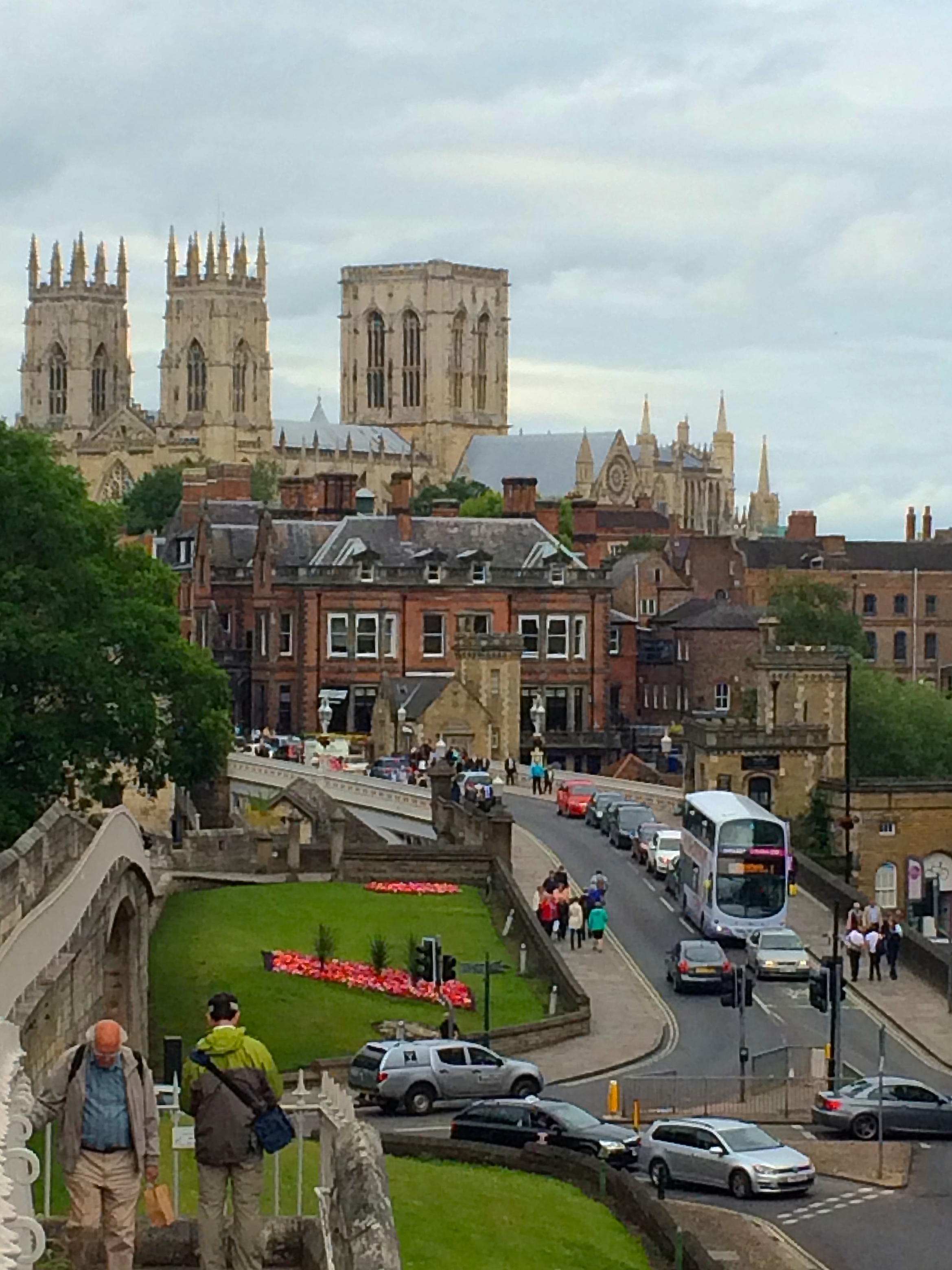
Cars and busses pierce the walls at various gates (called “bars” like our hotel “Monkbar,” which is hard to avoid calling “Monkeybar”), but few are allowed more than a single block’s intrusion.

We had the good fortune of visiting the Railway Museum one morning. It is large, as it needs to be to house these wonderful old trains. Much of the museum is devoted to how royalty travelled in the early days of rail service.

A second museum recreates the Yorkshire streets of a few hundred year ago, with facsimiles of dinning, wedding, dying, farming, and penury (debtor’s prison). The reproduced streets, shops, barns, and homes have the fascination of a HO-scale model train set, but at full scale. There’s even the smell of horse shit where one might presume it would have been.IMG_2409

Our last meal in York was memorable:

York Minster

July 7, Tuesday
Rod on train

The trip from Edinburgh to York was pleasant. This particular train is operated under the Virgin organization (Virgin Atlantic, Virgin America, Virgin Records). It seems an odd decision to label one’s corporation with a term meaning “inexperienced,” even if you mean it in the nicest way, when the product you are selling, high speed travel, is among those where we usually want experience. The desire for inexperience is only valid when the customer is driving, so to speak.

IMG_2314

The land along the northeast corner of England is bucolic. Sheep roam over large green pastures. Less often, one sees cows and less still, horses, but none are crowded into the fattening pens common to I5 in central California.

Whether viewing from a train or by air, one sees that the landscape of central Great Britain and Ireland comprises small patches of pasture or produce delineated by rows of trees. This is obviously less efficient than the hundreds of square miles of corn and wheat farming common to the American “bread basket,” but it is less damaging to the top soil. I’d feel better if our food were produced this way.

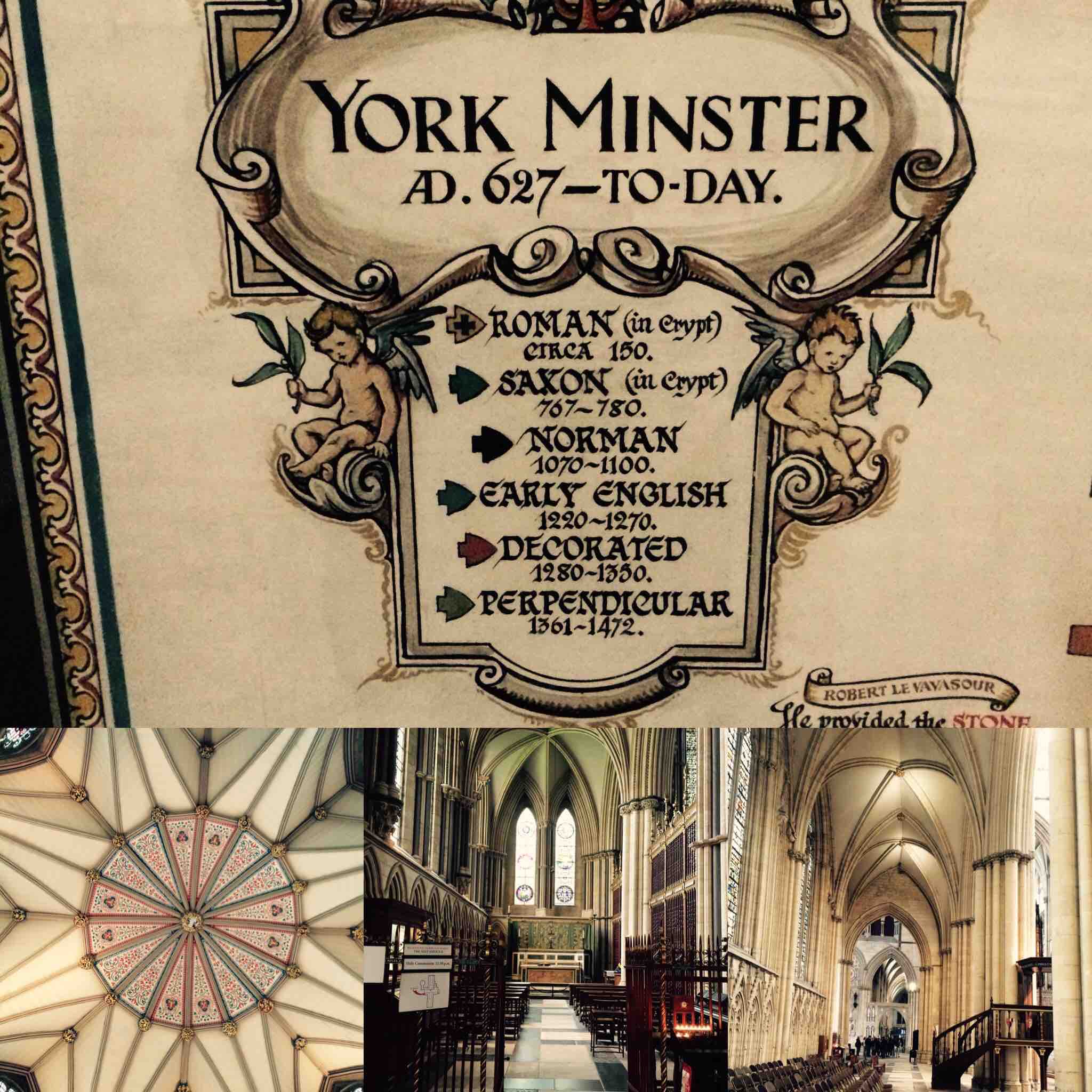
The town of York is dominated by a big church, called York Minster. It can absorb the better half of a day to gawk at. York-6The church has been under construction for about 1400 years. One has the impression that there was a time when someone thought construction would end. A roof collapse, a couple of fires, failing lead around the stained glass, vandalism, and acid rain have removed unjustified optimism. I was about to ask whether the guide thought these plagues might be the wrath of God, but in houses of worship, I feel an unwelcome guest without sarcasm.

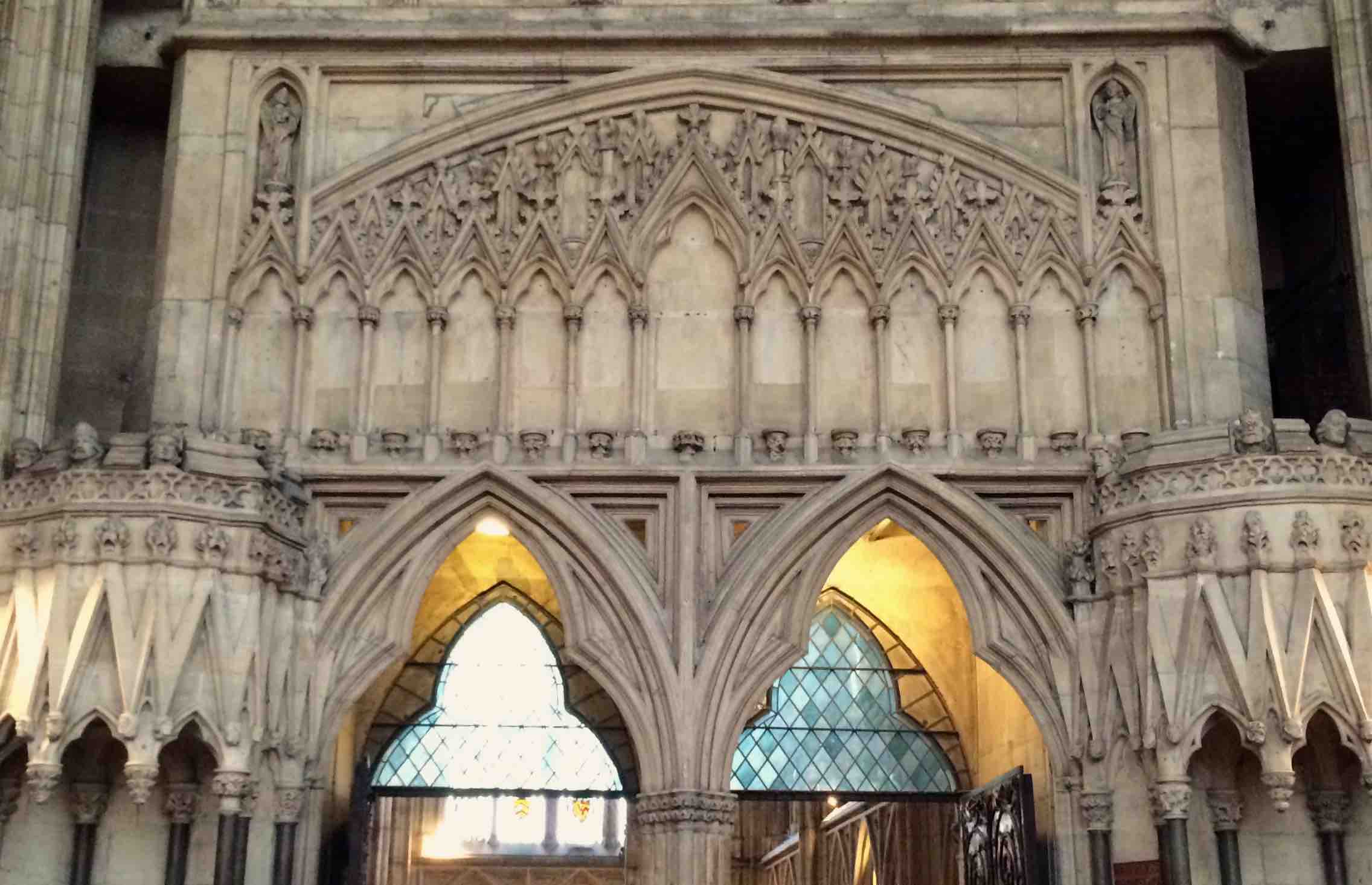
York-4These arched doors are from the inside of a room not used by parishioners. It shows how every square inch of this edifice is elaborately carved. The pointed arches appear designed so that the arch bishop and other high officials can walk upright without snagging a pointed hat. No pope. This is not a Catholic church.

York-5The grounds are also attractive. One can easily see that Pope Francis’s desire to get his minions to focus more on the poor and needy can be difficult when priests get swaddled in marble and fed foie gras. The clergy’s palaces are a concession to the corrupting influence of luxury. But who would dress for Sunday mass held in a large shed? Well, maybe evangelicals in America’s deep south, but not the Brits.