Regensburg

The magnificent small cities (or big towns) of Regensburg and Bamberg are unspoiled bookends to the tattered, bombed-out city of Nuremberg, though even the cities that were smashed in the allied vendetta are fabulously restored today. This part of Germany has an ancient, Italian influence. All of Germany has a more recent Italian influence in the form of pizza, spaghetti, and gelato. Perhaps Germany has taught Italy how to build a motorcar that works (note the rise of Fiat) while Italy has taught Germans something about food, but only the easy stuff. In fairness, the Germans can do things with mushrooms that are worthy of a closer look. But I digress wildly and may leave an unintended impression of entendre doubled.

Regensberg 798Regensburg (ominously pronounced “Reagan” as in Ronald) dates back to the days of Julius Caesar. The architecture has a decidedly Italian flavor. Most great buildings boast some form of tower, illustrative of the owner’s wealth; there are lots of balconies; the building colors are muted and tasteful (pre-Berlusconi Italy). A mural of David and Goliath (both fully clothed—colder climate than Florence, apparenly) is a bit cartoonish with the playful touch of Goliath resting an arm on a window cornice.

This is the first city we visited that had serious flooding two months ago. The lingering effects are hard to spot. A stone bridge completed around 1300 was partially submerged in the floods, but it is undiminished.
Regensberg 963

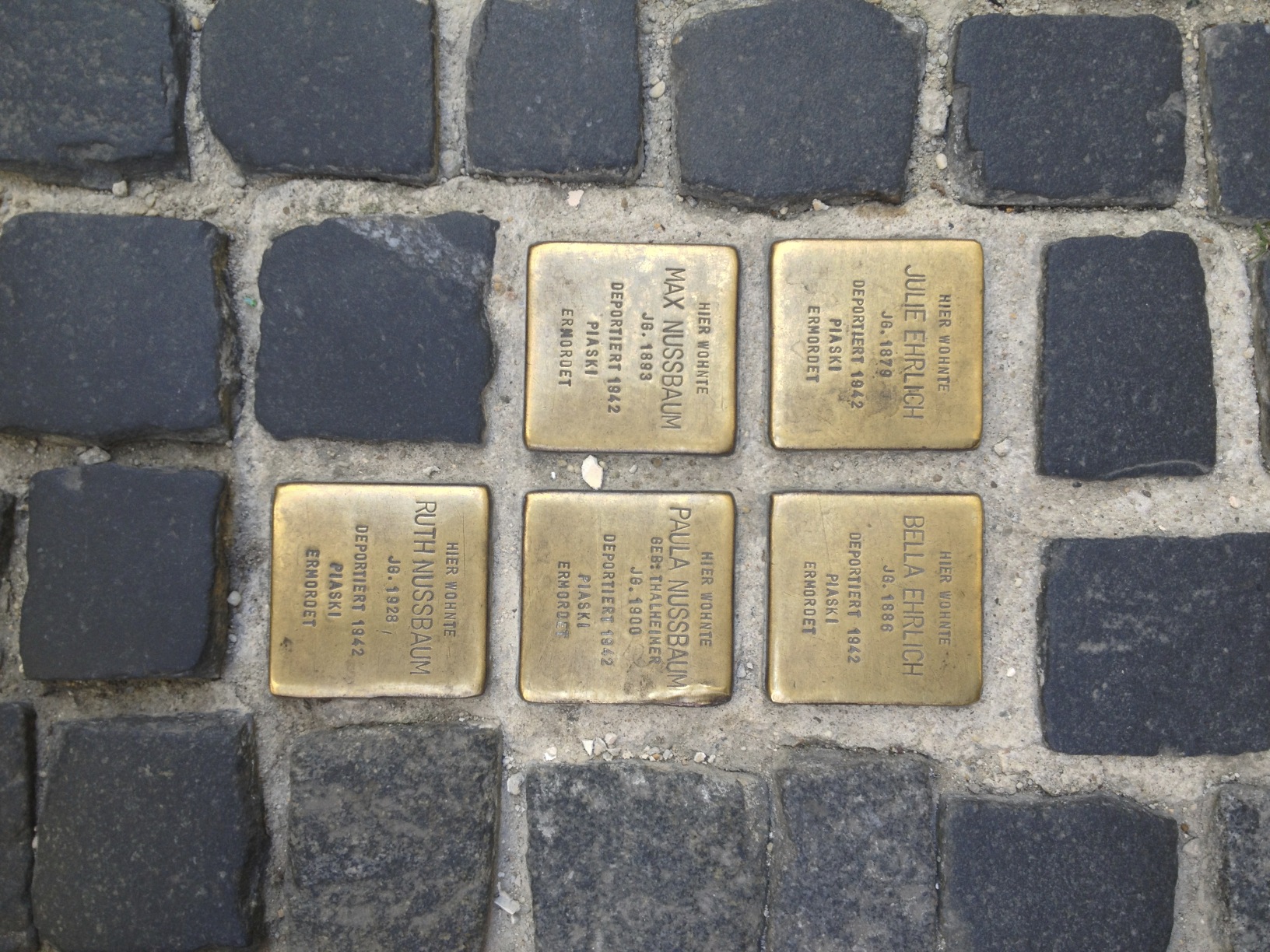
Our Australian guide pointed out some brass “stumbling stones” set into the street, replacing cobbles of the same size and shape. Each contains the name of a person who lived at the adjacent address and was murdered by the Nazis. The name “stumbling” does not indicate some intention to trip and kill elderly tourists in some ill-conceived act of pointless revenge, but in the more figurative sense of “stumbling upon” as a perpetual reminder of injustice. These are found in many Bavarian towns and are being set by citizens even today. This well-intentioned paving is irreconcileable with the adage about “the road to hell.”

Beer service at the café where our busses intended to rendezvous was regrettably slow. Chisti and I were forced to chug 12 ounces in 45 seconds, which we are conditioned to do, but this will cost the otherwise perfect town a half star—a sad day in northern Bavaria.

Life on Odin Long Ship

It rained after our return from Nuremberg, which we all hoped would pull the temps a safer distance from the three digit [non-metric] range. The English and Canadians accept the American insistence on Fahrenheit as if we were the keepers of the impractical past. The guides have a sweet way of poking fun at us by giving their first measurement of cathedral spire hight, city wall length, or distance from our ship in meters, then offer a polite conversion to feet or miles, which always earns a good natured titter. I recall that in Bruges, a handsome college student tour guide asked before starting his canal boat whether any wanted French translations (a few hands), Dutch translations (a few hands), and then “Anyone need English,” to the laughter of all but we befuddled Americans. The joke, of course, was that his questions had been asked in English and everyone aboard could accommodate it. Americans seldom notice this, or think it is just natural. To those who might find my comments too pointed, I am among the mono-linguistic. I offer the story in admiration of my multilingual, young, Chinese-American friends.

VikingOdin_Rhine

Odin from Water’s Edge

The Odin is called a “long ship,” and a walk from the observation deck to our cabin makes explanation of that name unnecessary. It is 135 meters long and 11.5 meters wide. It was specifically designed for the German canal locks that handle barges and tour ships of exactly this width. The ships have bumpers, and we are startled at their first use as the poor captain could hardly swish this colossal phallus into a stone-sided sheath without a groan here and there.

The proportions are fine, length and width, but it is the ship’s height that has proved most disappointing. It is unsafe for a man taller than one meter (three feet+) to be enjoying the upper deck erect (standing up) for fear of a concussion from a passing bridge. The captain’s wheel house is mounted on hydraulic lifts that dodge the obstructions like a whack-a-mole target. For many days, including this one, the sun deck is closed as drinking and diving (ducking) are not recommended. On a normal cruise, this would be less noticeable—the ship would travel while we sleep and be parked at a river port during the day and those who wanted to use the top deck could safely do so. Our ship must travel when it can.

Ah, the bridges! The Rhine, Main, Main-Danube Canal, and Danube river are criss-crossed by countless bridges. Some are several hundred years old, others are stunningly modern. They share one thing in common, they are all in excellent repair. In fact, the infrastructure in this swathe of Germany is as tidy as a bidet-using Frenchman’s bottom. Not that I am saying that Germans are anal, butt…

Along the rivers, after the mountain castles, riverside hamlets, vineyards, forests, and beaches, there are many industrial sites. Some have large cranes that unload lumber or manufactured goods. The yards are kept in immaculate condition. Roadside vegetation, farmland, cottage yards are all trimmed as carefully as a pole-dancer’s pubes. Where do these people find time to consume beer?

In the parts of Germany we visited, all utilities are underground and none of the streets shows any sign of patchwork from an ill-timed service drop. (In San Francisco, a repaved street has a half-life of 60 days before some contractor with a backhoe and planning myopia digs a trench through $750K of asphalt and then repairs same with $1500 worth of semi-packed gravel and tar.)

Glenn on deck

Glenn on Deck

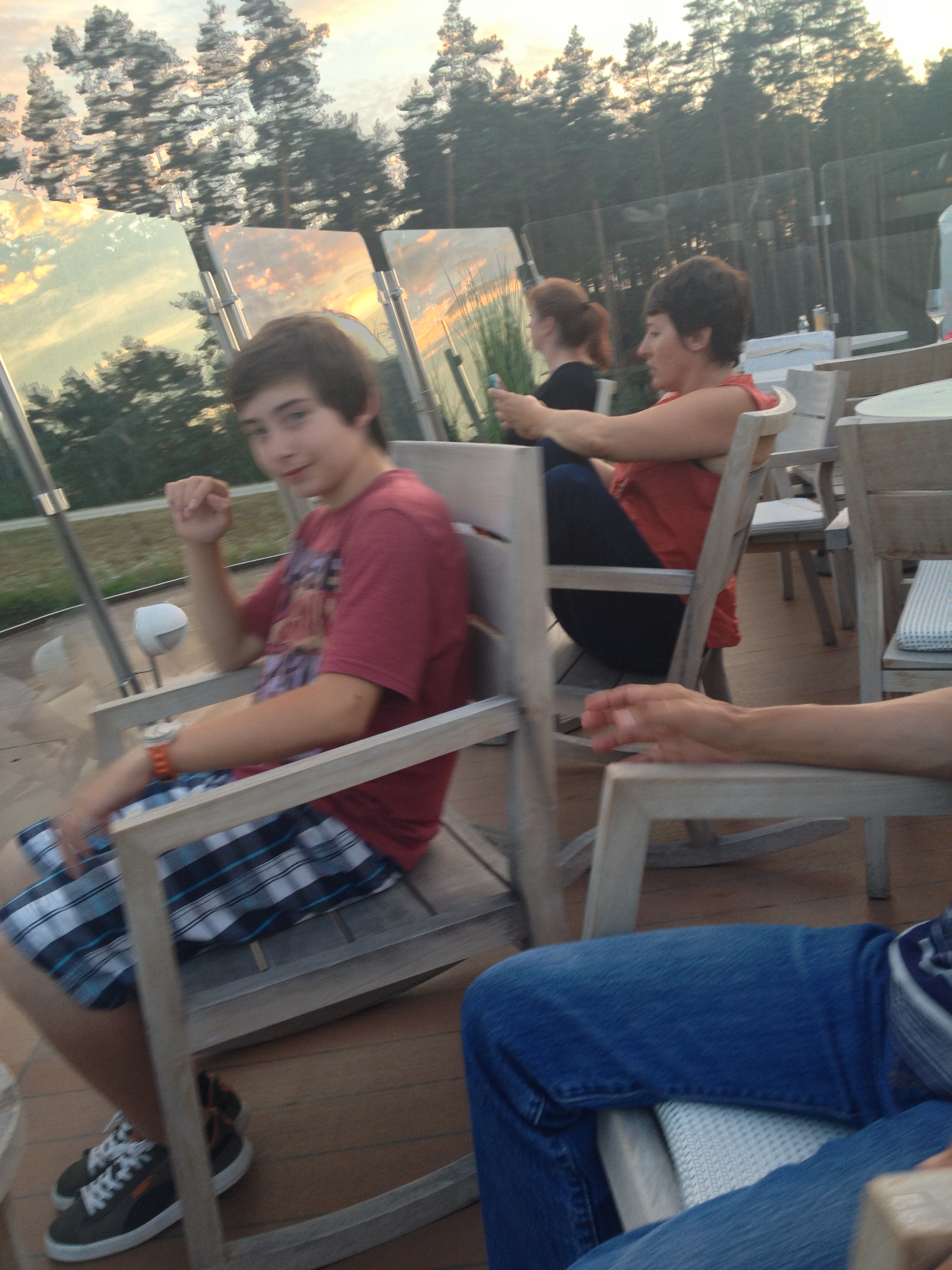
It is all quite scary to see California and Detroit fall so far behind, but that’s nothing to the fact that Glenn (the before-mentioned 13-year-old whizkid) beat me at backgammon immediately after I taught him the game. There’s more. His mother, upon learning of this feat, intent on imparting manners to her child, suggests, “Glenn, you should thank Richard for teaching you the game.”

He replies, “He didn’t teach me anything.” Ouch! And how could I? Still, he’s really a cool kid and he has added a lot of enjoyment to my trip.