Coming home

July 15, Wednesday

We left Wales for one last night in Dublin, where we had planned to catch an early flight to Paris the following morning. Three weeks before, we made reservations to have dinner at “the oldest pub in Ireland.” For those who have heard, correctly, that the food on the British Isles has improved substantially over that past two decades, there are hold-outs. The company at our assigned table were pleasant enough (all Americans), but the overpriced meal was served in the manor of a wedding reception where the bride’s mother spent a few weeks paring down the price in creative, if gastronomically questionable, ways. Of this there are no photos.

IMG_2639On our long walk to said pub, we stopped at this quiet pub for a whiskey and coffee, respectively. Somehow, I got into a long conversation with another patron. Rod says that this was just a ploy for me to show off my political erudition—hardly an opinion auditioning for the Book of Revelations.

The walk back to the hotel at about 10:00 took us one last time down Temple Bar, the street of many pubs. Costco on a Saturday afternoon handing out free pizza and beer would be less busy. These people do not understand the excitement of seeing a stranger “voted off the island,” asshole though he may be. There must soon be a push to install televisions in Irish homes.

We were early for both flights, but noticed that our return flight from Paris to SFO would be La Premiére or first class. It was, in a word, acceptable.

IMG_2640

The food was outstanding and the beds were a nice way to pass the time…sleeping.

Here’s some examples of the food we were served on Air France:

It was the extraordinary salmon tartar with caviar and gold leaf that made me realize that this was not a meal to be ignored. Rod had duck foie gras; I had yellow zucchini soup, Rod had (heart healthy) salmon pàté and sesame duck foie gras; I had grilled mixed vegetables in Creole-style aïoli sauce; Rod had slow-cooked fillet of John Dory with a tomato and eggplant compote. The banner photo is of a salad of ingredients, specified by the passenger, with a selection of cheeses. The Chardonnay and Burgundy were more than tolerable. An 18-year-old Glenlivet rounded out the meal nicely.

This proved to be an outstanding trip. All accommodations were exceptional and many of the places we visited were completely outside and beyond our expectations. The people of Ireland, Scotland, and Wales are more advanced than one might think. They put a high value on education and on common, social space. Edinburgh appears to be about 50% park. Wifi is everywhere and free. Scotland’s unemployment rate is under 5%. Ireland’s is higher (though now under 10%) but the country has infectious optimism.

There remains substantial acrimony in Scotland and Wales toward Maggie Thatcher, but it is hard to see how the absence of coal dust has dulled life in these quasi nations. I once thought it crazy for writers and artists to move to Ireland to avoid taxes on their windfall incomes. Now I only wish I had the talent, skill, intelligence and energy to have earned an invitation.

Portmeirion

Aside

July 14, Tuesday

The previous night’s rain had cleared by morning. Except for a few scattered clouds, the day was promising, but as we readied ourselves to drive to the seaside town of Portmeirion, there crept in premonitions. Thinking of the long, winding, narrow road in and out of Beddgelert that we would travel twice, I could not shake off parallels to Woody Allen’s fears depicted in Everything You Wanted to Know about Sex as a sperm-trainee preparing to be shot down a pre-moistened urethra to an uncertain fate.

Wales has an answer to William Randolf Hearst’s castle in the artificial village of Portmeirion built on an estuary along the middle coast of the country. The Hearst estate is described as Mediterranean Revival, while Portmeirion is a touch less formal, more playful, and referred to as “Italianate.” It, as fate would have it, was a receptive ovum.

This work of a rich architect, started about five years after San Simeon (Hearst’s castle), was created in part to protect an important estuary from untamed development. It is self-sustaining both by sales of parking/entry fees, by the rental of cottages and rooms, and by the sale of overpriced doodads at the gift shop and poorly prepared food at the 50s-style restaurant-dinner. Come to think of it, the limp fries and dirty water glasses might have been an intentional concession to the the period. Otherwise, the little village made for a thoroughly enjoyable few hours.

Portmeirion has been used by film studios as a set, most notably as the set for the short but popular British series The Prisoner from the late 60s, when it served as “the village” where the title character was held. The series kept the location unidentified until the credits of the last episode, giving the caretakers time to arrange for fee collection when the adoring swarms descended.

I cannot resist this quote from Wikipedia, which car rental agencies could use to prod cheap customers into springing for the GPS option no mater how overpriced:

The village is located in the community of Penrhyndeudraeth, on the estuary of the River Dwyryd, 2 miles (3.2 km) south east of Porthmadog, and 1 mile (1.6 km) from the railway station at Minffordd, which is served by both the narrow gauge Ffestiniog Railway and Arriva Trains Wales (Cambrian Line).

IMG_2626

We returned to Beddgelert without incident. Smiling though we are, it is sad to think that we are unlikely to return to this unusual part of the civilized world. Our three nights in Wales will long standout among the most charming destinations we have had the good fortune of finding.

Beddgelert

July 13, Monday

A light rain confined us to the car on the drive from Lledrod to Beddgelert. Considering how little rain we had seen until this point, the weather could only be regarded as cooperating. We had intended to stop at a particular town (tomorrow’s trip). It was best that we did not.

Our approach to this town was miles down narrow, houseless roads, leaving me to think I had booked another remote farmhouse, kept amused by shorn sheep. Not so.

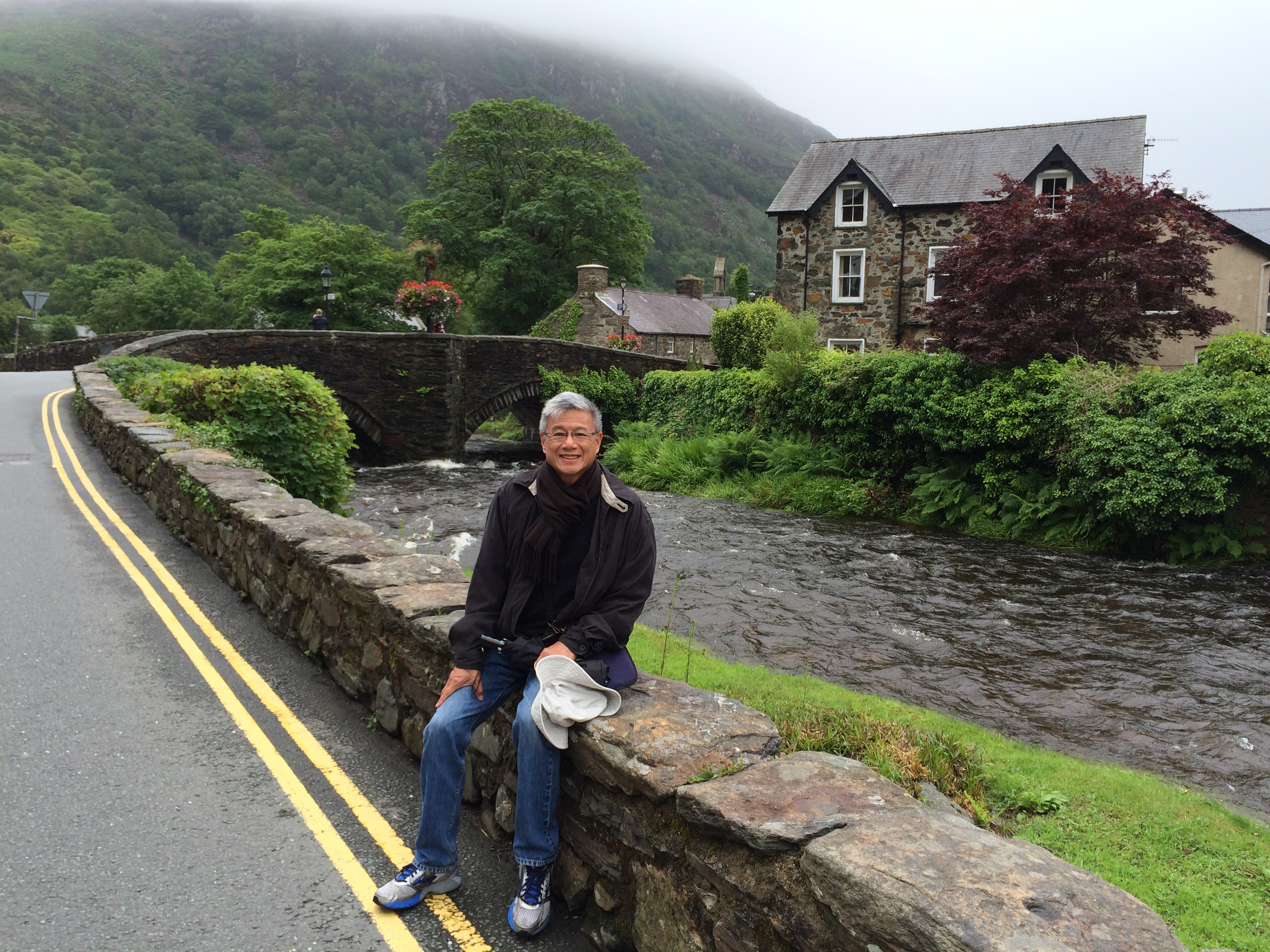
IMG_2559The town of Beddgelert boasts three pubs, several restaurants, three decent hotels, and a few novelty shops. Our GPS took us down this narrow alley to a foot bridge that even a European-sized sedan could not traverse. The actual road to our hotel required crossing the two tributary rivers.

IMG_2563

Rod found it easy to enjoy this immaculate town with its fine stonework, freshly painted details, and superb setting. We made two dinner reservations immediately, one at our hotel where the owner buys and cooks from a selection of what the market offers; the other at a restaurant recommended by our hosts in Lledrod.

IMG_2564

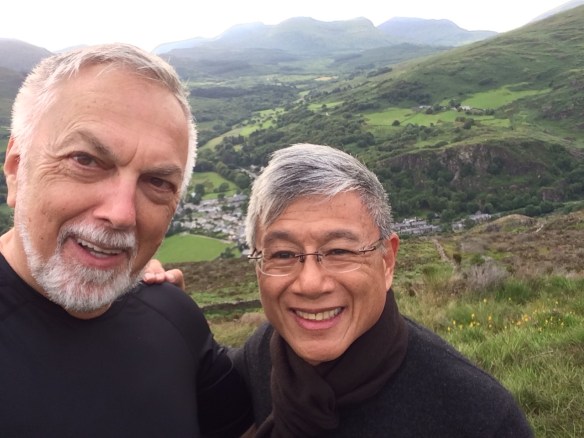
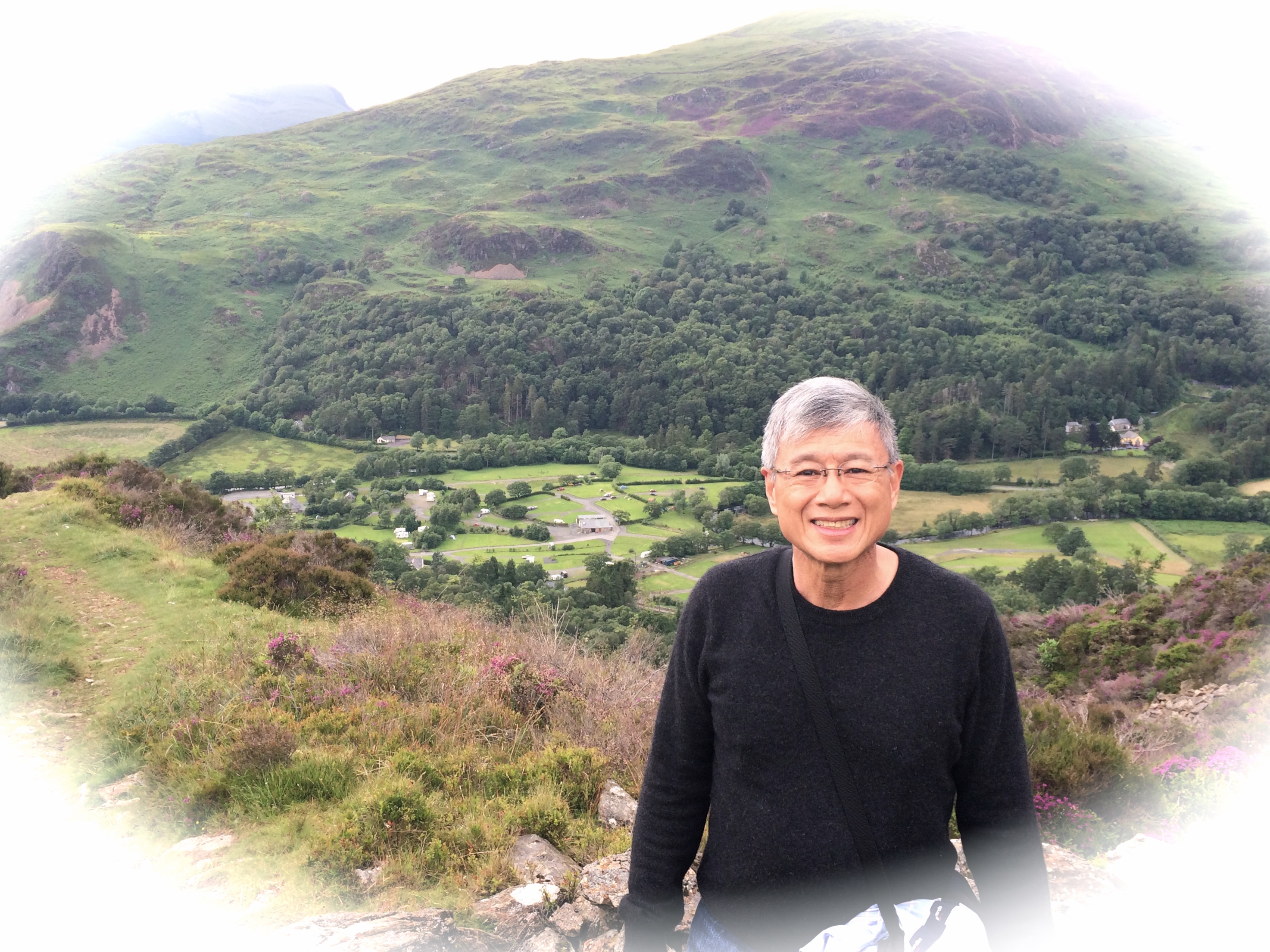
We took a hike to the top of the mountain behind our hotel. By California standards, this is not especially high, but the Welsh make up for that by leading unsuspecting tourists into what we thought might be our alpine grave when we completely lost track of anything that could be called a trail. Had it not been for a small series of better equipped hikers appearing and disappearing, apparitions from what must have been our town, we might have spent the night with the mountain goats. (Not their best choice, either.)

IMG_2619IMG_2623

IMG_2636
We showered quickly and reached our restaurant at 8:31 for a 8:30 reservation. As Oscar Wilde once quipped, “Punctuality is the thief of time.”

Lledrod and New Quay

July 12, Sunday

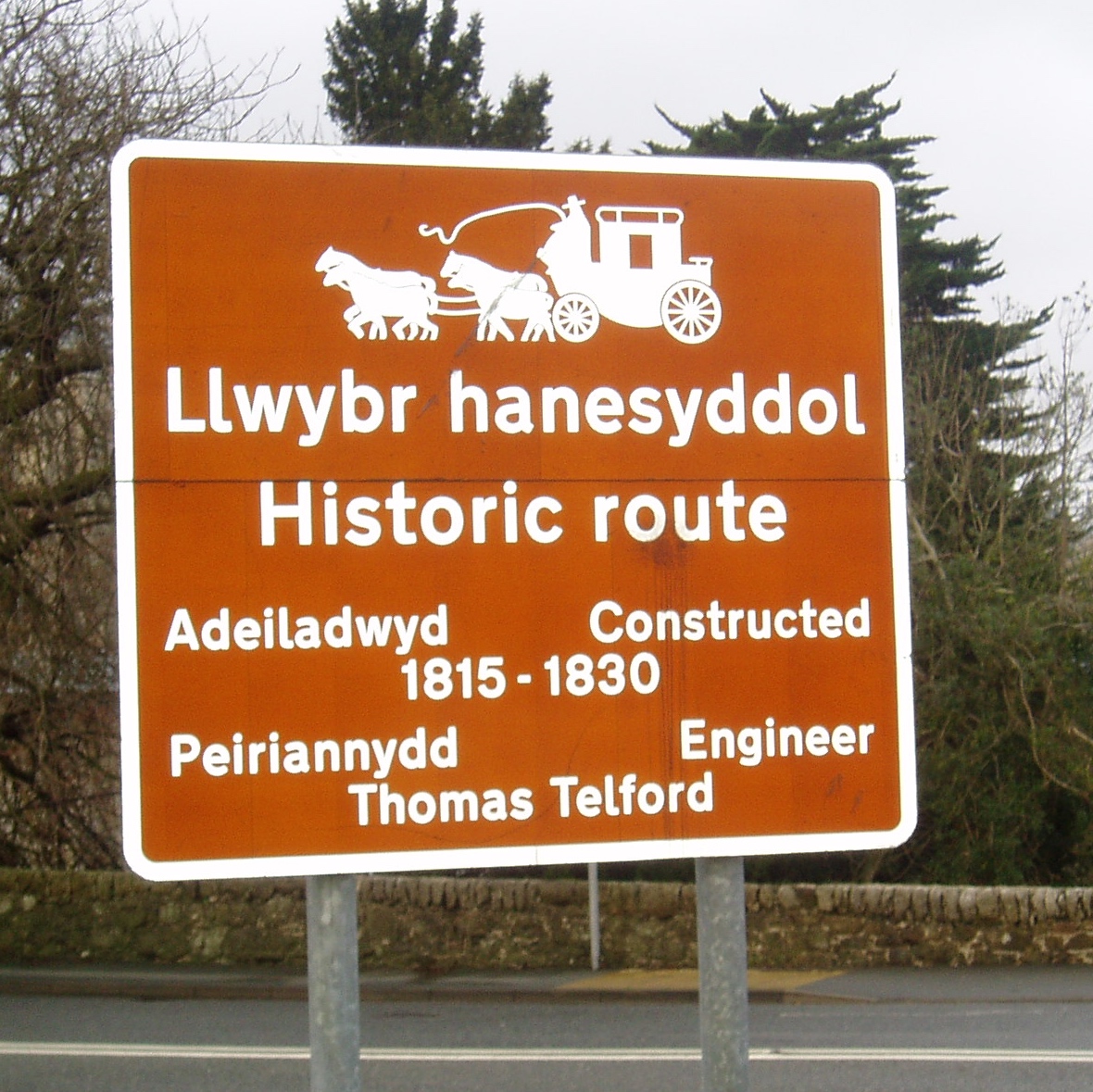
Whereas Ireland and Scotland can be regarded as English speaking, Wales is English tolerant. That applies to both the language and the people. There’s an odd feeling of disorder that goes beyond driving on the “left side” of a curvy roads barely wide enough for one car. It is the sign work.

OLYMPUS DIGITAL CAMERA

All signs are in both Welsh and English, but unlike countries that consistently put one at the top and the other below, Welsh sign makers use a (probably British) coin to make the selection both random and roughly even. Not only are you expected to untangle Aberaeron from Aberavon or Llanfyllin from Llangefni, but you must also scan through these unfamiliar names at full speed to determine which is the English. In a country where finding a citizen with a driver’s license who speaks only Welsh is more challenging than interviewing Yeti in a summer heat wave, the insistence of language equality is akin to a southern’s attachment to the Confederate flag, but without the belligerence and absence of humor.

Sometime during our stay in Edinburgh, we discovered that our travel planner (yours truly) had hired overlapping hotel stays in Dublin and Edinburgh which must mean that elsewhere in the trip, there was to be a night without an assigned bed. This was corrected in a most agreeable way.

IMG_2535 IMG_2511

Our booking at Brynarth Country Guest House was serendipity on a performance-enhancing vibrator. This impossible-to-find country guest house is run by two youngish guys who moved from England to find peace among the sheep. Stuart is a landscape gardener; James, a hotelier extraordinaire, or as the Welsh would say, extraordinary. The place is spotless. James gave us some great advice on places to eat in Wales, both in the wonderful town of New Quay, nearby, and in Beddgelert, where we were headed next. [I have discovered that the bleating of sheep, whose plaintive cries are discontented and pessimistic, make the most insipid life seem more bearable. That’s how the Welsh have tolerated the English—by comparison with a desolate creature whose coat is hot and scratchy.]

The local pronunciation is not as I say on the video “new quay” but “nooky,” probably a joke on the gullible tourist. Just as Lancaster County, Pennsylvania depicts boys on the road to [the town of] Intercourse, I imagine the Welsh have a similar joke of young people searching the winding coastal roads in search of nooky.

IMG_2546

We found a fine restaurant with a harbor view and excellent seafood.

IMG_2551 Our appetizers were a vision of more good food to come, a promise well kept.